


Antimony Test
New
2,145.00₹
In stock
All over India
0 Reviews
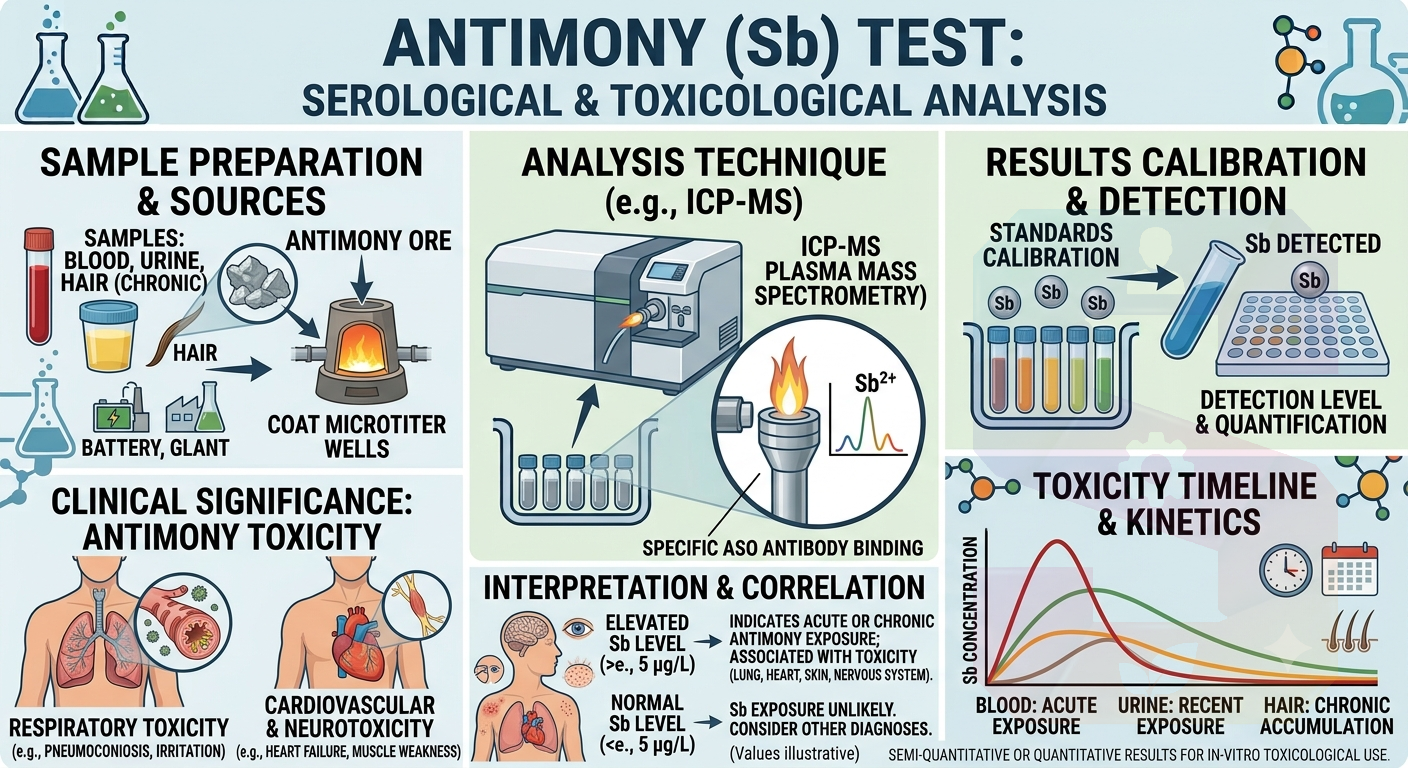
An **Antimony Test** is a diagnostic toxicology evaluation used to measure the levels of antimony, a toxic heavy metal, in a patient's blood, urine, or hair.
The test is primarily ordered to investigate acute or chronic heavy metal poisoning resulting from occupational exposure (such as in smelting, glass production, or battery manufacturing) or accidental ingestion.
Elevated antimony levels can indicate systemic toxicity, which can severely impact the respiratory system, cardiovascular health, and gastrointestinal tract. Monitoring these levels is essential for diagnosing environmental toxicity, ensuring industrial workplace safety, and managing effective chelation therapy.
The test is primarily ordered to investigate acute or chronic heavy metal poisoning resulting from occupational exposure (such as in smelting, glass production, or battery manufacturing) or accidental ingestion.
Elevated antimony levels can indicate systemic toxicity, which can severely impact the respiratory system, cardiovascular health, and gastrointestinal tract. Monitoring these levels is essential for diagnosing environmental toxicity, ensuring industrial workplace safety, and managing effective chelation therapy.
An **Antimony Test** is a diagnostic toxicology evaluation used to measure the levels of antimony, a toxic heavy metal, in a patient's blood, urine, or hair.
The test is primarily ordered to investigate acute or chronic heavy metal poisoning resulting from occupational exposure (such as in smelting, glass production, or battery manufacturing) or accidental ingestion.
Elevated antimony levels can indicate systemic toxicity, which can severely impact the respiratory system, cardiovascular health, and gastrointestinal tract. Monitoring these levels is essential for diagnosing environmental toxicity, ensuring industrial workplace safety, and managing effective chelation therapy.