


• ANA Profile Diagnostic Test New
    5,500.00₹
    In stock
    Hyderabad
    0 Reviews
    An **ANA Profile Diagnostic Test** is a comprehensive blood panel ordered following a positive Antinuclear Antibody (ANA) screen to investigate systemic autoimmune disorders. While a standard screen merely indicates the presence of autoantibodies, the profile identifies and measures specific antibodies, including anti-dsDNA, anti-Smith, anti-SSA, anti-SSB, and anti-RNP.

    This detailed diagnostic panel is vital for clinicians to differentiate between complex connective tissue diseases such as Systemic Lupus Erythematosus (SLE), Sjögren's syndrome, mixed connective tissue disease, and scleroderma. By mapping a patient's unique autoantibody blueprint, it confirms precise diagnoses and guides tailored treatment strategies.
    An **ANA Profile Diagnostic Test** is a comprehensive blood panel ordered following a positive Antinuclear Antibody (ANA) screen to investigate systemic autoimmune disorders. While a standard screen merely indicates the presence of autoantibodies, the profile identifies and measures specific antibodies, including anti-dsDNA, anti-Smith, anti-SSA, anti-SSB, and anti-RNP. This detailed diagnostic panel is vital for clinicians to differentiate between complex connective tissue diseases such as Systemic Lupus Erythematosus (SLE), Sjögren's syndrome, mixed connective tissue disease, and scleroderma. By mapping a patient's unique autoantibody blueprint, it confirms precise diagnoses and guides tailored treatment strategies.
    0 Comments 0 Shares 411 Views 0 Reviews
  • ANA Screening by IFA Diagnostic Test New
    1,100.00₹
    In stock
    Hyderabad
    0 Reviews
    An **ANA Screening by IFA Diagnostic Test** (Antinuclear Antibody Screening by Immunofluorescence Assay) is the gold-standard blood test used to detect autoantibodies that mistakenly target a patient's own cellular nuclei. Utilizing a fluorescent microscope, laboratory technicians examine human epithelial cells (HeP-2) mixed with the patient's blood serum to look for specific glowing patterns.

    This critical diagnostic screening is the foundational first step in identifying systemic autoimmune conditions, such as Systemic Lupus Erythematosus (SLE), Sjögren's syndrome, and rheumatoid arthritis. A positive result provides crucial initial data, prompting further specific autoantibody testing to establish an accurate medical diagnosis.
    An **ANA Screening by IFA Diagnostic Test** (Antinuclear Antibody Screening by Immunofluorescence Assay) is the gold-standard blood test used to detect autoantibodies that mistakenly target a patient's own cellular nuclei. Utilizing a fluorescent microscope, laboratory technicians examine human epithelial cells (HeP-2) mixed with the patient's blood serum to look for specific glowing patterns. This critical diagnostic screening is the foundational first step in identifying systemic autoimmune conditions, such as Systemic Lupus Erythematosus (SLE), Sjögren's syndrome, and rheumatoid arthritis. A positive result provides crucial initial data, prompting further specific autoantibody testing to establish an accurate medical diagnosis.
    0 Comments 0 Shares 540 Views 0 Reviews
  • Anaerobic Culture and susceptibility (Manual Method) New
    1,400.00₹
    In stock
    Hyderabad
    0 Reviews
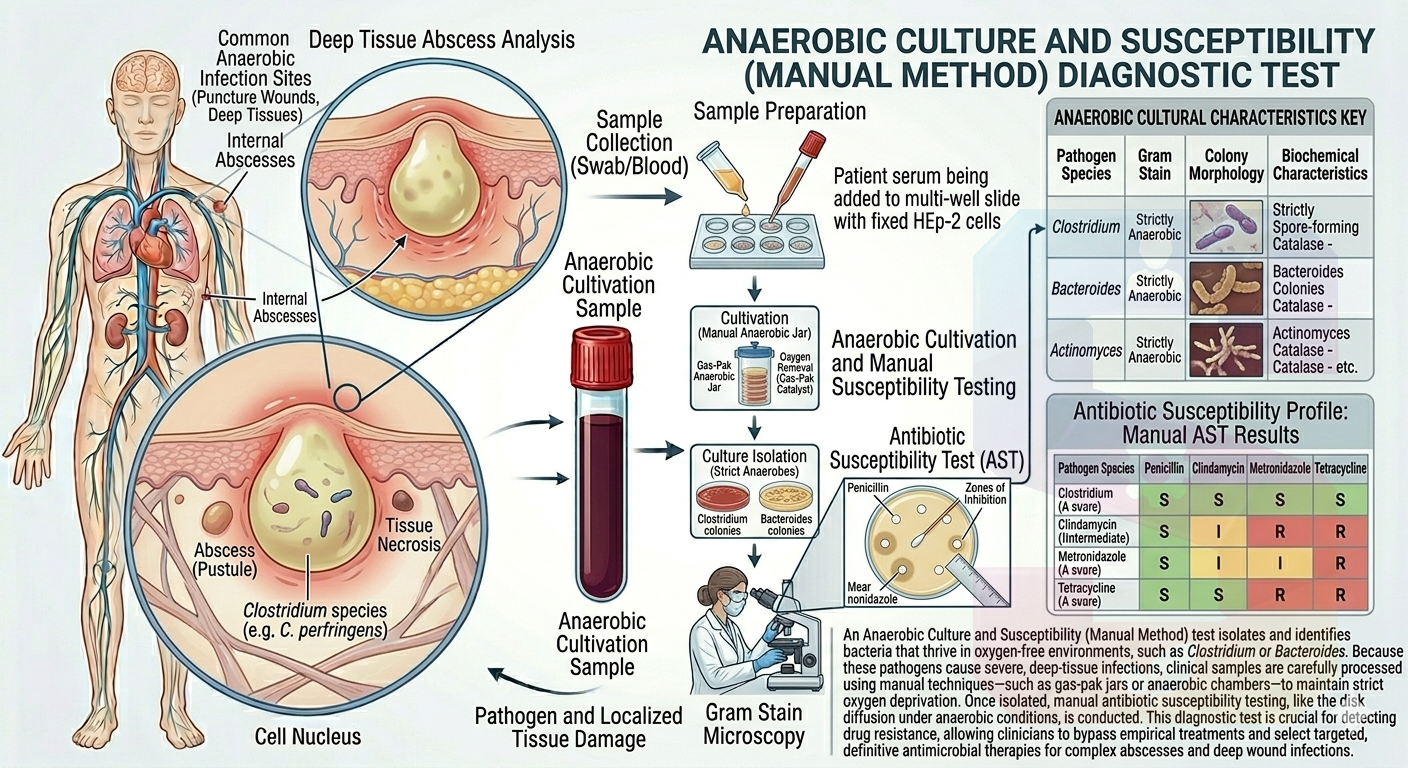
    An **Anaerobic Culture and Susceptibility (Manual Method)** test isolates and identifies bacteria that thrive in oxygen-free environments, such as *Clostridium* or *Bacteroides*. Because these pathogens cause severe, deep-tissue infections, clinical samples are carefully processed using manual techniques—such as gas-pak jars or anaerobic chambers—to maintain strict oxygen deprivation.

    Once isolated, manual antibiotic susceptibility testing, like the E-test or disk diffusion under anaerobic conditions, is conducted. This diagnostic test is crucial for detecting drug resistance, allowing clinicians to bypass empirical treatments and select targeted, definitive antimicrobial therapies for complex abscesses and deep wound infections.
    An **Anaerobic Culture and Susceptibility (Manual Method)** test isolates and identifies bacteria that thrive in oxygen-free environments, such as *Clostridium* or *Bacteroides*. Because these pathogens cause severe, deep-tissue infections, clinical samples are carefully processed using manual techniques—such as gas-pak jars or anaerobic chambers—to maintain strict oxygen deprivation. Once isolated, manual antibiotic susceptibility testing, like the E-test or disk diffusion under anaerobic conditions, is conducted. This diagnostic test is crucial for detecting drug resistance, allowing clinicians to bypass empirical treatments and select targeted, definitive antimicrobial therapies for complex abscesses and deep wound infections.
    0 Comments 0 Shares 455 Views 0 Reviews
  • Anaerobic Culture and susceptibility (Vitek 2 Compact) New
    1,750.00₹
    In stock
    Hyderabad
    0 Reviews
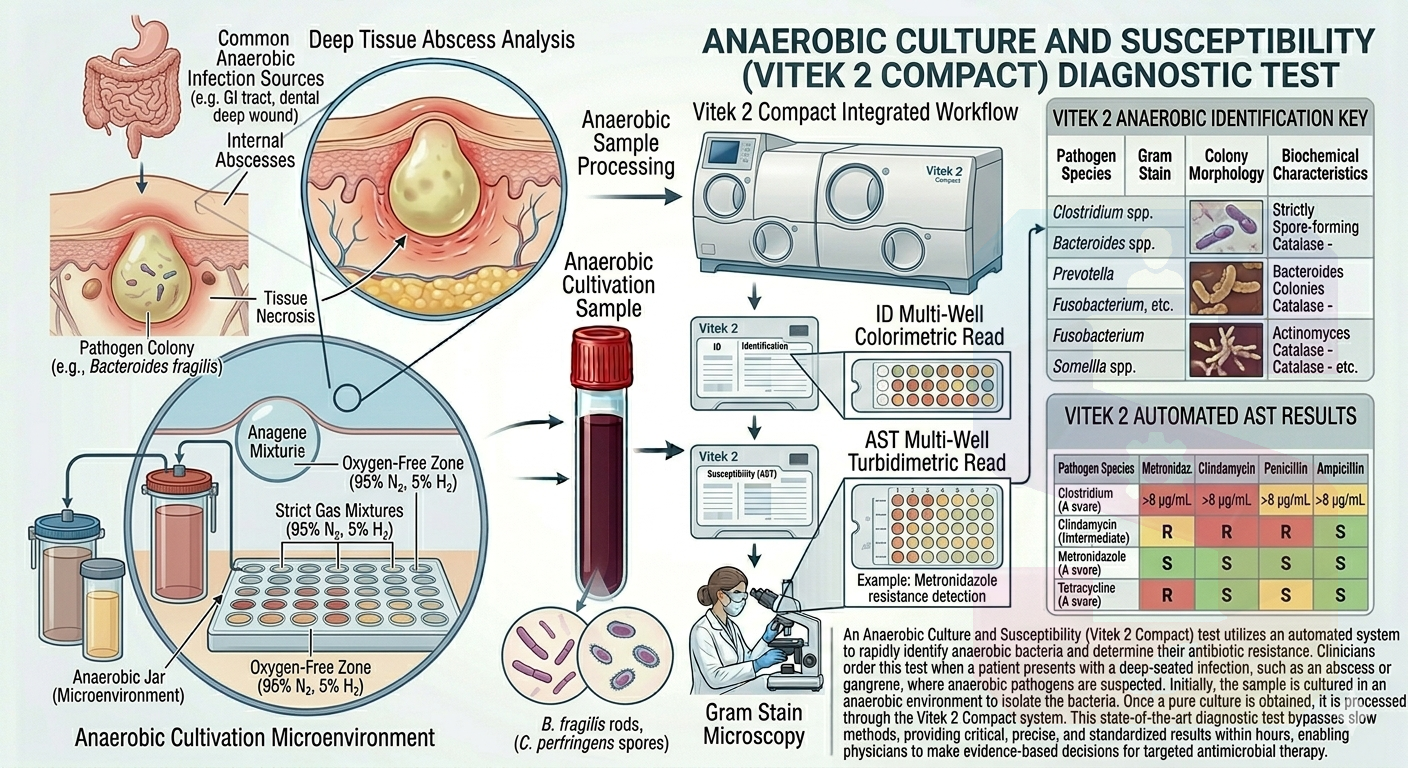
    An **Anaerobic Culture and Susceptibility (Vitek 2 Compact)** test utilizes an automated system to rapidly identify anaerobic bacteria and determine their antibiotic resistance. Clinicians order this test when a patient presents with a deep-seated infection, such as an abscess or gangrene, where anaerobic pathogens are suspected.

    Initially, the sample is cultured in an anaerobic environment to isolate the bacteria. Once a pure culture is obtained, it is processed through the Vitek 2 Compact system. This state-of-the-art diagnostic test bypasses slow manual methods, providing critical, precise, and standardized results within hours, enabling physicians to make evidence-based decisions for targeted antimicrobial therapy.
    An **Anaerobic Culture and Susceptibility (Vitek 2 Compact)** test utilizes an automated system to rapidly identify anaerobic bacteria and determine their antibiotic resistance. Clinicians order this test when a patient presents with a deep-seated infection, such as an abscess or gangrene, where anaerobic pathogens are suspected. Initially, the sample is cultured in an anaerobic environment to isolate the bacteria. Once a pure culture is obtained, it is processed through the Vitek 2 Compact system. This state-of-the-art diagnostic test bypasses slow manual methods, providing critical, precise, and standardized results within hours, enabling physicians to make evidence-based decisions for targeted antimicrobial therapy.
    0 Comments 0 Shares 403 Views 0 Reviews
  • Anal Canal - Medium biopsy 1-3cm Diagnostic test New
    1,000.00₹
    In stock
    Hyderabad
    0 Reviews
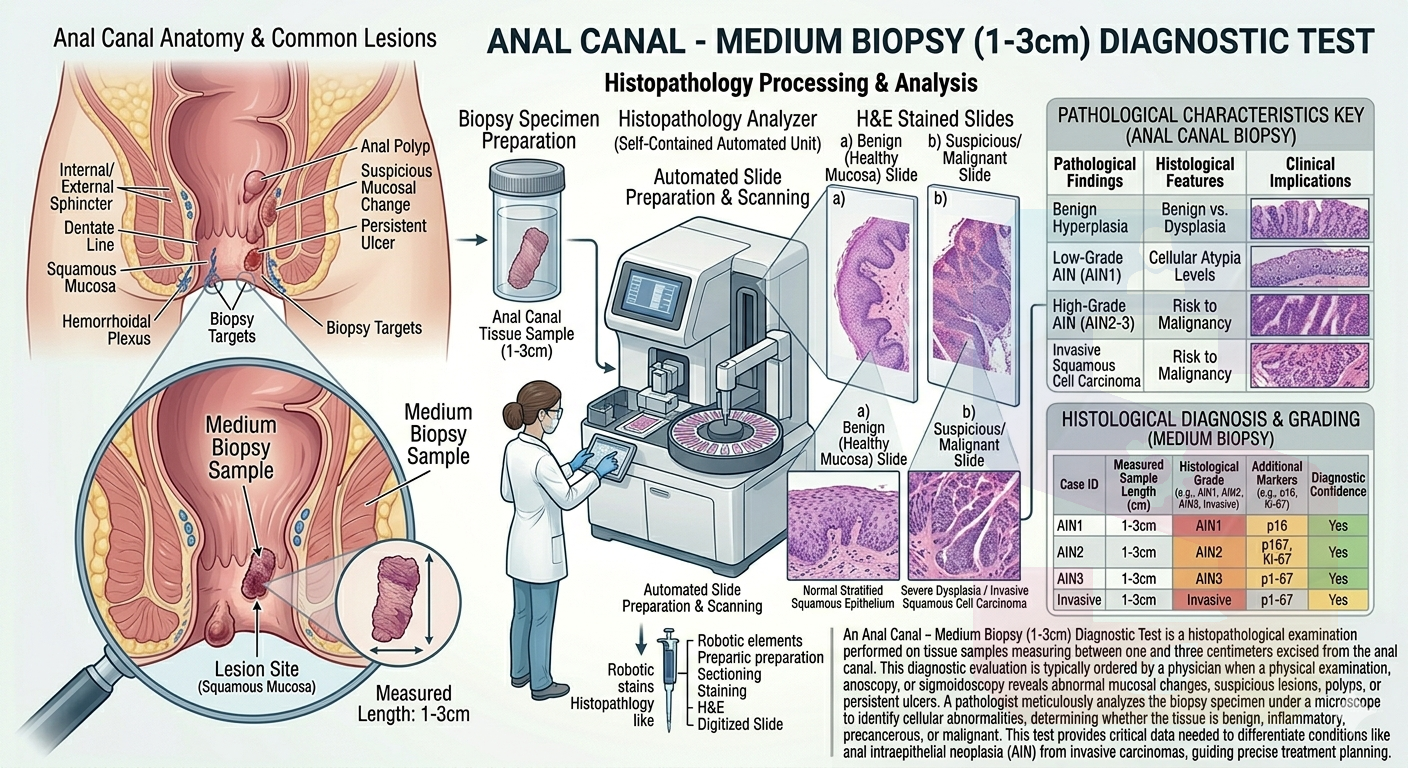
    An **Anal Canal - Medium Biopsy (1-3cm) Diagnostic Test** is a histopathological examination performed on tissue samples measuring between one and three centimeters excised from the anal canal. This diagnostic evaluation is typically ordered by a physician when a physical examination, anoscopy, or sigmoidoscopy reveals abnormal mucosal changes, suspicious lesions, polyps, or persistent ulcers.

    A pathologist meticulously analyzes the biopsy specimen under a microscope to identify cellular abnormalities, determining whether the tissue is benign, inflammatory, precancerous, or malignant. This test provides critical data needed to differentiate conditions like anal intraepithelial neoplasia (AIN) from invasive carcinomas, guiding precise treatment planning.
    An **Anal Canal - Medium Biopsy (1-3cm) Diagnostic Test** is a histopathological examination performed on tissue samples measuring between one and three centimeters excised from the anal canal. This diagnostic evaluation is typically ordered by a physician when a physical examination, anoscopy, or sigmoidoscopy reveals abnormal mucosal changes, suspicious lesions, polyps, or persistent ulcers. A pathologist meticulously analyzes the biopsy specimen under a microscope to identify cellular abnormalities, determining whether the tissue is benign, inflammatory, precancerous, or malignant. This test provides critical data needed to differentiate conditions like anal intraepithelial neoplasia (AIN) from invasive carcinomas, guiding precise treatment planning.
    0 Comments 0 Shares 406 Views 0 Reviews
  • Anal Canal - Large biopsy 3-6cm Diagnostic test New
    1,500.00₹
    In stock
    Hyderabad
    0 Reviews
    **Anal Canal - Large Biopsy (3-6 cm) Diagnostic Test**

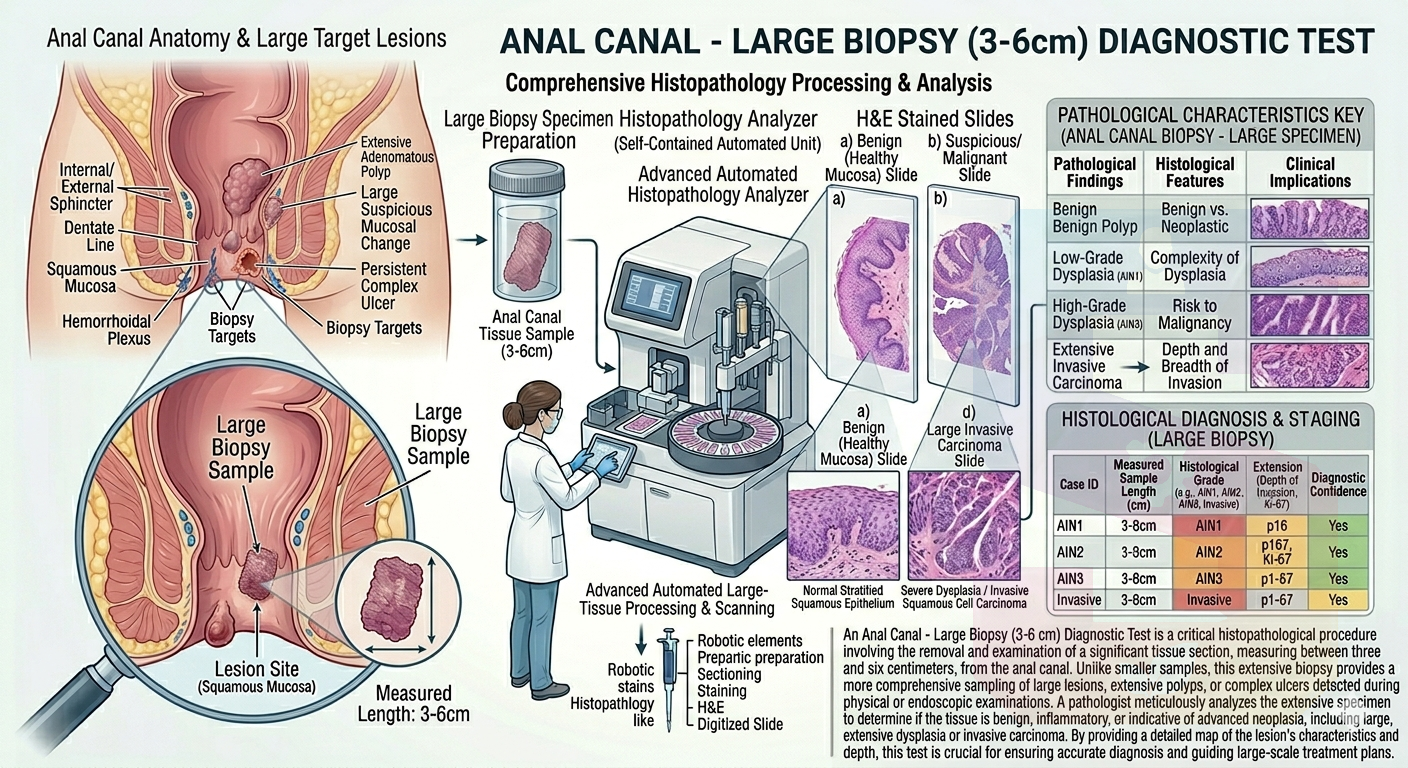
    An **Anal Canal - Large Biopsy (3-6 cm) Diagnostic Test** is a critical histopathological procedure involving the removal and examination of a significant tissue section, measuring between three and six centimeters, from the anal canal. Unlike smaller samples, this extensive biopsy provides a more comprehensive sampling of large lesions, extensive polyps, or complex ulcers detected during physical or endoscopic examinations. A pathologist meticulously analyzes the extensive specimen to determine if the tissue is benign, inflammatory, or indicative of advanced neoplasia, including large, extensive dysplasia or invasive carcinoma. By providing a detailed map of the lesion’s characteristics and depth, this test is crucial for ensuring accurate diagnosis and guiding large-scale treatment plans.
    **Anal Canal - Large Biopsy (3-6 cm) Diagnostic Test** An **Anal Canal - Large Biopsy (3-6 cm) Diagnostic Test** is a critical histopathological procedure involving the removal and examination of a significant tissue section, measuring between three and six centimeters, from the anal canal. Unlike smaller samples, this extensive biopsy provides a more comprehensive sampling of large lesions, extensive polyps, or complex ulcers detected during physical or endoscopic examinations. A pathologist meticulously analyzes the extensive specimen to determine if the tissue is benign, inflammatory, or indicative of advanced neoplasia, including large, extensive dysplasia or invasive carcinoma. By providing a detailed map of the lesion’s characteristics and depth, this test is crucial for ensuring accurate diagnosis and guiding large-scale treatment plans.
    0 Comments 0 Shares 466 Views 0 Reviews
  • ANC Profile Diagnostic Test New
    3,115.00₹
    In stock
    Hyderabad
    0 Reviews
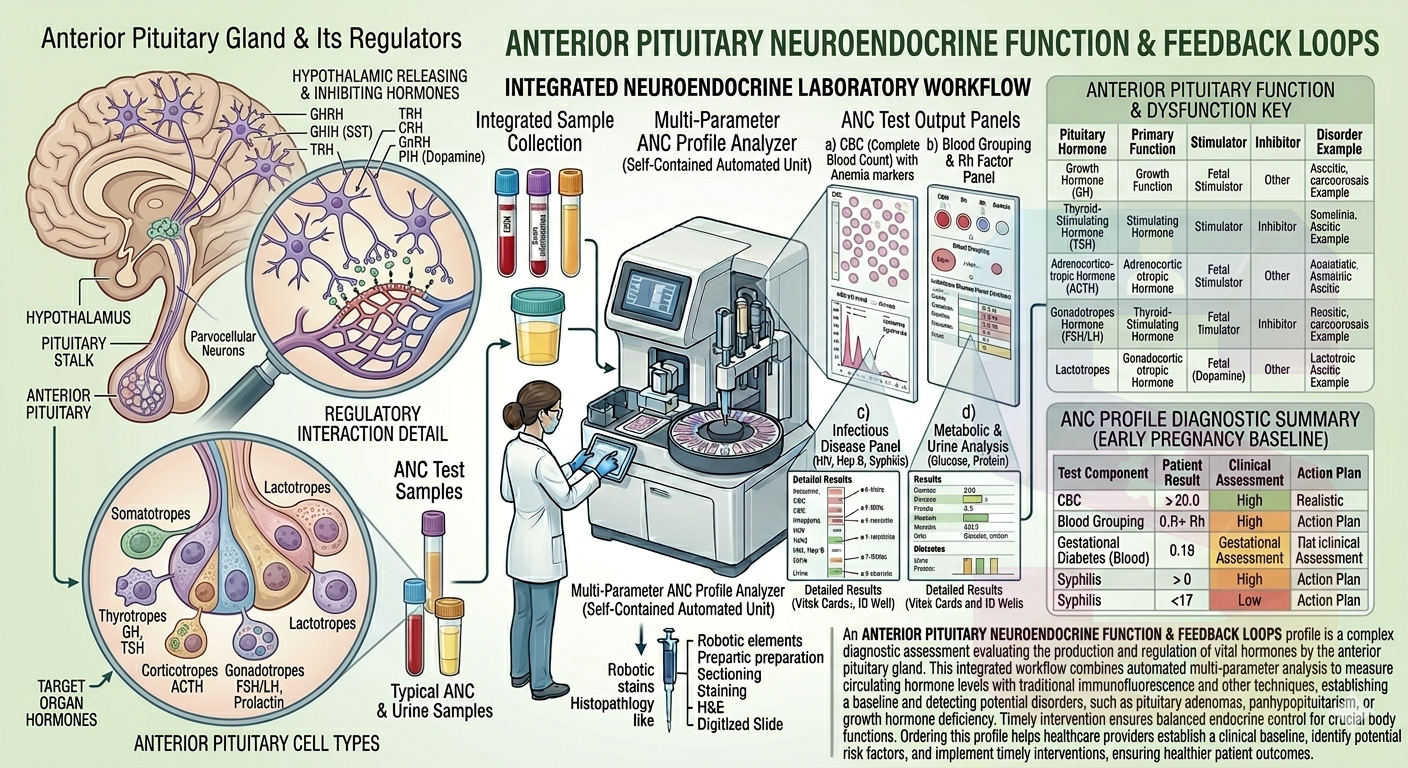
    An **ANC Profile Diagnostic Test** (Antenatal Care Profile) is a comprehensive panel of blood and urine tests routine during early pregnancy to monitor maternal health and fetal development. This foundational screening typically includes a complete blood count (CBC), blood grouping, Rh factor determination, and screenings for infectious diseases like HIV, Hepatitis B, and syphilis, alongside blood glucose and urine analysis.

    Ordering this profile helps healthcare providers establish a clinical baseline, identify potential risk factors—such as gestational diabetes, anemia, or maternal-fetal blood incompatibility—and implement timely interventions, ensuring a safer pregnancy and healthier outcomes for both mother and child.
    An **ANC Profile Diagnostic Test** (Antenatal Care Profile) is a comprehensive panel of blood and urine tests routine during early pregnancy to monitor maternal health and fetal development. This foundational screening typically includes a complete blood count (CBC), blood grouping, Rh factor determination, and screenings for infectious diseases like HIV, Hepatitis B, and syphilis, alongside blood glucose and urine analysis. Ordering this profile helps healthcare providers establish a clinical baseline, identify potential risk factors—such as gestational diabetes, anemia, or maternal-fetal blood incompatibility—and implement timely interventions, ensuring a safer pregnancy and healthier outcomes for both mother and child.
    0 Comments 0 Shares 608 Views 0 Reviews
  • ANCA by IFA reflex MPO/PR3 Antibodies Serum diagnostic test New
    2,600.00₹
    In stock
    Hyderabad
    0 Reviews
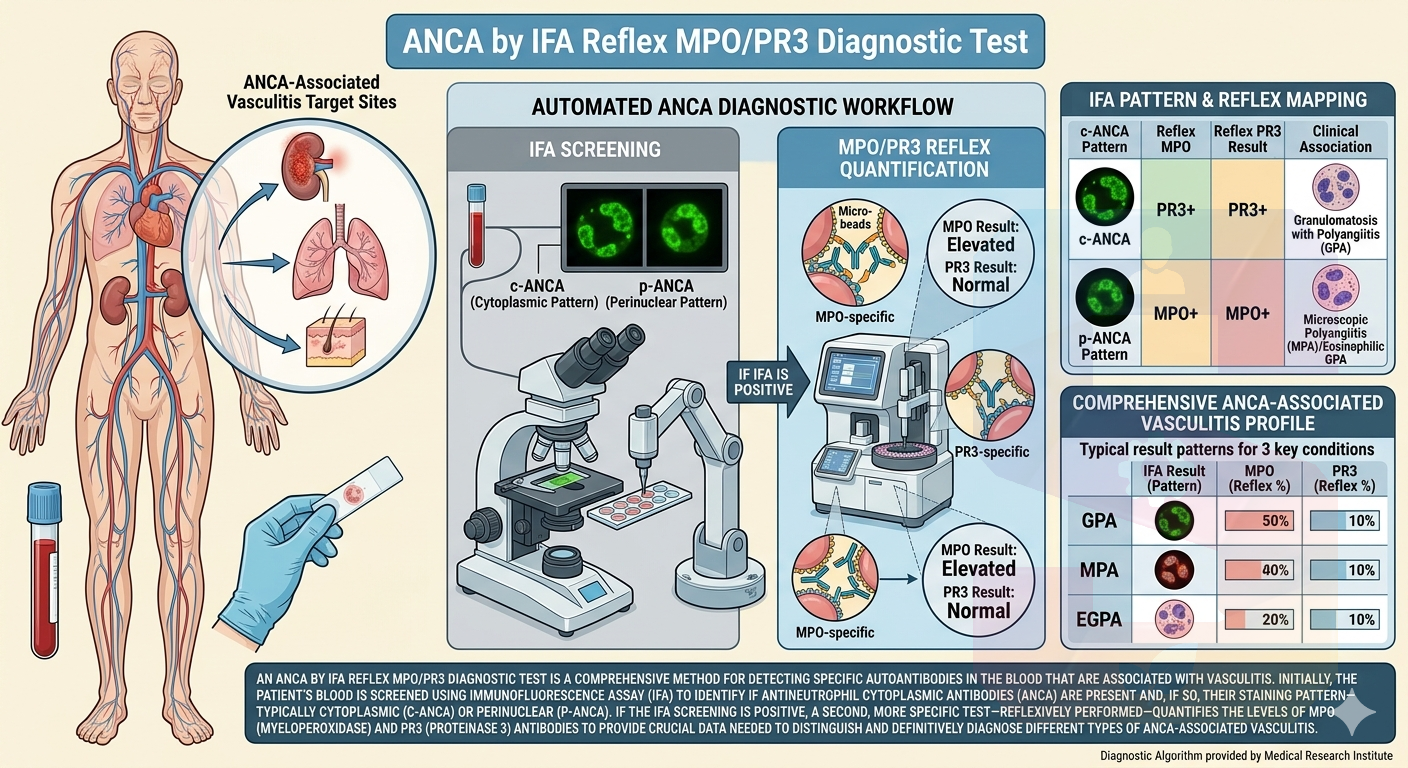
    An ANCA by IFA reflex MPO/PR3 serum diagnostic test is a highly specific method used for diagnosing and monitoring ANCA-associated vasculitis (AAV), a rare group of autoimmune diseases that affect small to medium blood vessels.

    The test begins with an indirect immunofluorescence assay (IFA) on human serum. This initial step determines the presence of antineutrophil cytoplasmic antibodies (ANCA) and characterizes their staining pattern, typically as either cytoplasmic (c-ANCA) or perinuclear (p-ANCA). If the IFA test yields a positive result, a reflex test is automatically performed. This reflex step uses enzyme-linked immunosorbent assay (ELISA) technology to precisely measure the concentration of antibodies specific for myeloperoxidase (MPO) and proteinase 3 (PR3).

    This combined diagnostic approach provides comprehensive data, enabling healthcare providers to accurately identify the specific ANCA-associated vasculitis type, such as granulomatosis with polyangiitis (GPA), microscopic polyangiitis (MPA), or eosinophilic granulomatosis with polyangiitis (EGPA), and initiate appropriate treatment strategies.
    An ANCA by IFA reflex MPO/PR3 serum diagnostic test is a highly specific method used for diagnosing and monitoring ANCA-associated vasculitis (AAV), a rare group of autoimmune diseases that affect small to medium blood vessels. The test begins with an indirect immunofluorescence assay (IFA) on human serum. This initial step determines the presence of antineutrophil cytoplasmic antibodies (ANCA) and characterizes their staining pattern, typically as either cytoplasmic (c-ANCA) or perinuclear (p-ANCA). If the IFA test yields a positive result, a reflex test is automatically performed. This reflex step uses enzyme-linked immunosorbent assay (ELISA) technology to precisely measure the concentration of antibodies specific for myeloperoxidase (MPO) and proteinase 3 (PR3). This combined diagnostic approach provides comprehensive data, enabling healthcare providers to accurately identify the specific ANCA-associated vasculitis type, such as granulomatosis with polyangiitis (GPA), microscopic polyangiitis (MPA), or eosinophilic granulomatosis with polyangiitis (EGPA), and initiate appropriate treatment strategies.
    0 Comments 0 Shares 796 Views 0 Reviews
  • 0 Comments 0 Shares 46 Views 0 Reviews
  • Androstenedione (A4) Diagnostic test New
    2,250.00₹
    In stock
    Hyderabad
    0 Reviews
    An **Androstenedione (A4) Diagnostic Test** measures the levels of androstenedione, a steroid hormone and precursor to testosterone and estrogen, in the blood. This evaluation is primarily ordered by physicians to investigate signs of hyperandrogenism, such as excessive hair growth (hirsutism), severe acne, irregular menstruation, or premature puberty.

    By evaluating A4 levels, healthcare providers can assess the function of the adrenal glands and ovaries. It serves as a vital tool in diagnosing and managing conditions like Polycystic Ovary Syndrome (PCOS), Congenital Adrenal Hyperplasia (CAH), and androgen-secreting tumors, guiding targeted clinical interventions.
    An **Androstenedione (A4) Diagnostic Test** measures the levels of androstenedione, a steroid hormone and precursor to testosterone and estrogen, in the blood. This evaluation is primarily ordered by physicians to investigate signs of hyperandrogenism, such as excessive hair growth (hirsutism), severe acne, irregular menstruation, or premature puberty. By evaluating A4 levels, healthcare providers can assess the function of the adrenal glands and ovaries. It serves as a vital tool in diagnosing and managing conditions like Polycystic Ovary Syndrome (PCOS), Congenital Adrenal Hyperplasia (CAH), and androgen-secreting tumors, guiding targeted clinical interventions.
    0 Comments 0 Shares 595 Views 0 Reviews
Sponsored