




Directory
Browse the SeshtaConnect Directory: Find professionals, courses, job listings, and groups. Discover new connections to ignite your career and personal growth.
-
-
 Apo lipoprotein A1 Test New495.00₹In stockAll over India0 Reviews**Apolipoprotein A1 (ApoA1)** is the primary structural protein component of High-Density Lipoprotein (HDL), commonly known as "good cholesterol." Produced mainly in the liver and intestine, ApoA1 plays a critical role in **reverse cholesterol transport**—a protective process where excess cholesterol is collected from peripheral tissues and artery walls, then transported back to the liver for excretion. Additionally, ApoA1 acts as a cofactor for lecithin-cholesterol acyltransferase (LCAT), an enzyme essential for converting free cholesterol into esterified forms for transport. Higher circulating levels of ApoA1 are strongly associated with reduced cardiovascular risk, anti-inflammatory defense, and improved vascular endothelial function.**Apolipoprotein A1 (ApoA1)** is the primary structural protein component of High-Density Lipoprotein (HDL), commonly known as "good cholesterol." Produced mainly in the liver and intestine, ApoA1 plays a critical role in **reverse cholesterol transport**—a protective process where excess cholesterol is collected from peripheral tissues and artery walls, then transported back to the liver for excretion. Additionally, ApoA1 acts as a cofactor for lecithin-cholesterol acyltransferase (LCAT), an enzyme essential for converting free cholesterol into esterified forms for transport. Higher circulating levels of ApoA1 are strongly associated with reduced cardiovascular risk, anti-inflammatory defense, and improved vascular endothelial function.0 Comments 0 Shares 1K Views 0 Reviews
 -
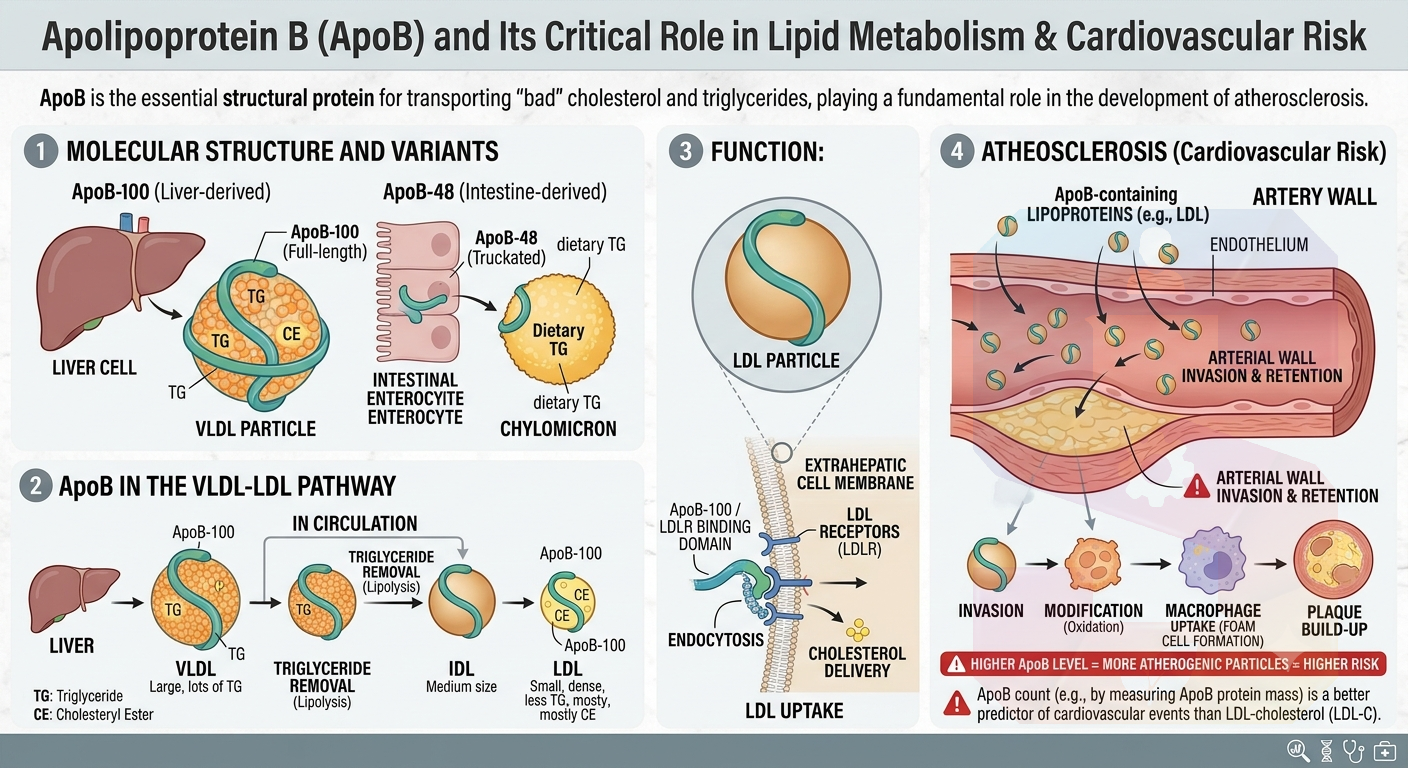 Apolipoprotein B New495.00₹In stockAll over India0 Reviews**Apolipoprotein B (ApoB)** is the primary structural protein found in all atherogenic lipoproteins, including low-density lipoprotein (LDL), very low-density lipoprotein (VLDL), and intermediate-density lipoprotein (IDL). Synthesized in the liver and intestine, each atherogenic particle carries exactly one ApoB molecule, making its measurement a direct representation of total circulating atherogenic particle count. ApoB plays a critical role in lipid metabolism by facilitating the transport of cholesterol and triglycerides to peripheral tissues. Because elevated ApoB levels directly contribute to arterial plaque accumulation, measuring ApoB provides a highly precise clinical assessment for evaluating cardiovascular disease risk alongside standard lipid panels.**Apolipoprotein B (ApoB)** is the primary structural protein found in all atherogenic lipoproteins, including low-density lipoprotein (LDL), very low-density lipoprotein (VLDL), and intermediate-density lipoprotein (IDL). Synthesized in the liver and intestine, each atherogenic particle carries exactly one ApoB molecule, making its measurement a direct representation of total circulating atherogenic particle count. ApoB plays a critical role in lipid metabolism by facilitating the transport of cholesterol and triglycerides to peripheral tissues. Because elevated ApoB levels directly contribute to arterial plaque accumulation, measuring ApoB provides a highly precise clinical assessment for evaluating cardiovascular disease risk alongside standard lipid panels.0 Comments 0 Shares 1K Views 0 Reviews
 -
 Appendix large biopsy 3 -6cm New1,500.00₹In stockAll over India0 Reviews
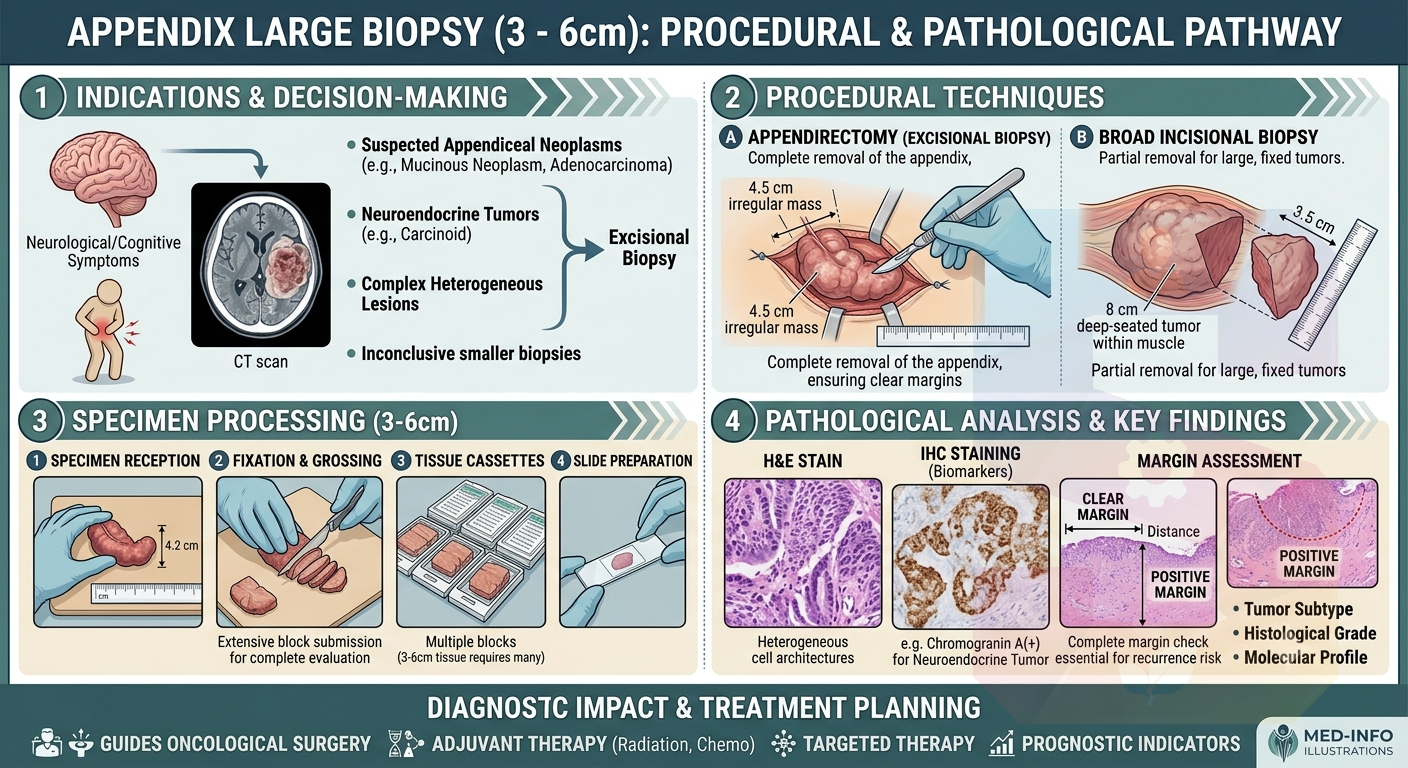
An **appendix large biopsy (3 to 6 cm)**, often performed as an excisional biopsy or an appendectomy, involves the removal of a substantial portion of the appendix for detailed pathological examination. This procedure is typically warranted when imaging or previous smaller biopsies are inconclusive, particularly to evaluate for conditions beyond acute appendicitis, such as appendiceal neoplasms, carcinoid tumors, or other complex pathological processes within the large 3 to 6 cm range. A pathologist will conduct a thorough macroscopic and microscopic assessment of the tissue structure, check surgical margins, and determine specific tumor type or grade, providing crucial data for accurate diagnosis and optimal treatment planning for complex appendiceal conditions.An **appendix large biopsy (3 to 6 cm)**, often performed as an excisional biopsy or an appendectomy, involves the removal of a substantial portion of the appendix for detailed pathological examination. This procedure is typically warranted when imaging or previous smaller biopsies are inconclusive, particularly to evaluate for conditions beyond acute appendicitis, such as appendiceal neoplasms, carcinoid tumors, or other complex pathological processes within the large 3 to 6 cm range. A pathologist will conduct a thorough macroscopic and microscopic assessment of the tissue structure, check surgical margins, and determine specific tumor type or grade, providing crucial data for accurate diagnosis and optimal treatment planning for complex appendiceal conditions.0 Comments 0 Shares 1K Views 0 Reviews -
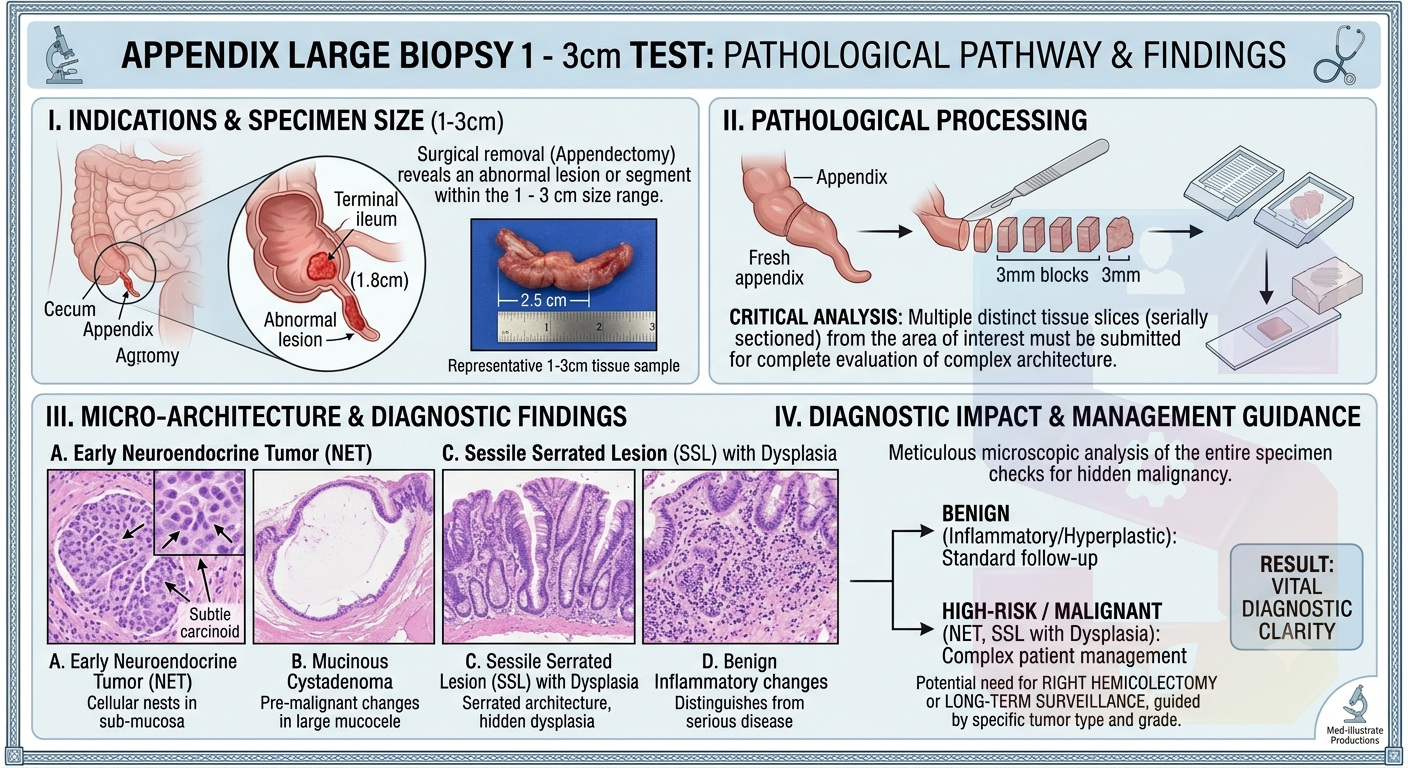 Appendix medium biopsy 1 -3cm New1,000.00₹In stockAll over India0 ReviewsThe **Appendix medium Biopsy 1-3cm Test** is a highly specific pathological examination performed on a surgically removed appendix specimen that presents an abnormal lesion or segment within the 1 to 3-centimeter size range. Unlike standard appendectomy reviews, this test requires critical microscopic analysis of the entire specimen, as well as multiple distinct tissue slices, to evaluate architectural complexity and check for pre-malignant changes. Pathologists meticulously look for early-stage neuroendocrine tumors, mucinous neoplasms, or sessile serrated lesions that may be hidden in this size category. The examination results provide vital diagnostic clarity, distinguishing between benign inflammation and subtle cancers, which directly guides subsequent patient management, such as the potential need for right hemicolectomy or long-term surveillance.The **Appendix medium Biopsy 1-3cm Test** is a highly specific pathological examination performed on a surgically removed appendix specimen that presents an abnormal lesion or segment within the 1 to 3-centimeter size range. Unlike standard appendectomy reviews, this test requires critical microscopic analysis of the entire specimen, as well as multiple distinct tissue slices, to evaluate architectural complexity and check for pre-malignant changes. Pathologists meticulously look for early-stage neuroendocrine tumors, mucinous neoplasms, or sessile serrated lesions that may be hidden in this size category. The examination results provide vital diagnostic clarity, distinguishing between benign inflammation and subtle cancers, which directly guides subsequent patient management, such as the potential need for right hemicolectomy or long-term surveillance.0 Comments 0 Shares 1K Views 0 Reviews
 -
 Arm swelling biopsy - medium 1-3cm New1,000.00₹In stockAll over India0 ReviewsAn arm swelling biopsy (medium 1-3 cm) is a medical procedure used to obtain a tissue sample from an abnormal growth in the arm. Typically, this applies to palpable masses, deep-seated lesions, or lymph nodes within that size range. A dermatologist or surgeon performs either an incisional biopsy to remove a portion or an excisional biopsy to remove the entire mass. The procedure is usually ultrasound-guided to ensure precise tissue collection. The acquired specimen is crucial for a definitive pathological diagnosis, distinguishing between benign, inflammatory, or malignant conditions. The results of the biopsy are the key determinant for guiding appropriate medical management or surgical treatment.An arm swelling biopsy (medium 1-3 cm) is a medical procedure used to obtain a tissue sample from an abnormal growth in the arm. Typically, this applies to palpable masses, deep-seated lesions, or lymph nodes within that size range. A dermatologist or surgeon performs either an incisional biopsy to remove a portion or an excisional biopsy to remove the entire mass. The procedure is usually ultrasound-guided to ensure precise tissue collection. The acquired specimen is crucial for a definitive pathological diagnosis, distinguishing between benign, inflammatory, or malignant conditions. The results of the biopsy are the key determinant for guiding appropriate medical management or surgical treatment.0 Comments 0 Shares 1K Views 0 Reviews
 -
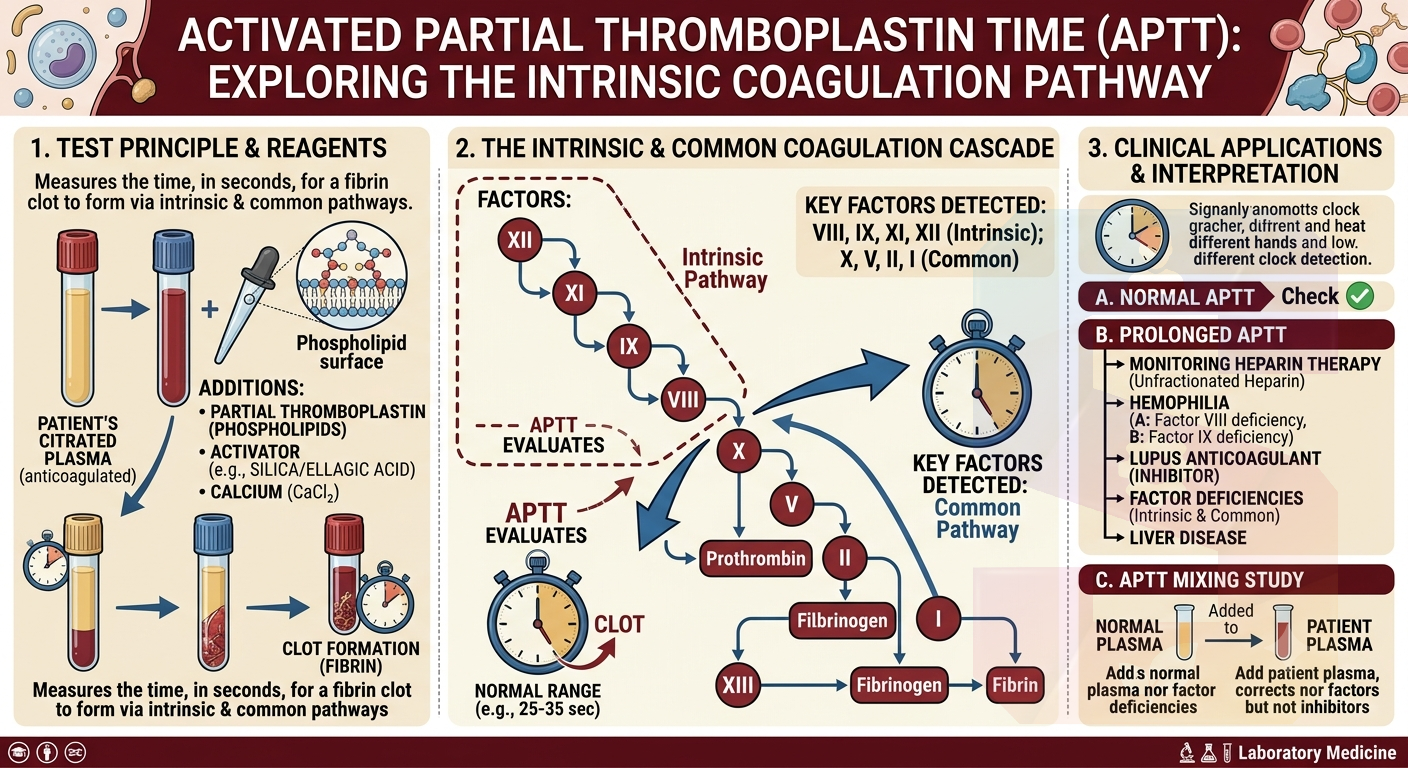 APTT New418.00₹In stockAll over India0 ReviewsThe **Activated Partial Thromboplastin Time (APTT)** test is a essential coagulation screening assay that evaluates the integrity of the intrinsic and common pathways of the blood clotting cascade. It measures the time, in seconds, required for a fibrin clot to form in plasma after specific activating reagents and calcium are added. Clinically, the APTT is primary used to monitor unfractionated heparin anticoagulant therapy and to investigate unexplained bleeding or bruising. Prolonged APTT values can indicate deficiency or dysfunction of clotting factors—such as Factor VIII in Hemophilia A or Factor IX in Hemophilia B—or the presence of circulating inhibitors like lupus anticoagulant.The **Activated Partial Thromboplastin Time (APTT)** test is a essential coagulation screening assay that evaluates the integrity of the intrinsic and common pathways of the blood clotting cascade. It measures the time, in seconds, required for a fibrin clot to form in plasma after specific activating reagents and calcium are added. Clinically, the APTT is primary used to monitor unfractionated heparin anticoagulant therapy and to investigate unexplained bleeding or bruising. Prolonged APTT values can indicate deficiency or dysfunction of clotting factors—such as Factor VIII in Hemophilia A or Factor IX in Hemophilia B—or the presence of circulating inhibitors like lupus anticoagulant.0 Comments 0 Shares 1K Views 0 Reviews