

• Angiotensin Converting enzyme (ACE) New
    1,452.00₹
    In stock
    Hyderabad
    0 Reviews
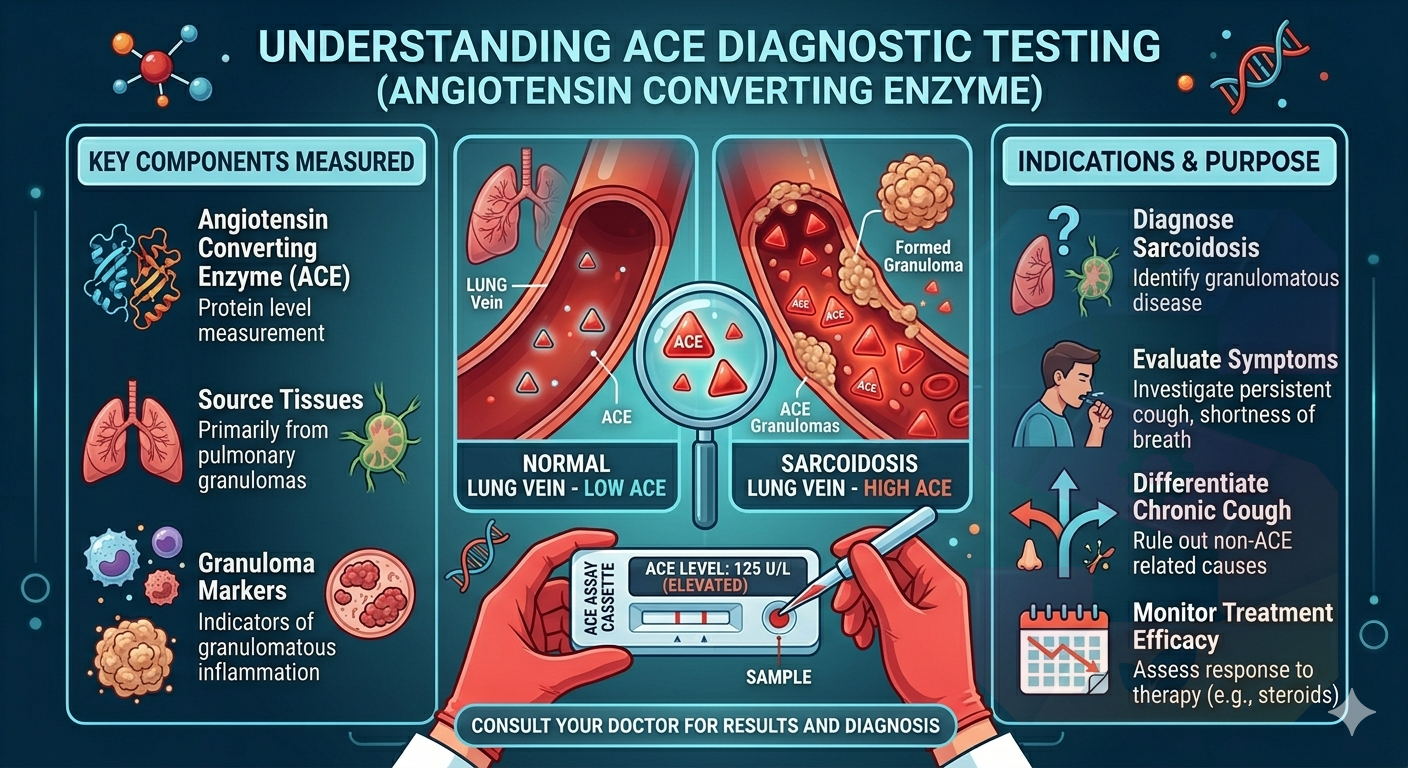
    An **Angiotensin-Converting Enzyme (ACE) test** is a diagnostic blood assay primarily used to measure the concentration of ACE proteins in the bloodstream. This enzyme is naturally produced by endothelial and epithelial cells, particularly within the lungs, and plays a crucial role in blood pressure regulation through the renin-angiotensin-aldosterone system.
    Clinically, an ACE test is most frequently ordered to help diagnose and monitor **sarcoidosis**, a systemic inflammatory disease characterized by the formation of granulomas (small clumps of immune cells) in organs like the lungs and lymph nodes. Because granuloma cells secrete high amounts of ACE, elevated blood levels serve as a key biomarker.
    The test is also highly valuable for tracking treatment efficacy, as falling ACE levels typically indicate a positive response to therapies like corticosteroids.
    An **Angiotensin-Converting Enzyme (ACE) test** is a diagnostic blood assay primarily used to measure the concentration of ACE proteins in the bloodstream. This enzyme is naturally produced by endothelial and epithelial cells, particularly within the lungs, and plays a crucial role in blood pressure regulation through the renin-angiotensin-aldosterone system. Clinically, an ACE test is most frequently ordered to help diagnose and monitor **sarcoidosis**, a systemic inflammatory disease characterized by the formation of granulomas (small clumps of immune cells) in organs like the lungs and lymph nodes. Because granuloma cells secrete high amounts of ACE, elevated blood levels serve as a key biomarker. The test is also highly valuable for tracking treatment efficacy, as falling ACE levels typically indicate a positive response to therapies like corticosteroids.
    0 Comments 0 Shares 284 Views 0 Reviews
  • Aldosterone / Direct Renin Ratio Diagnostic test New
    7,300.00₹
    In stock
    Hyderabad
    0 Reviews
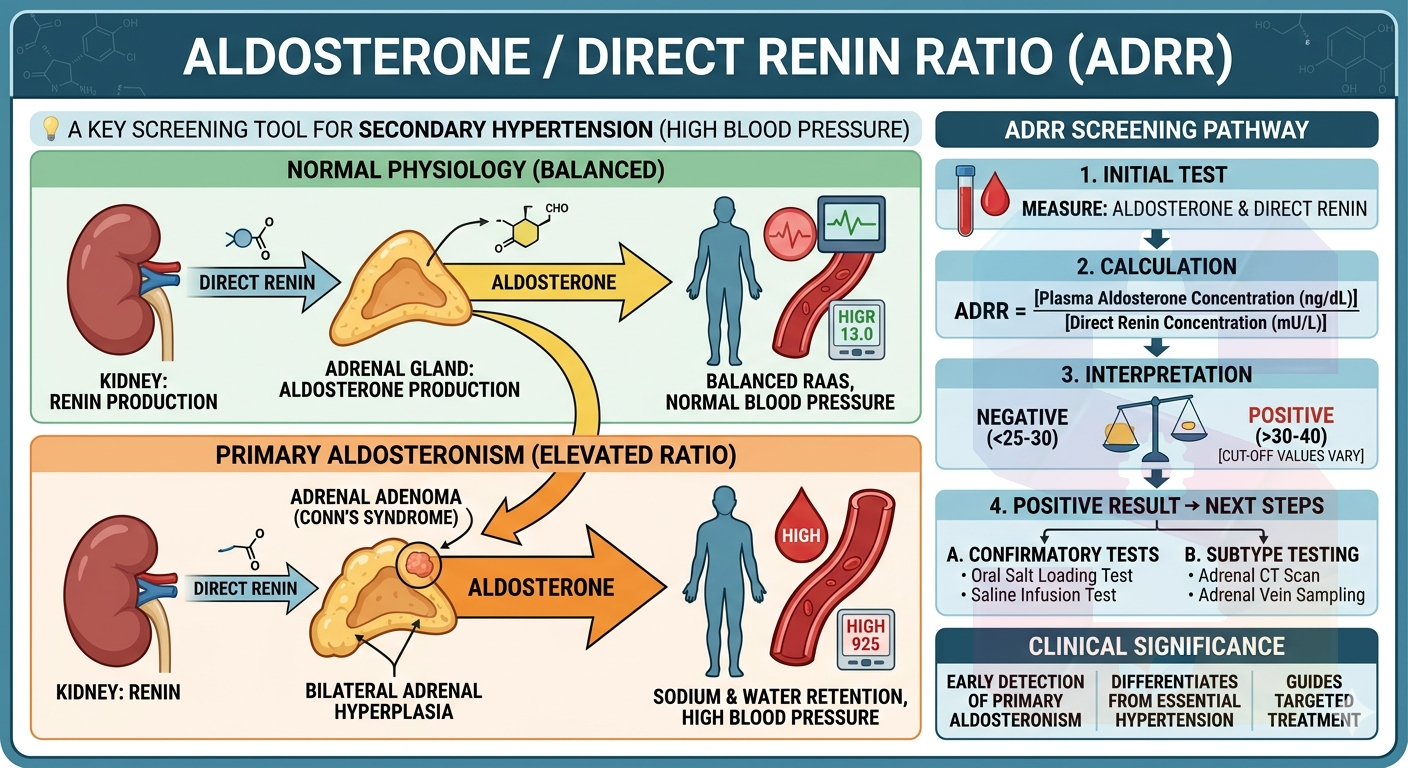
    The Aldosterone/Direct Renin Ratio (ADRR) is a vital screening tool used by clinicians to detect primary aldosteronism, a leading cause of secondary high blood pressure.

    Aldosterone is a hormone that regulates sodium and water balance, while renin is an enzyme that controls aldosterone production. In a healthy body, these two work in tandem. However, in primary aldosteronism, the adrenal glands overproduce aldosterone independently of renin.

    By measuring both levels in the blood and calculating the ratio, doctors can identify an abnormal imbalance—specifically, highly elevated aldosterone alongside suppressed renin levels—signaling the need for further diagnostic testing.
    The Aldosterone/Direct Renin Ratio (ADRR) is a vital screening tool used by clinicians to detect primary aldosteronism, a leading cause of secondary high blood pressure. Aldosterone is a hormone that regulates sodium and water balance, while renin is an enzyme that controls aldosterone production. In a healthy body, these two work in tandem. However, in primary aldosteronism, the adrenal glands overproduce aldosterone independently of renin. By measuring both levels in the blood and calculating the ratio, doctors can identify an abnormal imbalance—specifically, highly elevated aldosterone alongside suppressed renin levels—signaling the need for further diagnostic testing.
    0 Comments 0 Shares 492 Views 0 Reviews
  • Aldosterone Urine 24H diagnostic test New
    2,200.00₹
    In stock
    Hyderabad
    0 Reviews
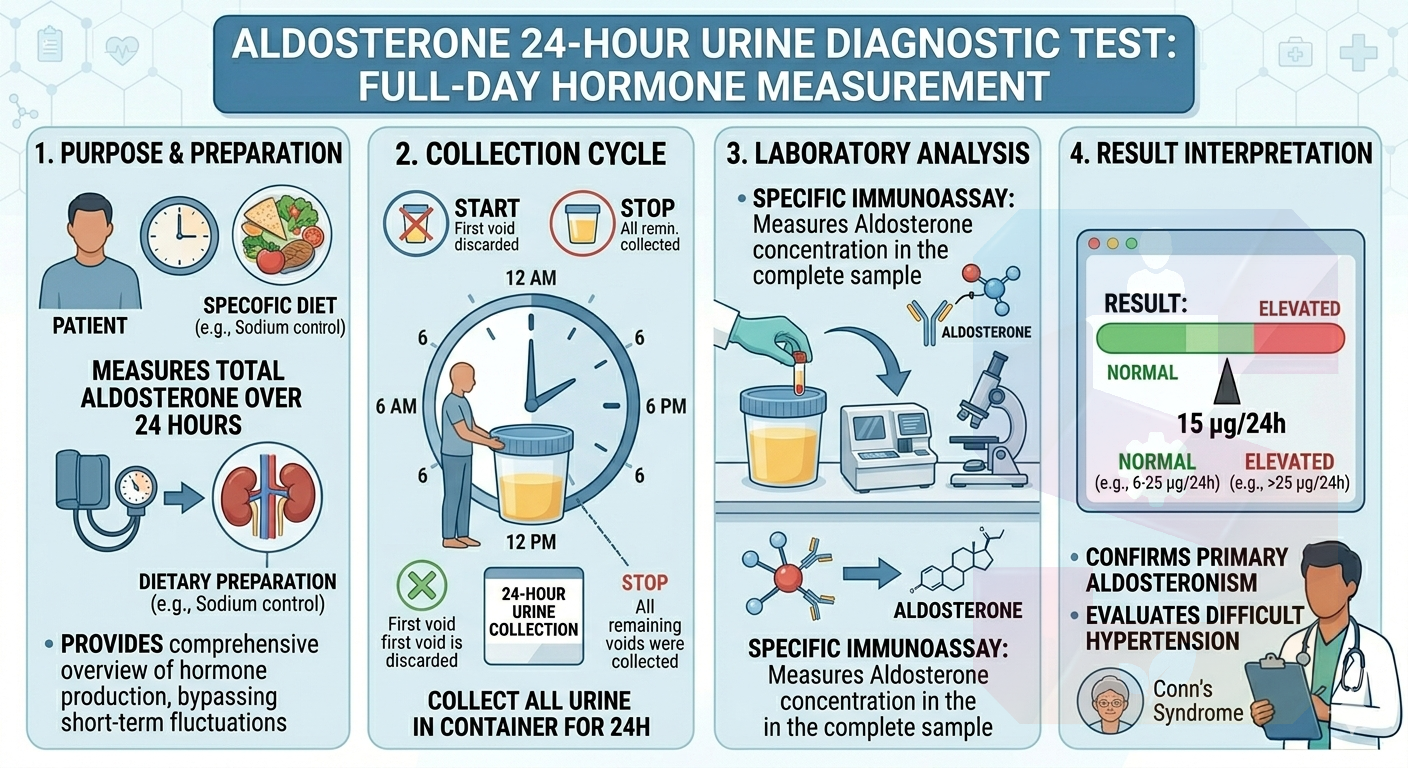
    An **Aldosterone 24-Hour Urine Diagnostic Test** measures the total amount of aldosterone excreted in urine over a full day. This provides a comprehensive overview of hormone production, bypassing the hourly fluctuations common in blood tests.

    To perform the test, a patient collects all urine passed within a 24-hour period into a specialized container.

    Clinicians typically order this test to confirm primary aldosteronism (Conn's syndrome) or evaluate cases of difficult-to-treat high blood pressure and low blood potassium. Because results depend heavily on diet, patients are often instructed to maintain a specific sodium intake prior to collection.
    An **Aldosterone 24-Hour Urine Diagnostic Test** measures the total amount of aldosterone excreted in urine over a full day. This provides a comprehensive overview of hormone production, bypassing the hourly fluctuations common in blood tests. To perform the test, a patient collects all urine passed within a 24-hour period into a specialized container. Clinicians typically order this test to confirm primary aldosteronism (Conn's syndrome) or evaluate cases of difficult-to-treat high blood pressure and low blood potassium. Because results depend heavily on diet, patients are often instructed to maintain a specific sodium intake prior to collection.
    0 Comments 0 Shares 567 Views 0 Reviews
  • Aldosterone Diagnostic test New
    2,440.00₹
    In stock
    Hyderabad
    0 Reviews
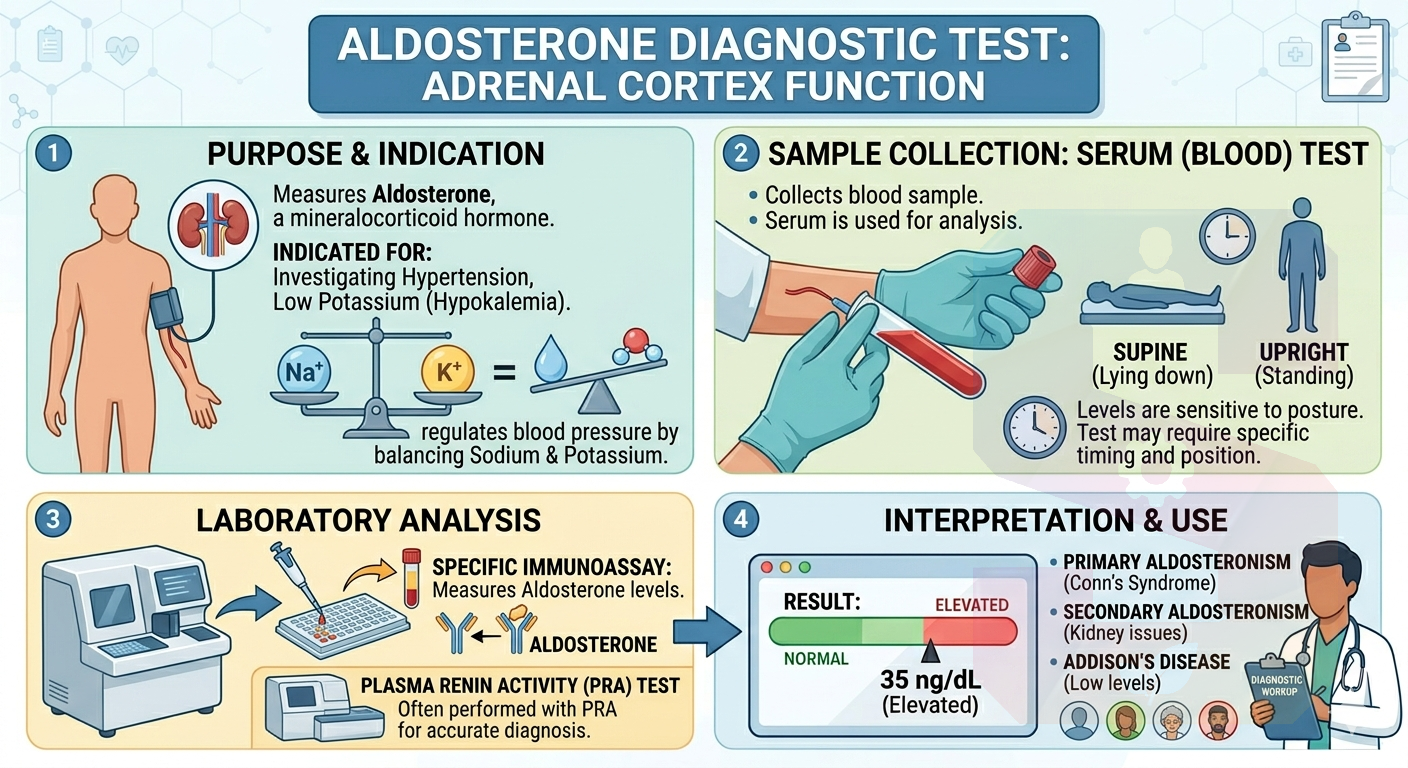
    An Aldosterone Diagnostic Test measures the level of aldosterone, a hormone produced by the adrenal glands that plays a critical role in regulating blood pressure. It controls how the kidneys balance essential electrolytes, specifically by retaining sodium and excreting potassium.

    Clinicians typically order this blood or 24-hour urine test to investigate primary aldosteronism (Conn's syndrome), unexplained high blood pressure, or low blood potassium levels. Because aldosterone levels fluctuate based on salt intake and body position, the test is frequently performed alongside a plasma renin activity (PRA) test to accurately evaluate underlying adrenal or kidney disorders.
    An Aldosterone Diagnostic Test measures the level of aldosterone, a hormone produced by the adrenal glands that plays a critical role in regulating blood pressure. It controls how the kidneys balance essential electrolytes, specifically by retaining sodium and excreting potassium. Clinicians typically order this blood or 24-hour urine test to investigate primary aldosteronism (Conn's syndrome), unexplained high blood pressure, or low blood potassium levels. Because aldosterone levels fluctuate based on salt intake and body position, the test is frequently performed alongside a plasma renin activity (PRA) test to accurately evaluate underlying adrenal or kidney disorders.
    0 Comments 0 Shares 517 Views 0 Reviews
  • Albumin - Creatinine Ratio (ACR) Spot Sample New
    900.00₹
    In stock
    Hyderabad
    0 Reviews
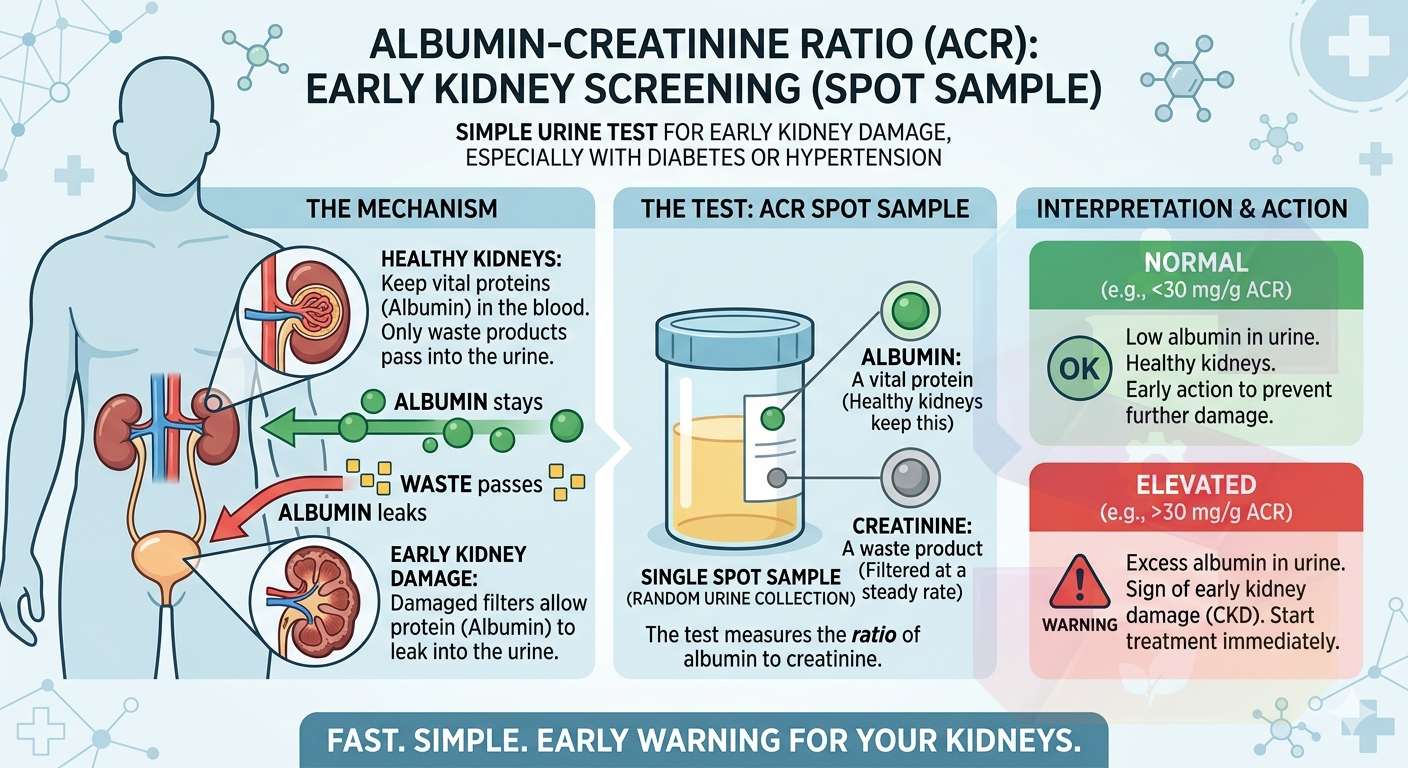
    The Albumin-Creatinine Ratio (ACR) test on a spot urine sample is a simple and highly effective screening tool used to detect early signs of kidney damage, particularly in individuals with diabetes or high blood pressure.

    Rather than requiring a cumbersome 24-hour urine collection, this test measures the amount of albumin (a vital protein) relative to creatinine (a waste product) in a single, random urine sample.

    Under normal conditions, healthy kidneys filter out waste while keeping large proteins like albumin in the blood. A high ACR ratio indicates that albumin is leaking into the urine, serving as an early warning sign of chronic kidney disease (CKD) so treatment can start immediately.
    The Albumin-Creatinine Ratio (ACR) test on a spot urine sample is a simple and highly effective screening tool used to detect early signs of kidney damage, particularly in individuals with diabetes or high blood pressure. Rather than requiring a cumbersome 24-hour urine collection, this test measures the amount of albumin (a vital protein) relative to creatinine (a waste product) in a single, random urine sample. Under normal conditions, healthy kidneys filter out waste while keeping large proteins like albumin in the blood. A high ACR ratio indicates that albumin is leaking into the urine, serving as an early warning sign of chronic kidney disease (CKD) so treatment can start immediately.
    0 Comments 0 Shares 416 Views 0 Reviews
  • CALMORIN TABLETS New
    510.00₹
    In stock
    Hyderabad
    0 Reviews
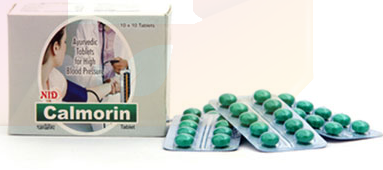
    HELPFUL IN HIGH BLOOD PRESSURE & SLEEP PROMOTER.
    Drawing inspiration from ancient wellness traditions, NID crafted this tablet to combat high blood pressure and associated sleep irregularities.
    This box consists of 100 tablets within 10 sheets (10 tablets in each sheet).
    HELPFUL IN HIGH BLOOD PRESSURE & SLEEP PROMOTER. Drawing inspiration from ancient wellness traditions, NID crafted this tablet to combat high blood pressure and associated sleep irregularities. This box consists of 100 tablets within 10 sheets (10 tablets in each sheet).
    0 Comments 0 Shares 2K Views 0 Reviews
  • ACTH (Adreno Corticotropic Hormone) Test New
    1,950.00₹
    In stock
    0 Reviews
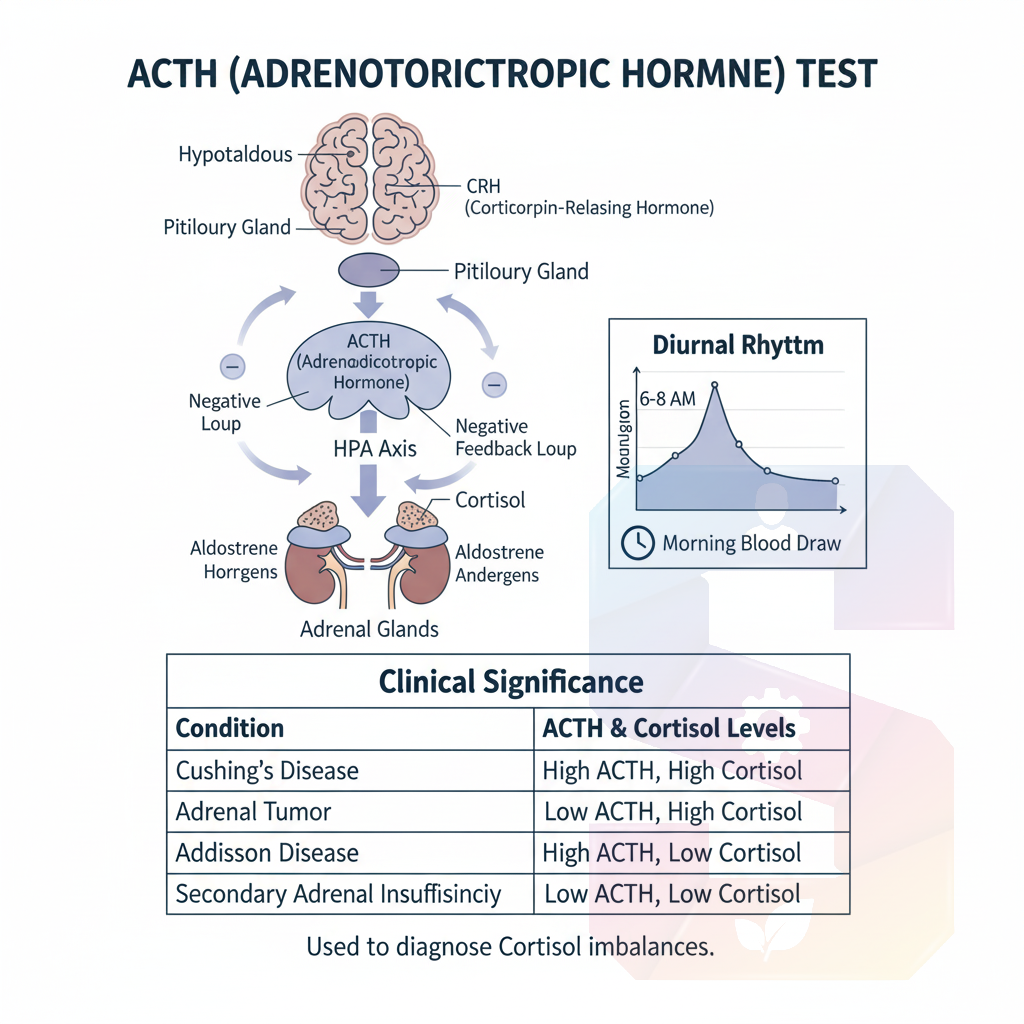
    The ACTH (Adrenocorticotropic Hormone) Test is a blood test that measures the amount of ACTH in your blood. ACTH is a hormone produced by the pituitary gland in the brain.

    🧠 The Hypothalamic-Pituitary-Adrenal (HPA) Axis
    To understand the ACTH test, it's essential to know about the HPA axis, which is a complex feedback system involving three glands:

    Hypothalamus: Releases Corticotropin-Releasing Hormone (CRH).

    Pituitary Gland: Stimulated by CRH, it releases ACTH.

    Adrenal Glands: Stimulated by ACTH, they release cortisol (and other adrenal hormones).

    Cortisol is a vital "stress hormone" involved in metabolism, immune response, blood pressure regulation, and more. When cortisol levels rise, they feed back to the hypothalamus and pituitary to inhibit CRH and ACTH production, creating a finely tuned balance.

    📝 What the Test Measures
    The ACTH test measures the level of ACTH, which helps to evaluate the function of the pituitary gland and adrenal glands and to determine the cause of imbalances in cortisol production.

    ⏰ Importance of Timing
    ACTH levels fluctuate throughout the day in a diurnal rhythm:

    They are highest in the early morning (around 6-8 AM).

    They gradually decrease throughout the day.

    They are lowest in the late evening/night.

    Therefore, the timing of the blood draw for an ACTH test is crucial, usually performed in the morning when levels are at their peak.

    🩺 Clinical Significance
    The ACTH test is used to diagnose and differentiate various conditions affecting the HPA axis, primarily related to excess or deficiency of cortisol.
    The ACTH (Adrenocorticotropic Hormone) Test is a blood test that measures the amount of ACTH in your blood. ACTH is a hormone produced by the pituitary gland in the brain. 🧠 The Hypothalamic-Pituitary-Adrenal (HPA) Axis To understand the ACTH test, it's essential to know about the HPA axis, which is a complex feedback system involving three glands: Hypothalamus: Releases Corticotropin-Releasing Hormone (CRH). Pituitary Gland: Stimulated by CRH, it releases ACTH. Adrenal Glands: Stimulated by ACTH, they release cortisol (and other adrenal hormones). Cortisol is a vital "stress hormone" involved in metabolism, immune response, blood pressure regulation, and more. When cortisol levels rise, they feed back to the hypothalamus and pituitary to inhibit CRH and ACTH production, creating a finely tuned balance. 📝 What the Test Measures The ACTH test measures the level of ACTH, which helps to evaluate the function of the pituitary gland and adrenal glands and to determine the cause of imbalances in cortisol production. ⏰ Importance of Timing ACTH levels fluctuate throughout the day in a diurnal rhythm: They are highest in the early morning (around 6-8 AM). They gradually decrease throughout the day. They are lowest in the late evening/night. Therefore, the timing of the blood draw for an ACTH test is crucial, usually performed in the morning when levels are at their peak. 🩺 Clinical Significance The ACTH test is used to diagnose and differentiate various conditions affecting the HPA axis, primarily related to excess or deficiency of cortisol.
    0 Comments 0 Shares 1K Views 0 Reviews
  • 24 Hours Urinary Sodium New
    300.00₹
    In stock
    0 Reviews
    The 24-Hour Urinary Sodium test measures the total amount of sodium (salt) excreted in the urine over a full 24-hour period. It is a key tool for evaluating the body's sodium balance, which is closely regulated by the kidneys and is vital for fluid balance, nerve function, and blood pressure control.
    Purpose and Significance Assessment of Sodium Intake: It is the most reliable way to estimate a person's average dietary salt intake, as sodium excretion generally equals intake over time in a stable state.
    Kidney Function: Helps determine if the kidneys are appropriately retaining or excreting sodium, particularly in relation to blood sodium levels.
    Differential Diagnosis: Used to help differentiate between causes of abnormal serum sodium levels (hyponatremia or hypernatremia) and acute kidney injury, distinguishing between kidney-related (renal) causes and fluid loss (pre-renal) causes.
    Monitoring Conditions: Useful for monitoring patients with conditions like hypertension (high blood pressure), congestive heart failure (CHF), cirrhosis, and adrenal gland disorders (e.g., hyperaldosteronism), which affect fluid and electrolyte balance.
    The 24-Hour Urinary Sodium test measures the total amount of sodium (salt) excreted in the urine over a full 24-hour period. It is a key tool for evaluating the body's sodium balance, which is closely regulated by the kidneys and is vital for fluid balance, nerve function, and blood pressure control. Purpose and Significance Assessment of Sodium Intake: It is the most reliable way to estimate a person's average dietary salt intake, as sodium excretion generally equals intake over time in a stable state. Kidney Function: Helps determine if the kidneys are appropriately retaining or excreting sodium, particularly in relation to blood sodium levels. Differential Diagnosis: Used to help differentiate between causes of abnormal serum sodium levels (hyponatremia or hypernatremia) and acute kidney injury, distinguishing between kidney-related (renal) causes and fluid loss (pre-renal) causes. Monitoring Conditions: Useful for monitoring patients with conditions like hypertension (high blood pressure), congestive heart failure (CHF), cirrhosis, and adrenal gland disorders (e.g., hyperaldosteronism), which affect fluid and electrolyte balance.
    0 Comments 0 Shares 1K Views 0 Reviews
  • 24 hour microalbumin creatinine ratio New
    800.00₹
    In stock
    Hyderabad
    0 Reviews
    The microalbumin-to-creatinine ratio (ACR) is a test that measures the amount of albumin and creatinine in a urine sample. It is a common and effective way to screen for early signs of kidney disease, especially in people with a high risk, such as those with diabetes or high blood pressure.
    ​While a "spot" or random urine sample is often used for this test, a 24-hour urine collection can also be done to get a more comprehensive picture of kidney function over a full day
    The microalbumin-to-creatinine ratio (ACR) is a test that measures the amount of albumin and creatinine in a urine sample. It is a common and effective way to screen for early signs of kidney disease, especially in people with a high risk, such as those with diabetes or high blood pressure. ​While a "spot" or random urine sample is often used for this test, a 24-hour urine collection can also be done to get a more comprehensive picture of kidney function over a full day
    0 Comments 0 Shares 3K Views 0 Reviews
Sponsored