

• 🌟 Colorful Kids Toilet Cubicles by Galaxy Cubicle India


    Safe, durable, and designed to make washroom spaces fun for children while ensuring privacy and hygiene.
    https://galaxycubicleindia.com/


    **** Now: +91-8178896458
    🌟 Colorful Kids Toilet Cubicles by Galaxy Cubicle India Safe, durable, and designed to make washroom spaces fun for children while ensuring privacy and hygiene. https://galaxycubicleindia.com/ Call Now: +91-8178896458
    0 Comments 0 Shares 122 Views 0 Reviews
  • Allergen, Individual Food - Egg White Anda New
    1,400.00₹
    In stock
    Hyderabad
    0 Reviews
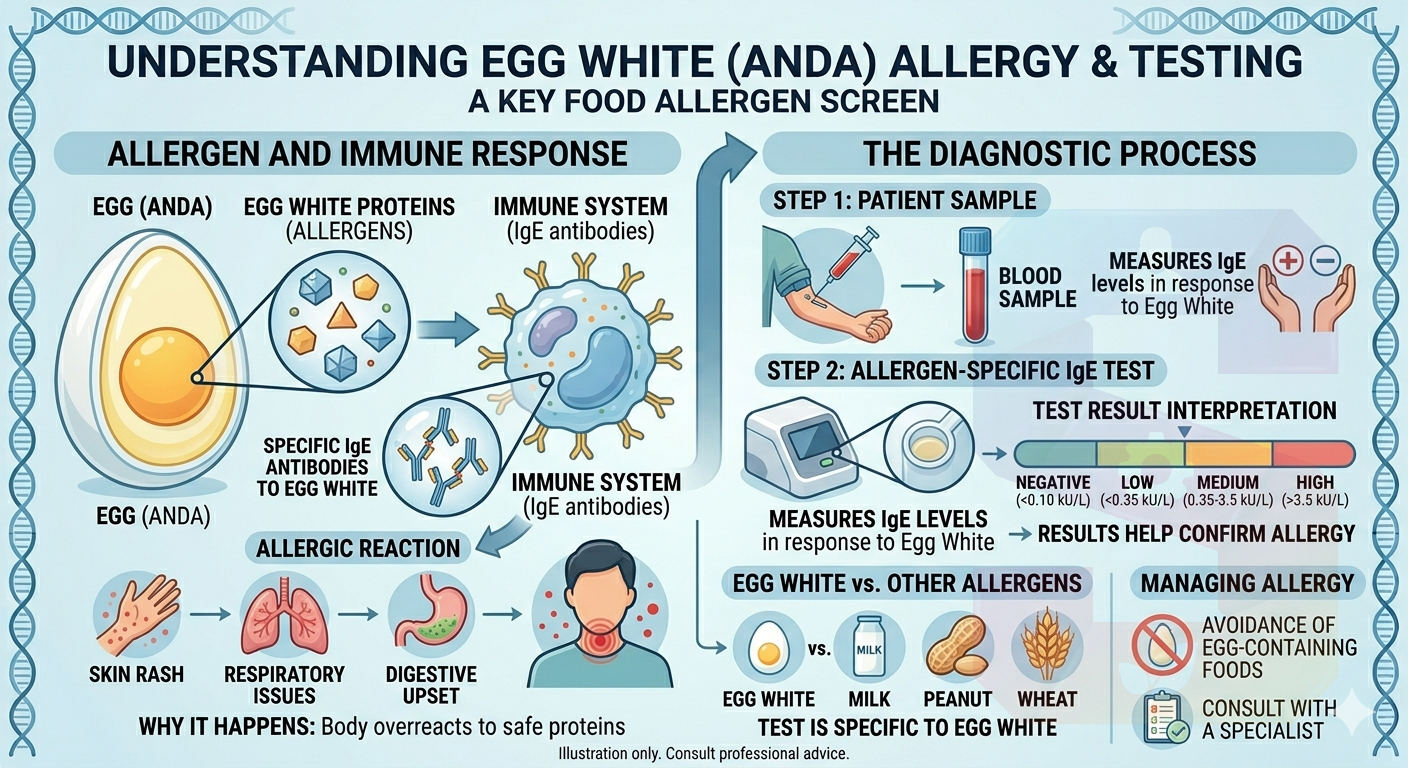
    An Egg White (Anda) Individual Food Allergen test is a specific blood test used to detect an allergic sensitivity to proteins found in egg whites. Egg allergy is one of the most common food allergies, particularly in children. While both the yolk and the white contain proteins, the white is typically the primary trigger for allergic reactions.

    The test measures the level of specific IgE antibodies produced by the immune system in response to egg white exposure. A positive result helps clinicians diagnose the allergy, allowing individuals to manage symptoms by avoiding egg-containing products and preventing potential reactions like hives, digestive distress, or anaphylaxis.
    An Egg White (Anda) Individual Food Allergen test is a specific blood test used to detect an allergic sensitivity to proteins found in egg whites. Egg allergy is one of the most common food allergies, particularly in children. While both the yolk and the white contain proteins, the white is typically the primary trigger for allergic reactions. The test measures the level of specific IgE antibodies produced by the immune system in response to egg white exposure. A positive result helps clinicians diagnose the allergy, allowing individuals to manage symptoms by avoiding egg-containing products and preventing potential reactions like hives, digestive distress, or anaphylaxis.
    0 Comments 0 Shares 407 Views 0 Reviews
  • AFB-Xpert Panel (M.Tb Detection & Rifamipicin resistance) by CBNAAT - pulmonary samples New
    2,750.00₹
    In stock
    Hyderabad
    0 Reviews
    An AFB-Xpert Panel (M.Tb Detection & Rifampicin Resistance) by CBNAAT for pulmonary samples is a highly efficient, automated molecular test. It serves as the frontline tool for rapidly diagnosing Tuberculosis (TB) in the lungs and checking if the bacteria are resistant to one of the most powerful first-line TB medications, Rifampicin.

    Unlike extra-pulmonary testing, which deals with fluids and tissues from other organs, pulmonary testing specifically evaluates secretions from the respiratory tract.

    1. What does the name mean?
    AFB: Acid-Fast Bacilli (the class of bacteria to which Mycobacterium tuberculosis belongs).

    CBNAAT: Cartridge-Based Nucleic Acid Amplification Test (commonly known as the GeneXpert test). It uses PCR technology to multiply and detect the DNA of the TB bacteria.

    Pulmonary samples: Samples originating from the lungs and respiratory airways.

    2. Common Pulmonary Sample Types
    Because pulmonary TB directly affects the lungs, the sample types are respiratory secretions:

    Sputum (Spontaneous): The thick mucus coughed up deeply from the lungs. This is the most common sample type.

    Induced Sputum: If a patient cannot cough up sputum naturally, they inhale a sterile saline mist to help loosen secretions.

    Bronchoalveolar Lavage (BAL): Fluid collected during a bronchoscopy, where a doctor passes a small scope into the lungs and flushes the area with saline. This is often used for complex or hard-to-diagnose cases.

    Gastric Aspirate/Lavage: Commonly used in young children who cannot expectorate (spit out) sputum and instead swallow their respiratory secretions overnight.
    An AFB-Xpert Panel (M.Tb Detection & Rifampicin Resistance) by CBNAAT for pulmonary samples is a highly efficient, automated molecular test. It serves as the frontline tool for rapidly diagnosing Tuberculosis (TB) in the lungs and checking if the bacteria are resistant to one of the most powerful first-line TB medications, Rifampicin. Unlike extra-pulmonary testing, which deals with fluids and tissues from other organs, pulmonary testing specifically evaluates secretions from the respiratory tract. 1. What does the name mean? AFB: Acid-Fast Bacilli (the class of bacteria to which Mycobacterium tuberculosis belongs). CBNAAT: Cartridge-Based Nucleic Acid Amplification Test (commonly known as the GeneXpert test). It uses PCR technology to multiply and detect the DNA of the TB bacteria. Pulmonary samples: Samples originating from the lungs and respiratory airways. 2. Common Pulmonary Sample Types Because pulmonary TB directly affects the lungs, the sample types are respiratory secretions: Sputum (Spontaneous): The thick mucus coughed up deeply from the lungs. This is the most common sample type. Induced Sputum: If a patient cannot cough up sputum naturally, they inhale a sterile saline mist to help loosen secretions. Bronchoalveolar Lavage (BAL): Fluid collected during a bronchoscopy, where a doctor passes a small scope into the lungs and flushes the area with saline. This is often used for complex or hard-to-diagnose cases. Gastric Aspirate/Lavage: Commonly used in young children who cannot expectorate (spit out) sputum and instead swallow their respiratory secretions overnight.
    0 Comments 0 Shares 651 Views 0 Reviews
  • 25 OH Vitamin D Blood Test New
    1,280.00₹
    In stock
    0 Reviews
    25 OH Vitamin D blood test, often called the Vitamin D Test, is the most accurate way to measure the body's vitamin D status.
    Purpose Assess Vitamin D Status: Measures the main circulating form of Vitamin D (Calcidiol), reflecting total intake from sun exposure, diet, and supplements.
    Diagnose Deficiency or Insufficiency: Used to determine if levels are too low, which can lead to bone disorders like rickets in children and osteomalacia/osteoporosis in adults.
    Monitor Treatment: Evaluates the effectiveness of vitamin D supplementation in patients with diagnosed deficiency.
    Investigate Abnormal Calcium/Phosphate: Used in the workup for conditions affecting calcium metabolism, bone health, or parathyroid function.
    25 OH Vitamin D blood test, often called the Vitamin D Test, is the most accurate way to measure the body's vitamin D status. Purpose Assess Vitamin D Status: Measures the main circulating form of Vitamin D (Calcidiol), reflecting total intake from sun exposure, diet, and supplements. Diagnose Deficiency or Insufficiency: Used to determine if levels are too low, which can lead to bone disorders like rickets in children and osteomalacia/osteoporosis in adults. Monitor Treatment: Evaluates the effectiveness of vitamin D supplementation in patients with diagnosed deficiency. Investigate Abnormal Calcium/Phosphate: Used in the workup for conditions affecting calcium metabolism, bone health, or parathyroid function.
    0 Comments 0 Shares 1K Views 0 Reviews
  • 7q Deletion/Monosomy (MDS), Heparin Bone Marrow New
    5,195.00₹
    In stock
    0 Reviews
    This refers to the loss of part or all of chromosome 7's long arm (q-arm), or the entire chromosome, which is a significant cytogenetic abnormality in Myelodysplastic Syndromes (MDS) and often associated with a poorer prognosis.
    Genetic Abnormality:
    Monosomy 7 (-7): Complete loss of one copy of chromosome 7. This is the most common and generally carries the worst prognosis among 7q abnormalities.
    Deletion of 7q : Partial loss of the long arm of chromosome 7. The commonly deleted region (CDR) is typically located at 7q22-7q32.
    Association with Other Conditions: Can occur as a sole abnormality in de novo MDS.
    Frequently seen in therapy-related MDS (t-MDS) and therapy-related Acute Myeloid Leukemia (t-AML), particularly after exposure to alkylating agents or topoisomerase II inhibitors.
    Also associated with MDS in children, especially those with inherited bone marrow failure syndromes (e.g., Fanconi anemia, GATA2 deficiency).

    Clinical Features: Often associated with bicytopenia or pancytopenia (low counts of two or more cell lines), including severe anemia, neutropenia, and thrombocytopenia.
    Increased risk of infections due to neutropenia.
    Higher risk of progression to Acute Myeloid Leukemia (AML) compared to other MDS subtypes, especially with monosomy 7.
    This refers to the loss of part or all of chromosome 7's long arm (q-arm), or the entire chromosome, which is a significant cytogenetic abnormality in Myelodysplastic Syndromes (MDS) and often associated with a poorer prognosis. Genetic Abnormality: Monosomy 7 (-7): Complete loss of one copy of chromosome 7. This is the most common and generally carries the worst prognosis among 7q abnormalities. Deletion of 7q : Partial loss of the long arm of chromosome 7. The commonly deleted region (CDR) is typically located at 7q22-7q32. Association with Other Conditions: Can occur as a sole abnormality in de novo MDS. Frequently seen in therapy-related MDS (t-MDS) and therapy-related Acute Myeloid Leukemia (t-AML), particularly after exposure to alkylating agents or topoisomerase II inhibitors. Also associated with MDS in children, especially those with inherited bone marrow failure syndromes (e.g., Fanconi anemia, GATA2 deficiency). Clinical Features: Often associated with bicytopenia or pancytopenia (low counts of two or more cell lines), including severe anemia, neutropenia, and thrombocytopenia. Increased risk of infections due to neutropenia. Higher risk of progression to Acute Myeloid Leukemia (AML) compared to other MDS subtypes, especially with monosomy 7.
    0 Comments 0 Shares 1K Views 0 Reviews
Sponsored