

• Blood C/S - Bact T/ Alert (with bottle) New
    1,045.00₹
    In stock
    All over India
    0 Reviews
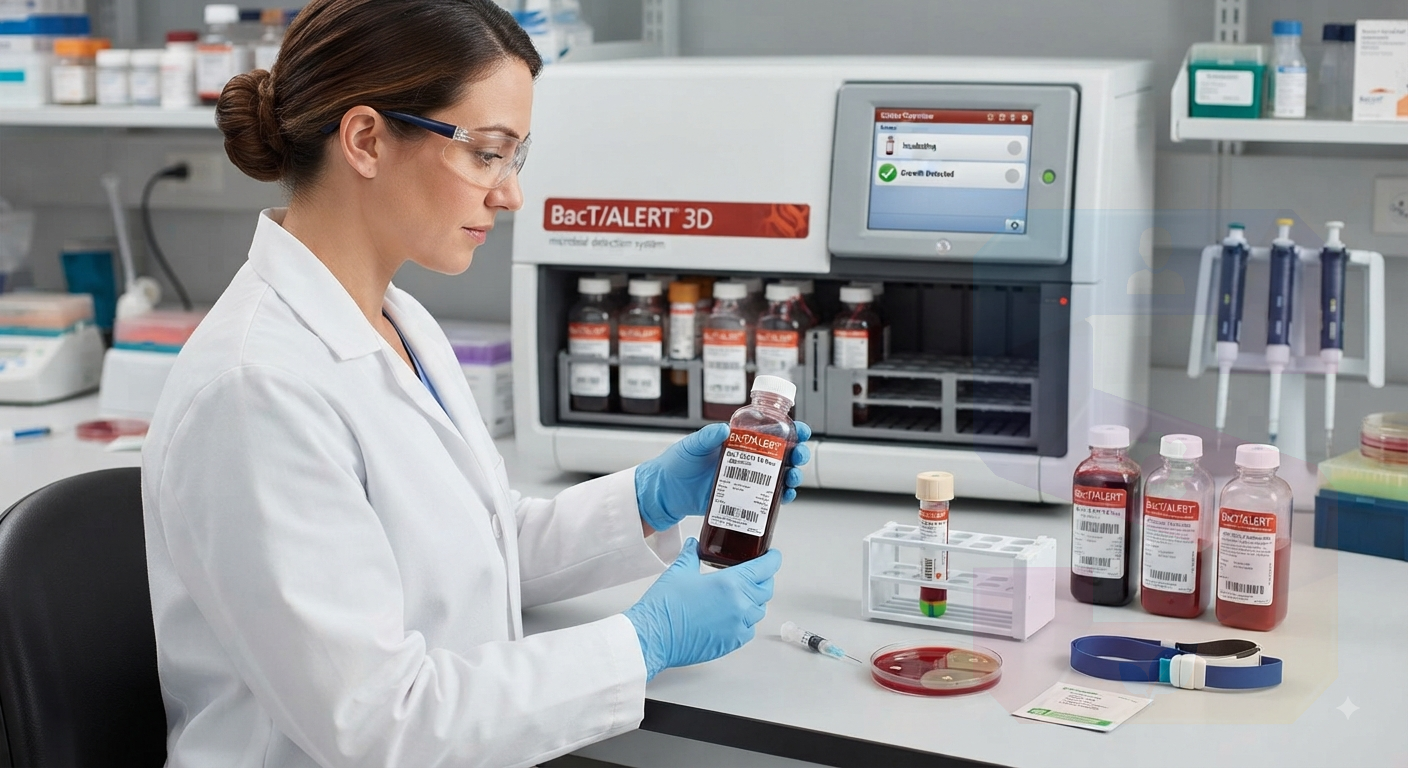
    The Blood Culture and Sensitivity (C/S) test using the BacT/ALERT system is a vital diagnostic procedure designed to detect bloodstream infections. A blood sample is inoculated into specialized culture bottles containing growth media that encourage the proliferation of bacteria or fungi.
    The BacT/ALERT instrument continuously incubates and monitors these bottles using advanced colorimetric sensor technology to detect microbial metabolism. When positive growth is flagged, technicians perform identification and susceptibility testing to determine the precise pathogen and effective antimicrobial treatments, guiding targeted clinical therapy for severe systemic infections.

    The Blood Culture and Sensitivity (C/S) test using the BacT/ALERT system is a vital diagnostic procedure designed to detect bloodstream infections. A blood sample is inoculated into specialized culture bottles containing growth media that encourage the proliferation of bacteria or fungi. The BacT/ALERT instrument continuously incubates and monitors these bottles using advanced colorimetric sensor technology to detect microbial metabolism. When positive growth is flagged, technicians perform identification and susceptibility testing to determine the precise pathogen and effective antimicrobial treatments, guiding targeted clinical therapy for severe systemic infections.
    0 Comments 0 Shares 266 Views 0 Reviews
  • B K Polyoma virus DNA detection by RT- PCR, Urine Test New
    4,800.00₹
    In stock
    All over India
    0 Reviews
    The BK Polyoma Virus DNA Detection RT-PCR Urine Test is a highly sensitive diagnostic assay used to identify and quantify the genetic material of the BK polyomavirus (BKV) in a urine sample.
    Most commonly ordered for kidney transplant recipients and immunocompromised individuals, this test monitors viral reactivation when suppressed immune systems allow the dormant virus to replicate. Real-time polymerase chain reaction (RT-PCR) technology provides precise viral load measurements, serving as an early-warning indicator to help clinicians prevent serious complications like nephropathy or graft rejection.
    The BK Polyoma Virus DNA Detection RT-PCR Urine Test is a highly sensitive diagnostic assay used to identify and quantify the genetic material of the BK polyomavirus (BKV) in a urine sample. Most commonly ordered for kidney transplant recipients and immunocompromised individuals, this test monitors viral reactivation when suppressed immune systems allow the dormant virus to replicate. Real-time polymerase chain reaction (RT-PCR) technology provides precise viral load measurements, serving as an early-warning indicator to help clinicians prevent serious complications like nephropathy or graft rejection.
    0 Comments 0 Shares 271 Views 0 Reviews
  • BCR-ABL qualitative - EDTA whole blood New
    4,777.00₹
    In stock
    All over India
    0 Reviews
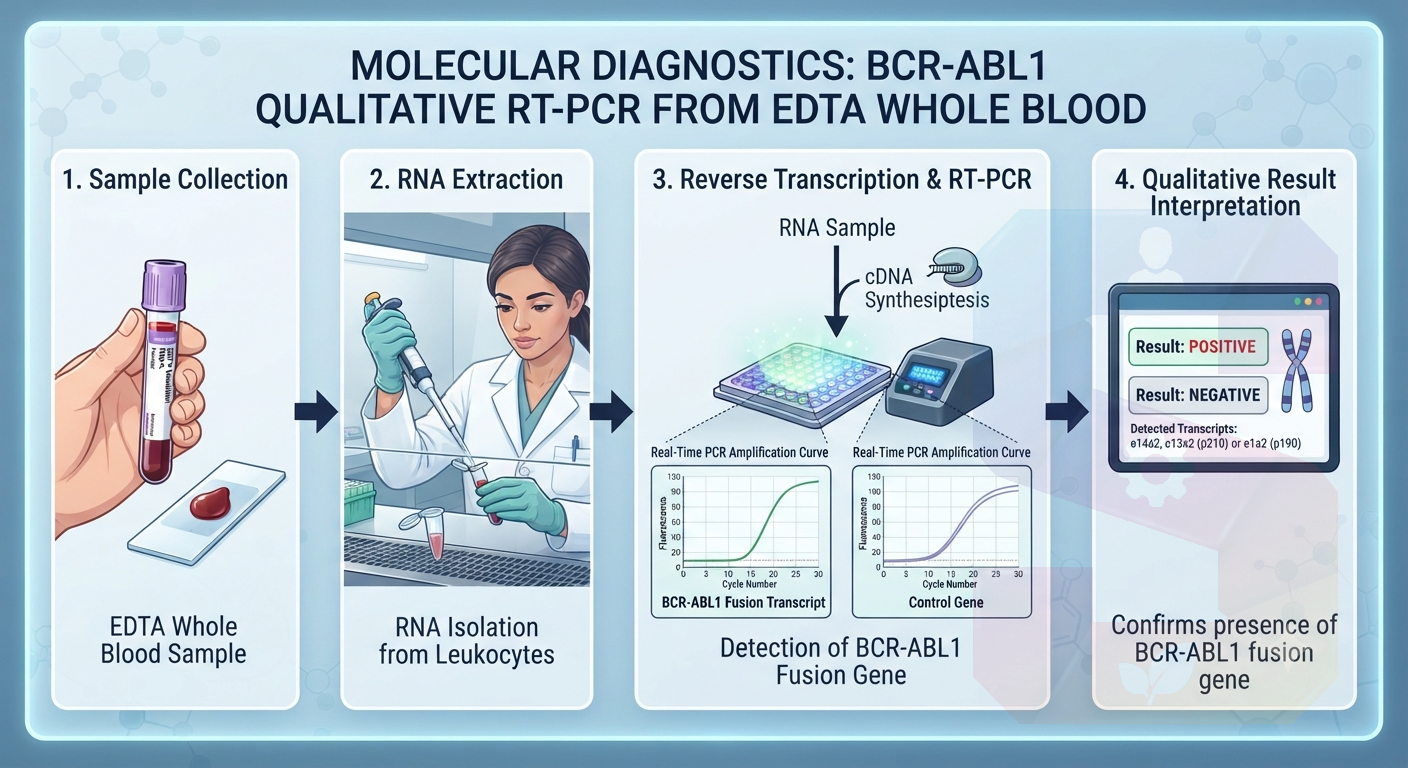
    The BCR-ABL qualitative test performed on EDTA whole blood is a specialized molecular assay designed to detect the presence of the BCR-ABL fusion gene transcript, commonly known as the Philadelphia chromosome. This genetic abnormality is a hallmark of chronic myeloid leukemia (CML) and certain types of acute lymphoblastic leukemia (ALL). By utilizing reverse transcription-polymerase chain reaction (RT-PCR) technology, the test identifies whether the specific gene rearrangement is present or absent in the patient's blood sample. It serves as a crucial initial diagnostic tool to confirm clinical suspicion, guide targeted therapies, and support personalized treatment planning for hematological malignancies.
    The BCR-ABL qualitative test performed on EDTA whole blood is a specialized molecular assay designed to detect the presence of the BCR-ABL fusion gene transcript, commonly known as the Philadelphia chromosome. This genetic abnormality is a hallmark of chronic myeloid leukemia (CML) and certain types of acute lymphoblastic leukemia (ALL). By utilizing reverse transcription-polymerase chain reaction (RT-PCR) technology, the test identifies whether the specific gene rearrangement is present or absent in the patient's blood sample. It serves as a crucial initial diagnostic tool to confirm clinical suspicion, guide targeted therapies, and support personalized treatment planning for hematological malignancies.
    0 Comments 0 Shares 909 Views 0 Reviews
  • Anti Ds-DNA Antibody (IFA) serum New
    1,820.00₹
    In stock
    India
    0 Reviews
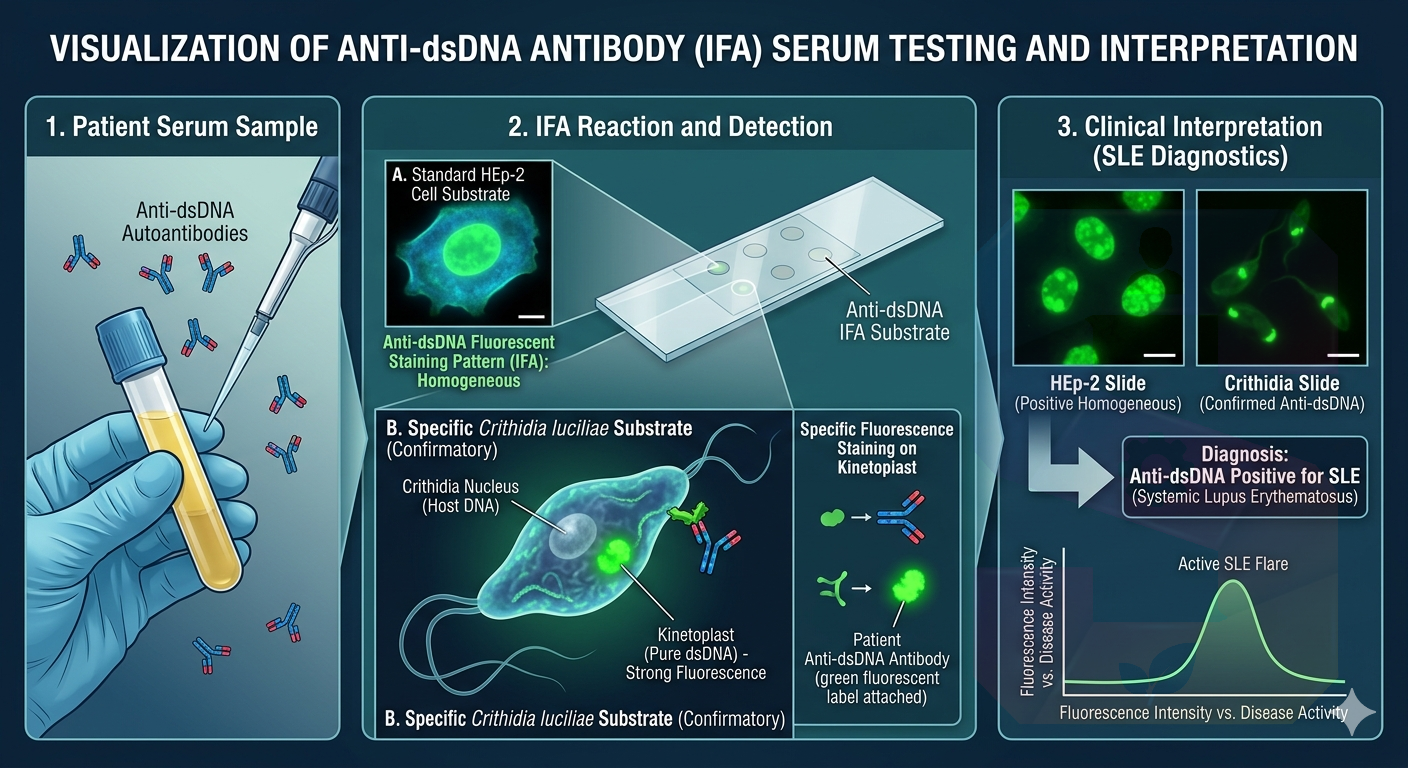
    An **Anti-dsDNA Antibody (IFA) Serum** test utilizes Indirect Immunofluorescence Assay (IFA) technology to detect autoantibodies targeting double-stranded DNA. This specialized method often employs *Crithidia luciliae* as a substrate, providing a highly specific substrate (the kinetoplast) to definitively confirm a **Systemic Lupus Erythematosus (SLE)** diagnosis.

    By visualizing the fluorescent staining patterns under a microscope, clinicians can accurately differentiate lupus from other autoimmune conditions. Because positive IFA results correlate strongly with active **lupus nephritis**, this serum test serves as a critical biomarker for monitoring disease severity, predicting renal flares, and guiding clinical immunosuppressive therapies.
    An **Anti-dsDNA Antibody (IFA) Serum** test utilizes Indirect Immunofluorescence Assay (IFA) technology to detect autoantibodies targeting double-stranded DNA. This specialized method often employs *Crithidia luciliae* as a substrate, providing a highly specific substrate (the kinetoplast) to definitively confirm a **Systemic Lupus Erythematosus (SLE)** diagnosis. By visualizing the fluorescent staining patterns under a microscope, clinicians can accurately differentiate lupus from other autoimmune conditions. Because positive IFA results correlate strongly with active **lupus nephritis**, this serum test serves as a critical biomarker for monitoring disease severity, predicting renal flares, and guiding clinical immunosuppressive therapies.
    0 Comments 0 Shares 693 Views 0 Reviews
  • ANCA by IFA reflex MPO/PR3 Antibodies Serum diagnostic test New
    2,600.00₹
    In stock
    Hyderabad
    0 Reviews
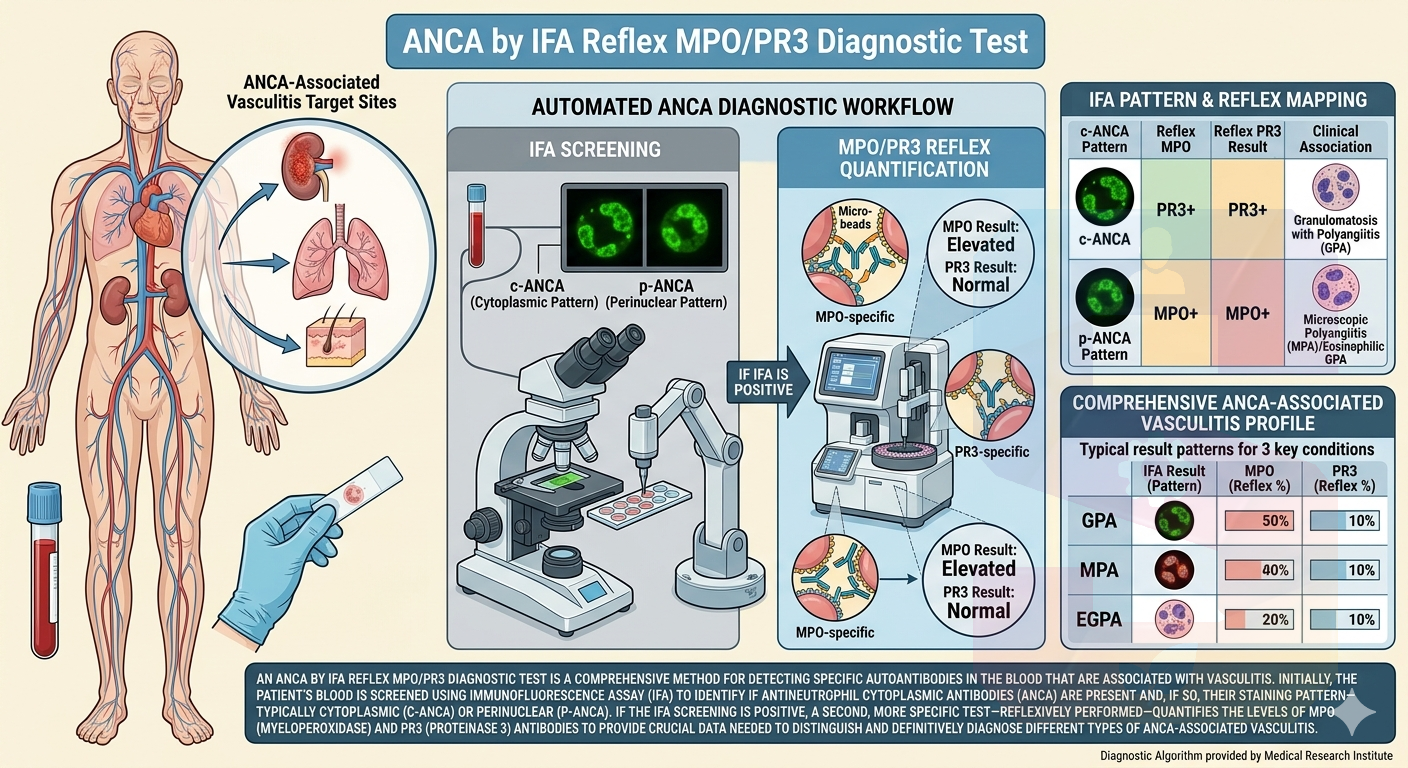
    An ANCA by IFA reflex MPO/PR3 serum diagnostic test is a highly specific method used for diagnosing and monitoring ANCA-associated vasculitis (AAV), a rare group of autoimmune diseases that affect small to medium blood vessels.

    The test begins with an indirect immunofluorescence assay (IFA) on human serum. This initial step determines the presence of antineutrophil cytoplasmic antibodies (ANCA) and characterizes their staining pattern, typically as either cytoplasmic (c-ANCA) or perinuclear (p-ANCA). If the IFA test yields a positive result, a reflex test is automatically performed. This reflex step uses enzyme-linked immunosorbent assay (ELISA) technology to precisely measure the concentration of antibodies specific for myeloperoxidase (MPO) and proteinase 3 (PR3).

    This combined diagnostic approach provides comprehensive data, enabling healthcare providers to accurately identify the specific ANCA-associated vasculitis type, such as granulomatosis with polyangiitis (GPA), microscopic polyangiitis (MPA), or eosinophilic granulomatosis with polyangiitis (EGPA), and initiate appropriate treatment strategies.
    An ANCA by IFA reflex MPO/PR3 serum diagnostic test is a highly specific method used for diagnosing and monitoring ANCA-associated vasculitis (AAV), a rare group of autoimmune diseases that affect small to medium blood vessels. The test begins with an indirect immunofluorescence assay (IFA) on human serum. This initial step determines the presence of antineutrophil cytoplasmic antibodies (ANCA) and characterizes their staining pattern, typically as either cytoplasmic (c-ANCA) or perinuclear (p-ANCA). If the IFA test yields a positive result, a reflex test is automatically performed. This reflex step uses enzyme-linked immunosorbent assay (ELISA) technology to precisely measure the concentration of antibodies specific for myeloperoxidase (MPO) and proteinase 3 (PR3). This combined diagnostic approach provides comprehensive data, enabling healthcare providers to accurately identify the specific ANCA-associated vasculitis type, such as granulomatosis with polyangiitis (GPA), microscopic polyangiitis (MPA), or eosinophilic granulomatosis with polyangiitis (EGPA), and initiate appropriate treatment strategies.
    0 Comments 0 Shares 778 Views 0 Reviews
  • Allergy panel-others Adult (Comprehensive) Panel parameters (By IMMUNO-EIA) New
    17,400.00₹
    In stock
    Hyderabad
    0 Reviews
    The Allergy Panel-Others Adult (Comprehensive) Panel (By IMMUNO-EIA) is an advanced blood test designed to evaluate specific IgE-mediated responses to a broad spectrum of miscellaneous and unconventional allergens. Utilizing high-precision Enzyme Immunoassay (EIA) technology, this panel measures antibody concentrations triggered by environmental and occupational factors not covered in standard panels.

    It typically evaluates parameters such as latex, common indoor and outdoor molds, occupational chemicals, and regional tree or grass pollens. Essential for adults presenting with unexplained respiratory issues, hives, or systemic reactions, this comprehensive panel helps clinicians pinpoint specific hidden triggers to formulate effective, tailored allergen-avoidance plans.
    The Allergy Panel-Others Adult (Comprehensive) Panel (By IMMUNO-EIA) is an advanced blood test designed to evaluate specific IgE-mediated responses to a broad spectrum of miscellaneous and unconventional allergens. Utilizing high-precision Enzyme Immunoassay (EIA) technology, this panel measures antibody concentrations triggered by environmental and occupational factors not covered in standard panels. It typically evaluates parameters such as latex, common indoor and outdoor molds, occupational chemicals, and regional tree or grass pollens. Essential for adults presenting with unexplained respiratory issues, hives, or systemic reactions, this comprehensive panel helps clinicians pinpoint specific hidden triggers to formulate effective, tailored allergen-avoidance plans.
    0 Comments 0 Shares 1K Views 0 Reviews
  • Allergy - Vegetarian Panel (By IMMUNO-EIA) Diagnostic Test New
    7,800.00₹
    In stock
    Hyderabad
    0 Reviews
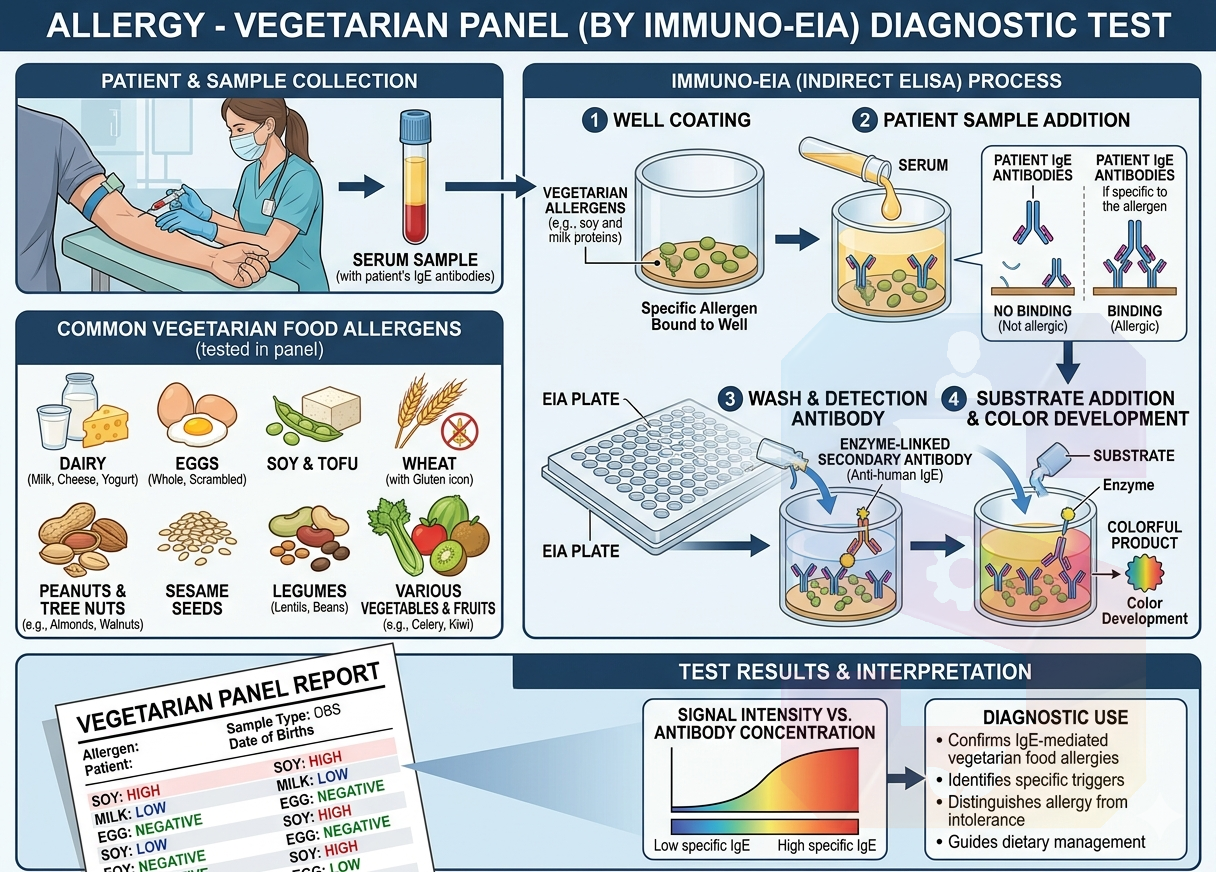
    The Allergy - Vegetarian Panel (By IMMUNO-EIA) is a focused diagnostic blood test designed to identify specific IgE-mediated allergic reactions to common vegetarian food sources. This comprehensive panel utilizes Enzyme Immunoassay (EIA) technology to measure the concentration of allergen-specific antibodies in response to a range of plant-based proteins.

    The panel typically screens for sensitivities to key vegetarian staples, such as soy, wheat (gluten), peanuts, various tree nuts, legumes, and seeds. It is particularly valuable for individuals following a vegetarian or vegan diet who experience symptoms like hives, digestive distress, or respiratory issues after meals. By precisely pinpointing the plant-based triggers, this diagnostic tool enables healthcare providers to create targeted dietary management plans, effectively distinguishing true food allergies from other food intolerances to ensure nutritional safety.
    The Allergy - Vegetarian Panel (By IMMUNO-EIA) is a focused diagnostic blood test designed to identify specific IgE-mediated allergic reactions to common vegetarian food sources. This comprehensive panel utilizes Enzyme Immunoassay (EIA) technology to measure the concentration of allergen-specific antibodies in response to a range of plant-based proteins. The panel typically screens for sensitivities to key vegetarian staples, such as soy, wheat (gluten), peanuts, various tree nuts, legumes, and seeds. It is particularly valuable for individuals following a vegetarian or vegan diet who experience symptoms like hives, digestive distress, or respiratory issues after meals. By precisely pinpointing the plant-based triggers, this diagnostic tool enables healthcare providers to create targeted dietary management plans, effectively distinguishing true food allergies from other food intolerances to ensure nutritional safety.
    0 Comments 0 Shares 1K Views 0 Reviews
  • Allergy - Non-vegetarian Panel (By IMMUNO-EIA) Diagnostic Test New
    7,150.00₹
    In stock
    Hyderabad
    0 Reviews
    The Allergy - Non-vegetarian Panel (By IMMUNO-EIA) is a specialized blood test designed to identify specific IgE-mediated allergic reactions to various meats, poultry, and seafood. Utilizing advanced Enzyme Immunoassay (EIA) technology, this comprehensive panel measures the concentration of antibodies triggered by consuming non-vegetarian foods.

    The test typically screens for individual sensitivities to common proteins found in chicken, mutton, beef, pork, fish, and shellfish. It is vital for individuals experiencing hives, gastrointestinal distress, or anaphylaxis after meals. This accurate diagnostic tool helps clinicians distinguish true food allergies from food intolerances to guide safe dietary management.
    The Allergy - Non-vegetarian Panel (By IMMUNO-EIA) is a specialized blood test designed to identify specific IgE-mediated allergic reactions to various meats, poultry, and seafood. Utilizing advanced Enzyme Immunoassay (EIA) technology, this comprehensive panel measures the concentration of antibodies triggered by consuming non-vegetarian foods. The test typically screens for individual sensitivities to common proteins found in chicken, mutton, beef, pork, fish, and shellfish. It is vital for individuals experiencing hives, gastrointestinal distress, or anaphylaxis after meals. This accurate diagnostic tool helps clinicians distinguish true food allergies from food intolerances to guide safe dietary management.
    0 Comments 0 Shares 1K Views 0 Reviews
  • AFB-M.Tb detection with 1st line drug resistance (Rifampicin and Isoniazid resistance) by CBNAAT New
    3,300.00₹
    In stock
    Hyderabad
    0 Reviews
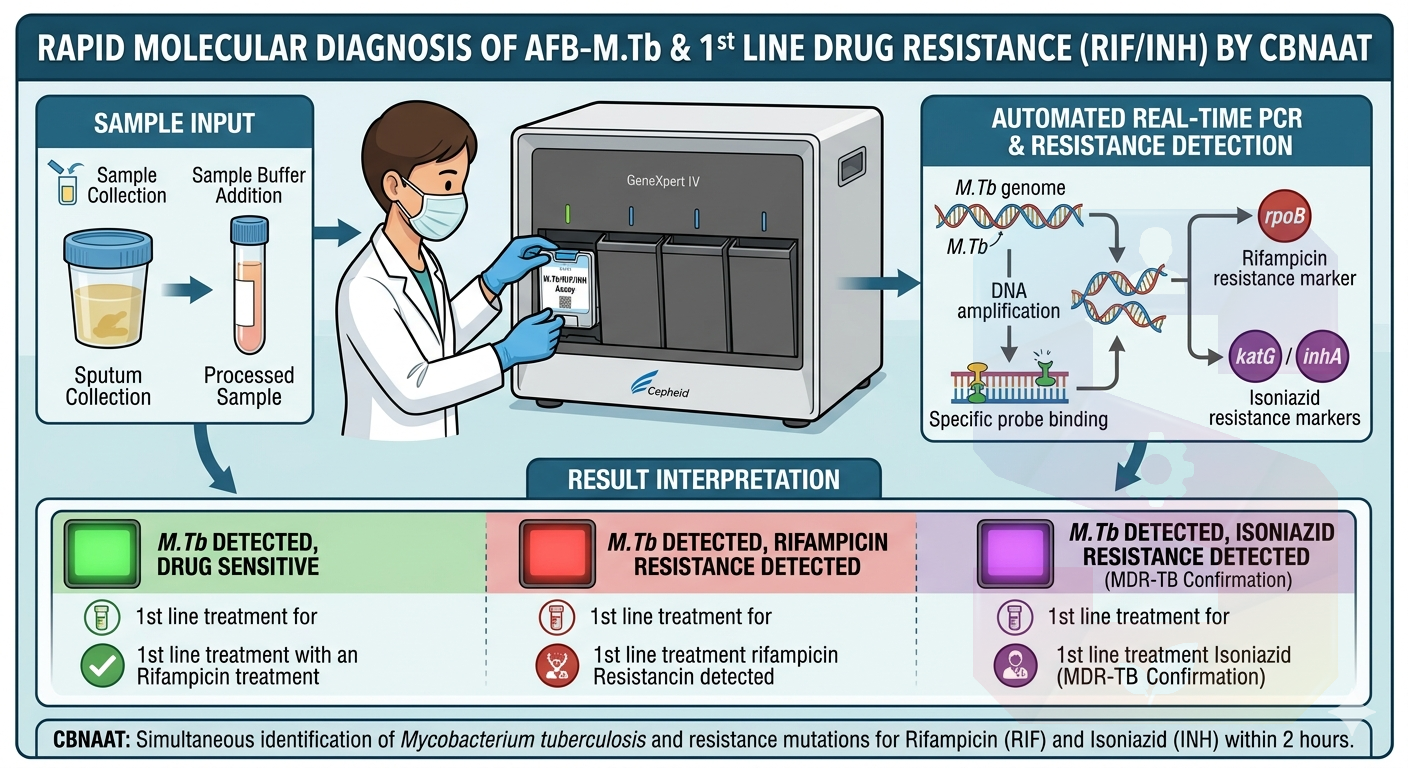
    This rapid, automated DNA test detects active Tuberculosis (M.Tb) and checks for resistance to the two most critical first-line TB medications: Rifampicin and Isoniazid.

    Using advanced CBNAAT (GeneXpert) technology, the test analyzes samples (like sputum, fluid, or tissue) to identify bacterial DNA within hours. Simultaneously, it maps genetic mutations responsible for drug resistance.

    By confirming whether the infection is standard TB or drug-resistant TB (such as MDR-TB), this test prevents critical treatment delays. It allows doctors to bypass weeks of traditional lab cultures and immediately prescribe the most effective, lifesaving antibiotic regimen.
    This rapid, automated DNA test detects active Tuberculosis (M.Tb) and checks for resistance to the two most critical first-line TB medications: Rifampicin and Isoniazid. Using advanced CBNAAT (GeneXpert) technology, the test analyzes samples (like sputum, fluid, or tissue) to identify bacterial DNA within hours. Simultaneously, it maps genetic mutations responsible for drug resistance. By confirming whether the infection is standard TB or drug-resistant TB (such as MDR-TB), this test prevents critical treatment delays. It allows doctors to bypass weeks of traditional lab cultures and immediately prescribe the most effective, lifesaving antibiotic regimen.
    0 Comments 0 Shares 599 Views 0 Reviews
  • AFB-M.Tb detection (M.Tb/NTM Detection) by CBNAAT Tissue New
    2,700.00₹
    In stock
    Hyderabad
    0 Reviews
    This is an advanced, rapid molecular test used to detect tuberculosis (TB) or other similar infections directly from a small piece of body tissue (obtained via a biopsy or minor surgical procedure).

    It uses a technology called CBNAAT (Cartridge-Based Nucleic Acid Amplification Test), famously known as the GeneXpert test. Instead of waiting weeks to grow bacteria in a lab, this machine looks directly for the genetic material (DNA) of the bacteria, giving highly accurate results in just a few hours.

    When is a tissue sample used?
    While TB is most common in the lungs, it can also infect other parts of the body—this is known as Extrapulmonary TB. Doctors recommend this test on tissue samples when they suspect TB in areas like:

    Lymph nodes (swellings in the neck, armpits, etc.)

    Skin or bone tissue

    Gastrointestinal tissue

    Other internal organs

    What does the test detect?
    The test checks for three crucial things simultaneously:

    M.Tb (Mycobacterium tuberculosis): The specific bacteria that causes traditional Tuberculosis.

    NTM (Nontuberculous Mycobacteria): A different family of environmental bacteria. NTM can cause tissue infections that look exactly like TB but require completely different antibiotics to cure.

    Rifampicin Resistance: It instantly checks if the bacteria are resistant to Rifampicin (a major first-line TB medicine). This tells your doctor immediately if a standard treatment will work or if a specialized, stronger regimen is required.
    This is an advanced, rapid molecular test used to detect tuberculosis (TB) or other similar infections directly from a small piece of body tissue (obtained via a biopsy or minor surgical procedure). It uses a technology called CBNAAT (Cartridge-Based Nucleic Acid Amplification Test), famously known as the GeneXpert test. Instead of waiting weeks to grow bacteria in a lab, this machine looks directly for the genetic material (DNA) of the bacteria, giving highly accurate results in just a few hours. When is a tissue sample used? While TB is most common in the lungs, it can also infect other parts of the body—this is known as Extrapulmonary TB. Doctors recommend this test on tissue samples when they suspect TB in areas like: Lymph nodes (swellings in the neck, armpits, etc.) Skin or bone tissue Gastrointestinal tissue Other internal organs What does the test detect? The test checks for three crucial things simultaneously: M.Tb (Mycobacterium tuberculosis): The specific bacteria that causes traditional Tuberculosis. NTM (Nontuberculous Mycobacteria): A different family of environmental bacteria. NTM can cause tissue infections that look exactly like TB but require completely different antibiotics to cure. Rifampicin Resistance: It instantly checks if the bacteria are resistant to Rifampicin (a major first-line TB medicine). This tells your doctor immediately if a standard treatment will work or if a specialized, stronger regimen is required.
    0 Comments 0 Shares 800 Views 0 Reviews
  • AFB-M.Tb detection (M.Tb/NTM Detection) by CBNAAT Sputum New
    2,700.00₹
    In stock
    Hyderabad
    0 Reviews
    This is a modern, rapid molecular test used to detect tuberculosis (TB) from a cough sample (sputum). It uses an advanced technology called CBNAAT (Cartridge-Based Nucleic Acid Amplification Test), commonly known as the GeneXpert test.

    Instead of just looking for the bacteria under a microscope, this test looks directly for the DNA of the bacteria, making it incredibly fast and accurate.

    What does the test detect?
    The test checks for three major things at the same time:

    M.Tb (Mycobacterium tuberculosis): The bacteria responsible for causing active Tuberculosis.

    NTM (Nontuberculous Mycobacteria): A different family of environmental bacteria that can mimic TB symptoms but requires completely different treatment.

    Rifampicin Resistance: It checks if the TB bacteria are resistant to Rifampicin, one of the main medicines used to cure TB. This helps doctors know immediately if a stronger treatment plan is needed.

    Why is this test preferred over routine tests?
    Speed: Gives accurate results within a few hours, whereas traditional bacterial cultures can take weeks.

    High Accuracy: It can find TB bacteria even if there is only a tiny amount present in the sputum sample (which routine microscopy often misses).

    Clear Distinction: It tells the doctor exactly whether you have standard TB or an NTM infection, preventing the wrong medicine from being prescribed.
    This is a modern, rapid molecular test used to detect tuberculosis (TB) from a cough sample (sputum). It uses an advanced technology called CBNAAT (Cartridge-Based Nucleic Acid Amplification Test), commonly known as the GeneXpert test. Instead of just looking for the bacteria under a microscope, this test looks directly for the DNA of the bacteria, making it incredibly fast and accurate. What does the test detect? The test checks for three major things at the same time: M.Tb (Mycobacterium tuberculosis): The bacteria responsible for causing active Tuberculosis. NTM (Nontuberculous Mycobacteria): A different family of environmental bacteria that can mimic TB symptoms but requires completely different treatment. Rifampicin Resistance: It checks if the TB bacteria are resistant to Rifampicin, one of the main medicines used to cure TB. This helps doctors know immediately if a stronger treatment plan is needed. Why is this test preferred over routine tests? Speed: Gives accurate results within a few hours, whereas traditional bacterial cultures can take weeks. High Accuracy: It can find TB bacteria even if there is only a tiny amount present in the sputum sample (which routine microscopy often misses). Clear Distinction: It tells the doctor exactly whether you have standard TB or an NTM infection, preventing the wrong medicine from being prescribed.
    0 Comments 0 Shares 833 Views 0 Reviews
  • AFB-M.Tb detection (M.Tb/NTM Detection) by CBNAAT Ascitic Fluid New
    2,700.00₹
    In stock
    Hyderabad
    0 Reviews
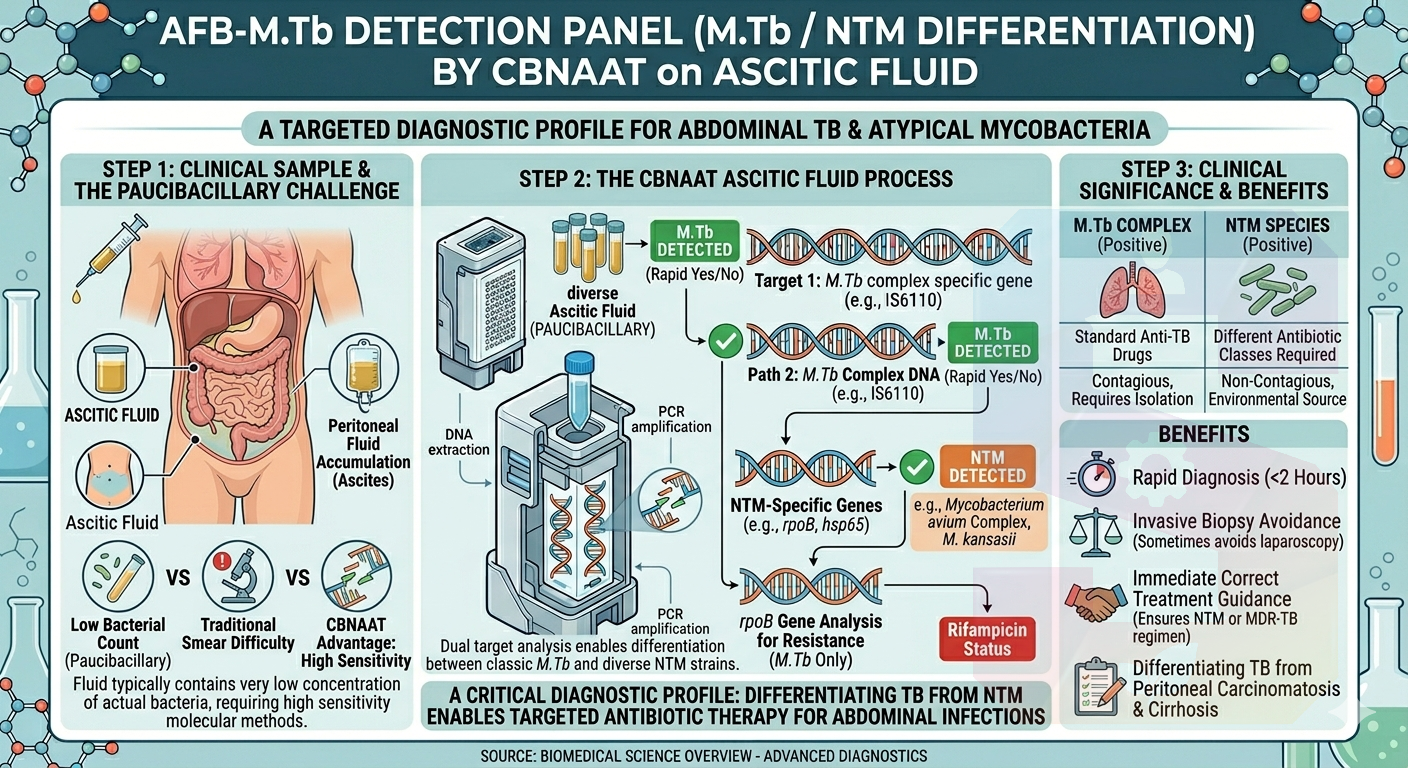
    An AFB-M.Tb Detection (M.Tb/NTM Detection) by CBNAAT on Ascitic Fluid is a targeted molecular diagnostic test designed to identify tuberculosis infections within the peritoneal (abdominal) cavity.

    This specific test is a frontline tool for diagnosing Tuberculous Peritonitis (abdominal TB). What makes this panel unique is its dual capability: it not only checks for the classic Mycobacterium tuberculosis complex but also differentiates it from NTM (Non-Tuberculous Mycobacteria), which require completely different clinical treatment strategies.

    1. Breaking Down the Terminology
    M.Tb: Mycobacterium tuberculosis, the primary pathogen responsible for classic tuberculosis.

    NTM: Non-Tuberculous Mycobacteria (also known as atypical mycobacteria). These are environmental organisms that can mimic TB symptoms and presentation but do not respond to standard anti-TB medications.

    CBNAAT: Cartridge-Based Nucleic Acid Amplification Test. It uses automated, rapid Polymerase Chain Reaction (PCR) technology to detect the specific DNA signatures of these organisms.

    Ascitic Fluid: The fluid that builds up in the peritoneal cavity of the abdomen (a condition called ascites) due to inflammation, infection, or other medical conditions.
    An AFB-M.Tb Detection (M.Tb/NTM Detection) by CBNAAT on Ascitic Fluid is a targeted molecular diagnostic test designed to identify tuberculosis infections within the peritoneal (abdominal) cavity. This specific test is a frontline tool for diagnosing Tuberculous Peritonitis (abdominal TB). What makes this panel unique is its dual capability: it not only checks for the classic Mycobacterium tuberculosis complex but also differentiates it from NTM (Non-Tuberculous Mycobacteria), which require completely different clinical treatment strategies. 1. Breaking Down the Terminology M.Tb: Mycobacterium tuberculosis, the primary pathogen responsible for classic tuberculosis. NTM: Non-Tuberculous Mycobacteria (also known as atypical mycobacteria). These are environmental organisms that can mimic TB symptoms and presentation but do not respond to standard anti-TB medications. CBNAAT: Cartridge-Based Nucleic Acid Amplification Test. It uses automated, rapid Polymerase Chain Reaction (PCR) technology to detect the specific DNA signatures of these organisms. Ascitic Fluid: The fluid that builds up in the peritoneal cavity of the abdomen (a condition called ascites) due to inflammation, infection, or other medical conditions.
    0 Comments 0 Shares 798 Views 0 Reviews
More Results
Sponsored