


Asafoetida (Hing): The Pungent "Red Gold" of Modern Spice Markets
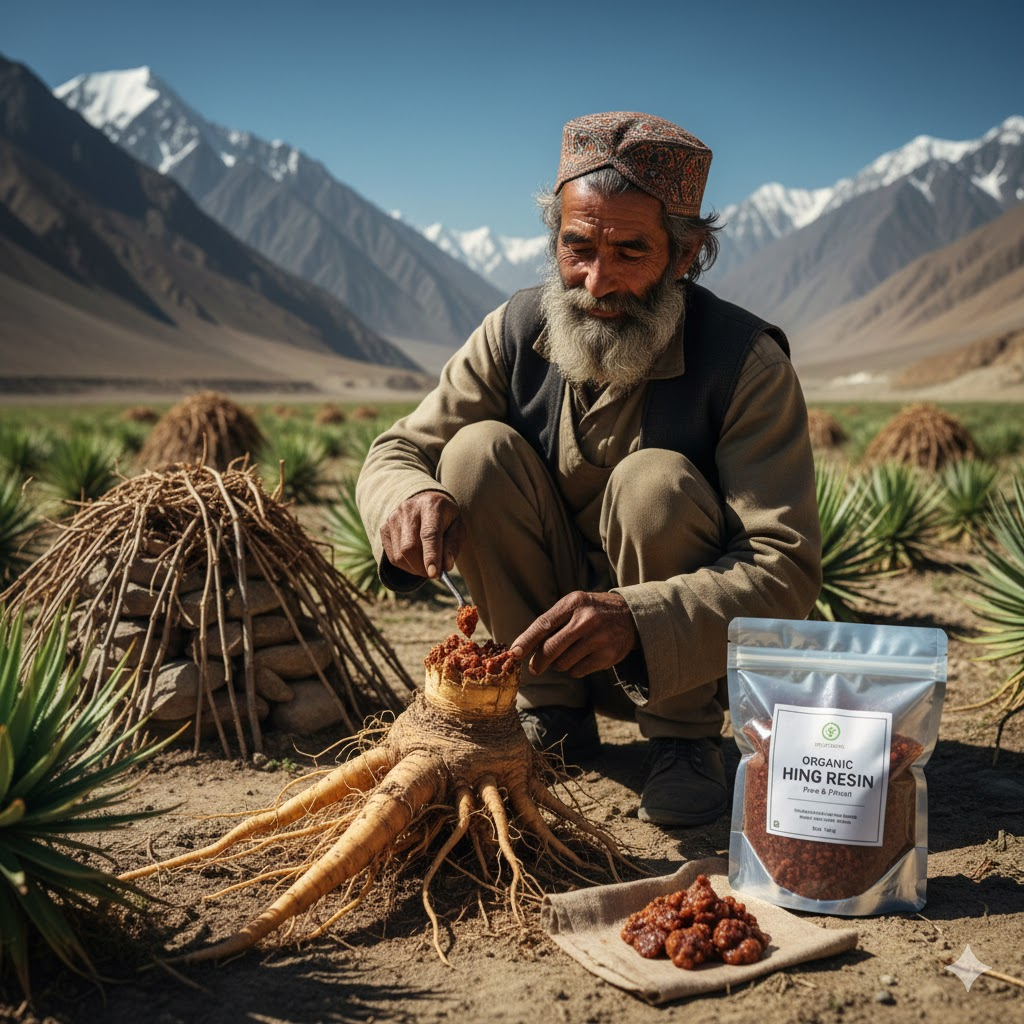
Asafoetida, commonly known as Hing, is one of the most intriguing and profitable commodities in the global spice trade. Derived from the oleo-gum resin of the Ferula plant, it is moving beyond traditional kitchens and into the spotlight of international food tech and wellness.
Historically, the world relied on wild harvests from high-altitude regions like Afghanistan and Iran. However, recent breakthroughs in domestic cultivation and "clean-label" processing are transforming it into a strategic asset for modern agribusiness.
1. Cultivation: The High-Altitude Long Game
Growing Asafoetida is a test of patience and precision. It is a perennial herb that requires specific environmental conditions to thrive.
-
The Climate: Thrives in cold, arid, high-altitude deserts. It needs a temperature range of $-4°C$ to $40°C$ and very low annual rainfall (200–300 mm).
-
Soil Requirements: Prefers well-drained, sandy-loam soil. The plant is highly sensitive to waterlogging, which can rot the valuable resin-producing taproots.
-
The Maturity Cycle: A plant takes 5 years to mature before it can be tapped for resin. Once established, it becomes a reliable source of income for years.
2. Harvesting: The Art of Resin Extraction
The extraction of Hing remains an artisanal process that requires specialized technical knowledge.
-
Tapping: Just before the plant flowers, the upper part of the taproot is exposed, and the stem is cut near the crown.
-
Exudation: A milky white sap (latex) seeps out. This sap hardens into reddish-brown resin lumps when exposed to air.
-
Collection: Harvesters scrape off the hardened resin every few days. A single mature plant can yield 25 to 30 grams of Hing per season.
-
Processing: Raw resin is extremely potent. Most commercial Hing is "Compounded," blended with gum arabic and flour to create the user-friendly powder found in stores.
3. Industrial & Wellness Trends
Hing is currently experiencing a "renaissance" due to its functional health benefits and culinary versatility:
-
The Ultimate Digestive Aid: Known for its anti-spasmodic and anti-flatulent properties, it is a staple in high-fiber diets and Ayurvedic formulations.
-
All-Natural Flavor Enhancer: As vegan and plant-based diets grow, Hing is used as a primary onion and garlic substitute, providing deep umami flavor without the digestive triggers of alliums.
-
Functional Food Ingredient: Manufacturers are now using microencapsulated Hing to create odor-controlled powders for Western ready-to-eat meals and snack seasonings.
4. Agricultural Profitability: A Niche Market Powerhouse
The economics of Asafoetida are driven by high demand and limited supply sources.
| Metric | Market Outlook |
| Market Value | The global market is expanding steadily, with the Asia-Pacific region accounting for over 60% of demand. |
| Profit Margins | Raw resin is one of the world's most expensive spices, with premium grades fetching significant prices in international trade. |
| Sustainability | Growing Hing aligns with organic and low-input farming models, attracting premium "clean-label" buyers. |
| Export Potential | Demand is surging in North America and Europe, driven by the Indian diaspora and a growing interest in Ayurvedic wellness. |
5. Usage Pro-Tip
To unlock the best flavor and health benefits, always sizzle a pinch of Hing in hot oil (tempering) for a few seconds. This mellows its sulfurous raw aroma into a savory scent similar to sautéed leeks, while activating the essential oils that aid digestion.
Conclusion
Asafoetida is a bridge between ancient tradition and 21st-century agricultural innovation. With its high value-to-volume ratio and increasing use in the pharmaceutical and food sectors, it offers a stable, long-term opportunity for those willing to master its unique cultivation.
