


The Silent Pandemic: Global Road Traffic Deaths Hit 1.19 Million Annually
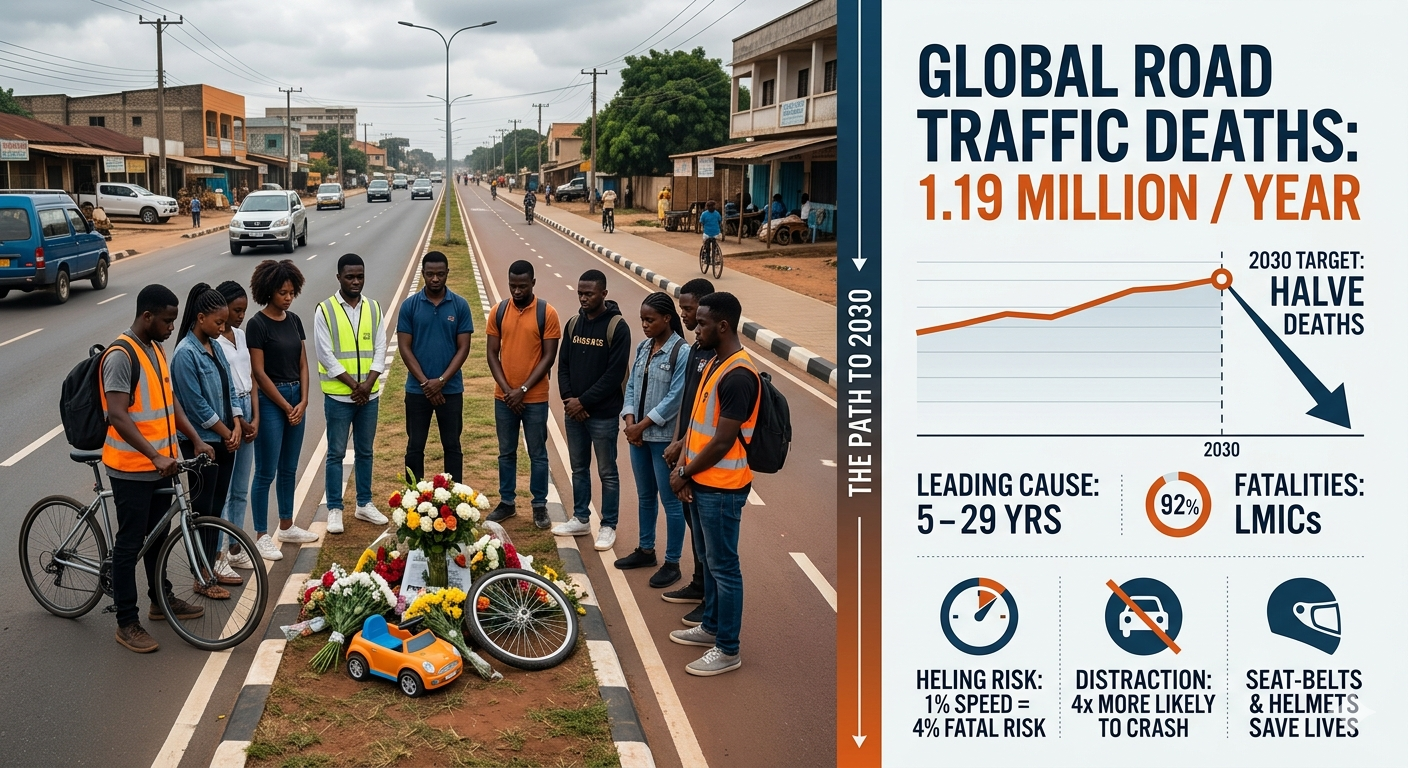
GENEVA — New data from the World Health Organization (WHO) reveals a staggering toll on global health: road traffic crashes are now the leading cause of death for children and young adults aged 5–29. With approximately 1.19 million lives lost every year, international health officials are calling for urgent systemic reforms to meet the UN goal of halving fatalities by 2030.
Beyond the tragic loss of life, these incidents leave millions more with permanent disabilities and create a massive economic vacuum, costing most nations roughly 3% of their annual GDP.
A Crisis of Inequality
The report highlights a sharp divide between wealthy and developing nations. While low- and middle-income countries own only 60% of the world's registered vehicles, they bear a disproportionate 92% of the global death toll.
There is also a significant gender disparity in the data: males account for 73% of all road traffic deaths, making them three times more likely than females to die in a crash.
The Top Five Killers on the Road
The WHO identifies five critical risk factors that contribute to the majority of fatal incidents:
-
Excessive Speed: Every 1% increase in average speed raises the risk of a fatal crash by 4%.
-
DUI & Substance Use: Driving under the influence of alcohol or drugs like amphetamines dramatically spikes the likelihood of a high-impact collision.
-
The Distraction Factor: Drivers using mobile phones are four times more likely to crash, with reaction times slowed significantly by screen time.
-
Non-use of Protective Gear: Despite their proven efficacy, the inconsistent use of helmets and seat-belts remains a primary cause of preventable death.
-
Unsafe Infrastructure: Roads designed without dedicated lanes for pedestrians and cyclists put the most vulnerable users at extreme risk.
Simple Solutions, Massive Impact
Health experts emphasize that the technology to save lives already exists and is relatively simple to implement:
-
Helmets: Correct usage reduces the risk of fatal head injuries by over six times.
-
Seat-belts: Wearing a belt reduces the risk of death for front-seat occupants by 45–50%.
-
Child Restraints: Proper car seats can reduce infant deaths by up to 71%.
The Path to 2030: The "Safe System" Approach
The WHO is championing a "Safe System" approach, which accepts that humans will inevitably make mistakes. Instead of blaming the driver alone, this strategy focuses on creating a multi-layered safety net:
-
Safe Speeds: Lowering limits in high-pedestrian areas.
-
Safe Vehicles: Mandating electronic stability control and advanced braking systems.
-
Safe Roads: Designing infrastructure that physically separates different types of traffic.
"Road traffic deaths are preventable. The 2030 target to halve these deaths is ambitious but achievable if governments prioritize human life over vehicle speed."
— WHO Fact Sheet Summary
Drive Safe. Stay Focused. Save Lives.
