


Future-Proofing Interior Design Firms with AI Technology
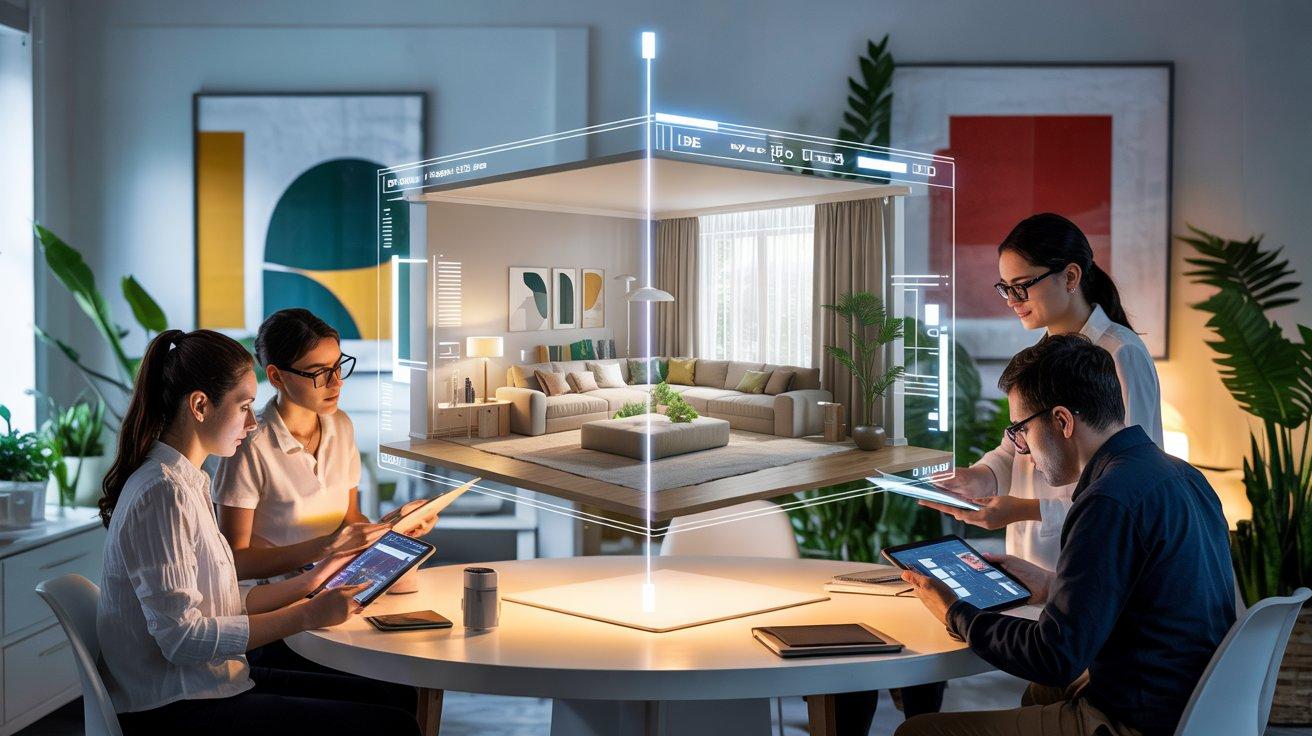
Interior design is entering a phase where creativity alone is no longer enough to stay competitive. Firms are now expected to operate with the precision of tech companies, the agility of startups, and the creative depth of traditional design studios. That combination is reshaping how the entire industry functions.
Artificial intelligence is at the center of this transformation. It is not replacing designers or diminishing creativity. Instead, it is strengthening decision-making, improving operational systems, and allowing firms to scale without losing control over quality. The firms that adapt early are not just becoming more efficient—they are building long-term resilience.
Future-proofing an interior design firm is no longer about buying better software. It is about redesigning how information flows, how teams collaborate, and how design decisions are supported by intelligent systems.
Why Interior Design Firms Need a Future-Proof Strategy
Interior design has become significantly more complex over the last decade. Projects now involve global sourcing, remote collaboration, tighter deadlines, and higher client expectations. At the same time, product data, specifications, and procurement workflows have multiplied in complexity.
Many firms still rely on fragmented systems: spreadsheets for product tracking, emails for approvals, PDFs for documentation, and separate tools for design visualization. This creates operational gaps that slow down execution and increase the risk of errors.
A future-proof strategy focuses on unifying these disconnected workflows into a connected digital ecosystem. AI acts as the layer that brings intelligence into that ecosystem, reducing manual effort and improving consistency across every stage of a project.
The goal is not automation for its own sake. It is stability at scale.
How AI Is Reshaping Interior Design Operations
AI is changing interior design in ways that go far beyond visualization tools or concept generation. Its real value lies in operational intelligence.
For example, AI can help analyze product data, detect inconsistencies in specifications, flag missing information in schedules, and even suggest alternatives when items become unavailable. These small improvements compound across large projects, saving hours of manual coordination.
More importantly, AI introduces predictive capability. Instead of reacting to problems like delayed lead times or specification conflicts, firms can anticipate them earlier in the workflow.
This shift from reactive to proactive decision-making is one of the most important transformations happening in the industry today.
It allows design teams to focus less on administrative firefighting and more on creative direction and client experience.
The New Role of Data in Design Firms
Data has quietly become one of the most valuable assets in interior design. Every project generates thousands of data points—product selections, pricing updates, material specifications, vendor details, and installation requirements.
The challenge is not collecting this data. It is organizing it in a way that supports decision-making.
When data is fragmented across tools and team members, it loses value. AI helps unify and structure this information so that it becomes usable in real time.
This is where platforms like SpecSources are becoming increasingly relevant. By centralizing design data, product information, and specification workflows in one place, such systems help firms eliminate duplication and reduce the risk of working with outdated information.
When combined with AI capabilities, structured platforms like this become more than storage systems. They become operational intelligence hubs that support every stage of a project lifecycle.
From Manual Coordination to Intelligent Collaboration
One of the biggest challenges in interior design firms is coordination between teams. Designers, procurement managers, project coordinators, and consultants often work in parallel but not always in sync.
AI is helping bridge that gap.
Instead of relying on constant email updates or manual document sharing, intelligent systems can synchronize changes across teams automatically. When a product specification is updated, for example, that change can reflect instantly across schedules, procurement lists, and project dashboards.
This reduces miscommunication and eliminates the delays caused by version confusion.
Collaboration becomes more fluid, not because people are communicating more, but because systems are communicating better.
That subtle shift dramatically improves project execution quality.
Why Firms Struggle Without AI Integration
Many design firms still hesitate to adopt AI-driven workflows because they believe their current systems are “good enough.” The problem is that inefficiencies are often invisible until a project scales.
Small issues like inconsistent product naming, delayed approvals, or missing specification details may not seem critical individually. But across multiple projects, they accumulate into significant operational drag.
Without AI integration, firms spend more time managing information than using it strategically.
This creates a ceiling on growth. Teams become overloaded, project timelines stretch, and quality control becomes harder to maintain as workload increases.
AI does not eliminate these challenges entirely, but it reduces their frequency and impact, allowing firms to scale more confidently.
Future-Proofing Through Workflow Intelligence
Future-proofing is not just about adopting new tools. It is about designing workflows that can adapt to change.
Interior design firms that rely heavily on manual processes often struggle when project complexity increases. AI-driven workflows, on the other hand, are designed to evolve with data.
For example, when a firm handles more projects, AI systems can learn patterns from past work—such as common specification issues, frequently delayed products, or recurring design decisions—and use that insight to improve future outcomes.
This creates a feedback loop where each project makes the next one more efficient.
Over time, firms become not just more productive but more intelligent in how they operate.
The Shift Toward Integrated Design Ecosystems
The future of interior design is not about isolated tools. It is about integrated ecosystems where design, specification, sourcing, and procurement all work together.
AI plays a key role in making that integration meaningful. It ensures that information does not just move between systems but also remains consistent and actionable.
For example, when design decisions are made in a modeling environment, those decisions should seamlessly connect to specification systems, procurement workflows, and client documentation.
This level of integration reduces friction and ensures that every stakeholder is working from the same source of truth.
Firms that achieve this level of alignment gain a significant competitive advantage in both speed and accuracy.
Enhancing Creativity Through Operational Efficiency
There is a misconception that AI and automation reduce creativity. In practice, the opposite is often true.
When designers are burdened with repetitive administrative tasks, their creative energy is fragmented. Time spent updating spreadsheets or verifying product data is time not spent refining concepts or exploring design ideas.
AI helps remove that burden.
By handling repetitive operational tasks, AI allows designers to stay focused on higher-value thinking—spatial storytelling, material exploration, and client experience development.
Creativity becomes more consistent because it is less interrupted.
This is one of the most important but often overlooked benefits of AI adoption in design firms.
Building Scalable Design Systems
Scalability is one of the biggest challenges for growing interior design firms. What works for a small team often breaks down when the number of projects increases.
AI helps firms scale by standardizing processes without restricting flexibility.
For instance, specification structures can be standardized so that every project follows a consistent framework. At the same time, AI can adapt to project-specific requirements, ensuring that standardization does not become rigidity.
This balance is essential for long-term growth.
Scalable systems reduce dependency on individual knowledge and make firms more resilient to staffing changes, workload fluctuations, and project complexity.
The Client Experience Advantage
Future-proofing is not only about internal efficiency. It also directly impacts client experience.
Clients today expect transparency, faster responses, and clearer communication throughout the design process. AI-supported systems make this easier by providing accurate, real-time project information.
When clients receive updates quickly and consistently, trust increases. When decisions are documented clearly and shared seamlessly, confidence in the design process improves.
A well-structured digital ecosystem allows firms to present themselves as more organized, reliable, and professional.
In competitive markets, this perception often becomes a deciding factor in winning and retaining clients.
Why Adoption Is Becoming Urgent
The pace of change in interior design technology is accelerating. Firms that delay adoption risk falling behind not just in efficiency, but in capability.
AI is quickly becoming a baseline expectation rather than an advanced advantage. As more firms integrate intelligent systems into their workflows, traditional manual processes will feel increasingly slow and outdated.
The real risk is not adopting AI too early. It is adopting it too late.
Firms that begin transitioning now have the advantage of gradual learning, system refinement, and cultural adaptation.
Those that wait may find the shift more disruptive and harder to implement under pressure.
Conclusion
Future-proofing interior design firms with AI technology is not about replacing human creativity. It is about strengthening it with better systems, smarter workflows, and more reliable data structures.
AI allows firms to move beyond fragmented operations and toward connected, intelligent ecosystems where every decision is supported by accurate information.
Platforms like SpecSources are helping lead this shift by centralizing design data and enabling more structured, scalable workflows.
The firms that will thrive in the coming years are not necessarily the largest or most traditional. They are the ones that embrace intelligent systems early, build adaptable processes, and treat data as a strategic asset rather than an administrative burden.
In a rapidly evolving industry, future-proofing is not a one-time decision. It is an ongoing commitment to smarter, more connected ways of working.
