

Understanding Aarskog Syndrome: Genetics, Symptoms, and Holistic Care
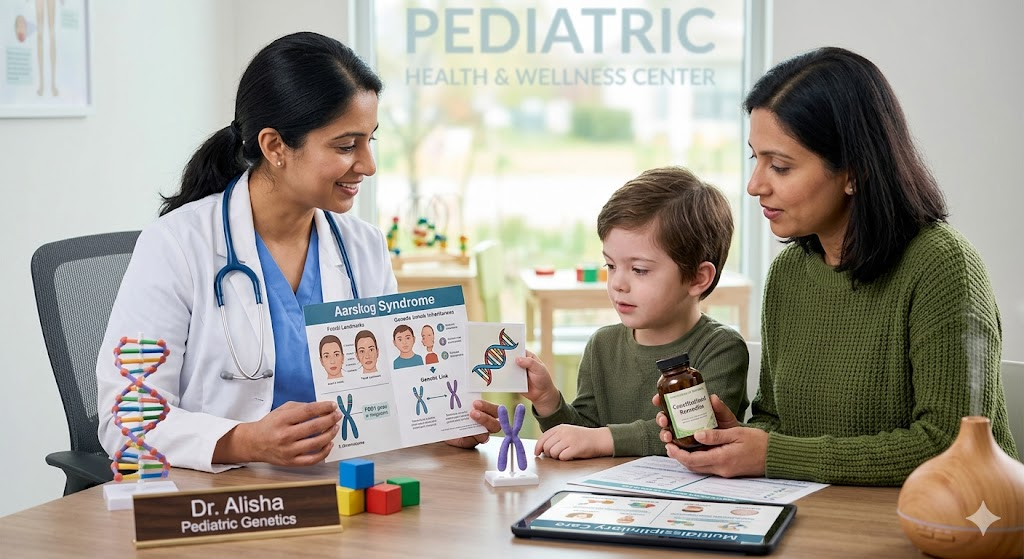
If you are researching rare genetic conditions, you’ve likely realized how overwhelming the medical jargon can get. Today, we are breaking down Aarskog Syndrome (also known as Aarskog-Scott syndrome)—a rare genetic disorder that impacts a child's physical stature, facial features, and skeletal development.
Whether you are a parent looking for clear answers, a student, or someone exploring complementary healthcare options, here is what you need to know about its causes, signs, and how different medical approaches view it.
What Causes Aarskog Syndrome?
Aarskog syndrome is an inherited genetic condition, meaning it is passed down through families. Specifically, it is caused by a mutation in the FGD1 gene (Faciogenital Dysplasia 1 gene).
To understand how it travels through generations, it helps to look at its inheritance pattern:
-
The Blueprint Hook: The FGD1 gene is responsible for sending signals that tell a developing body how to form its skeleton and face during embryonic development. When this gene has a mutation, those structural instructions get disrupted.
-
The X-Linked Pattern: This condition is X-linked recessive. Because males have only one X chromosome (XY), a single mutated copy from their mother will cause the syndrome. Females have two X chromosomes (XX), so a healthy second copy usually shields them. This is why Aarskog syndrome primarily impacts males, while females are usually asymptomatic carriers or show only very mild signs.
Recognizing the Key Symptoms
Signs of Aarskog syndrome are rarely obvious at birth. They typically become noticeable around the age of three as the child grows. The condition primarily influences three areas of the body:
1. Distinct Facial Features
Children with Aarskog syndrome often share a distinct, gentle facial structure:
-
A rounded face with a prominent forehead.
-
Hypertelorism: Widely spaced eyes.
-
A short nose with forward-pointing nostrils.
-
A "widow's peak" hairline.
2. Skeletal and Limb Alterations
-
Short Stature: Growth is often delayed during early childhood. Interestingly, many affected individuals experience a significant growth spurt later in adolescence.
-
Short, broad hands and feet with short fingers (brachydactyly).
-
An inward curving of the pinky finger (clinodactyly).
-
Mild webbing between the fingers or toes.
-
Loose, hypermobile joints.
3. Characteristic Genital Features
A highly specific indicator of Aarskog syndrome is a "shawl scrotum," where the scrotal tissue folds up and surrounds the base of the penis. Undescended testes are also common.
Mental Development: It is worth noting that most children with Aarskog syndrome have normal intelligence. However, some may experience mild learning disabilities or navigate behavioral challenges like ADHD.
The Homeopathic Approach: Principles and Realities
When navigating a rare condition, many families look toward holistic systems like homeopathy to support their child's health. If you are considering this path, it is crucial to understand what homeopathy can—and cannot—do for a genetic disorder.
The Limitation: Genetics are Permanent
Because Aarskog syndrome is caused by a structural mutation embedded directly in the DNA, homeopathic remedies cannot alter the genetic defect or reverse physical malformations (such as webbed fingers or a shawl scrotum).
The Practice: Constitutional Support
Instead of attempting to "cure" the genetic condition, homeopaths use a constitutional approach. This means looking at the child as a whole—their physical energy, temperament, and specific secondary symptoms—to select highly diluted natural remedies aimed at supporting general vitality.
Some remedies traditionally considered by practitioners for delayed development include:
-
Baryta Carbonica: Often turned to in holistic practices for children experiencing delayed physical growth or mild learning hurdles.
-
Calcarea Phosphorica: Used with the intent of supporting individuals who display slow bone development.
-
Silicea: Frequently looked to for constitutional support in children with delicate bone structures or fine hair.
Balancing the Care: The Importance of Integrated Medicine
While complementary therapies like homeopathy focus on general well-being, standard medical care is essential to address the physical, structural impacts of Aarskog syndrome. True holistic care means combining the best of both worlds safely.
A comprehensive, supportive medical plan often includes:
-
Surgical Intervention: To correct anatomical issues like hernias, webbed fingers, or undescended testes.
-
Orthodontics: To manage dental crowding or jaw alignment issues caused by facial structural changes.
-
Endocrinology: Checking in with a specialist to see if growth hormone therapy is appropriate for severe height delays.
-
Therapeutic Support: Utilizing physical therapy for loose joints, or speech and educational therapy to help with school-age learning differences.
Final Thoughts
If you choose to explore homeopathy for constitutional support, ensure it is done in tandem with a trusted pediatrician or clinical geneticist. By keeping open communication between all your healthcare providers, you can build a safe, well-rounded care team that supports your child's development from every angle.
