


How Much Does Concrete Demolition Cost?
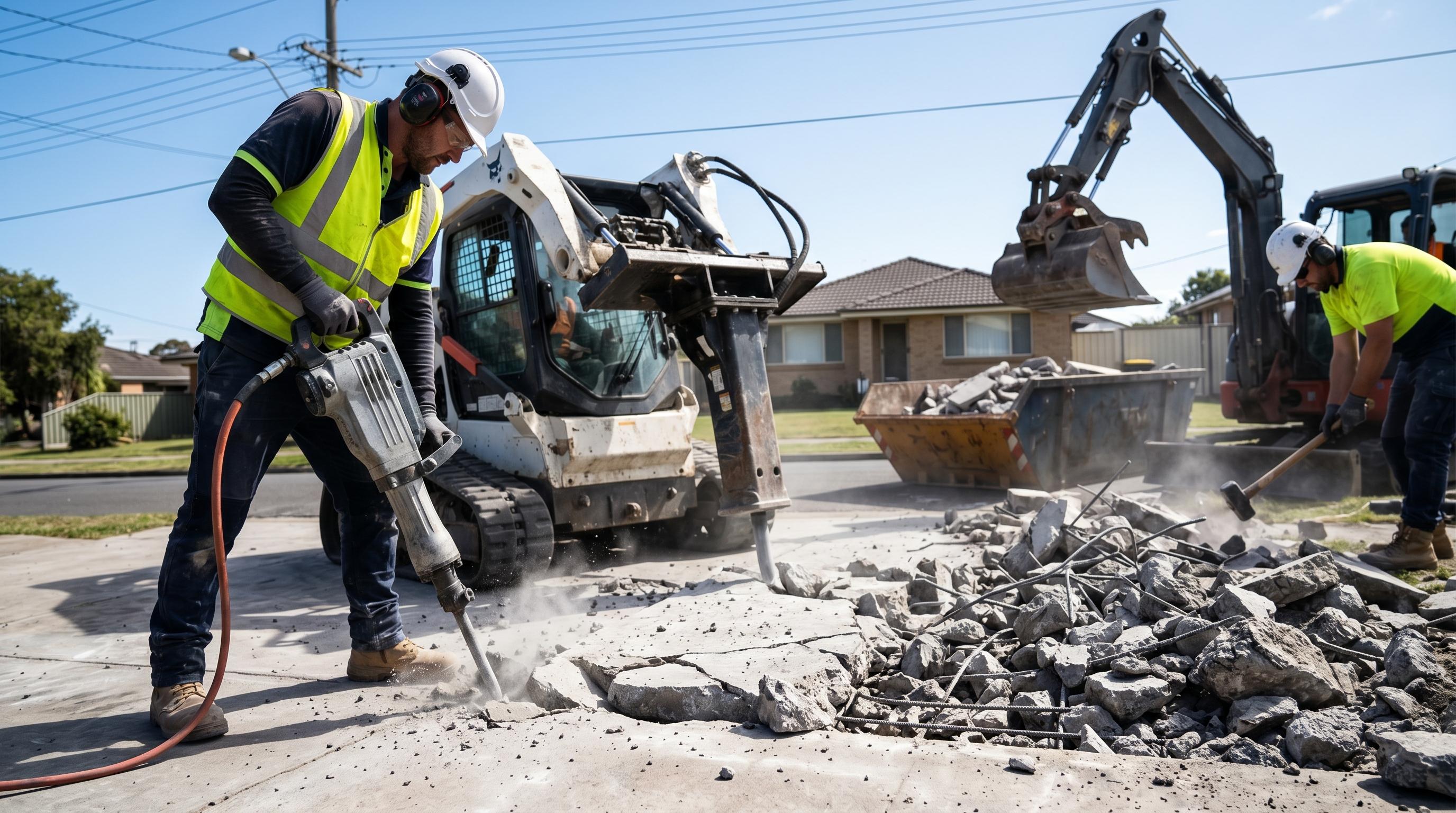
Concrete demolition in the United States typically costs between $2 and $8 per square foot, depending on the thickness of the concrete, reinforcement materials, accessibility, labor rates, and disposal requirements. Minor residential works might cost just a few hundred dollars, while major commercial demolition projects could be priced in the higher thousands. Homeowners and contractors usually turn to professional estimating services to figure out exact budgets before initiating any demolition work.
Nowadays, concrete demolition is a regular feature in renovation and redevelopment activities nationwide. Whether a homeowner is changing an old driveway or a contractor is setting up a commercial site for redevelopment, meaning proper planning is important. For this purpose, many professionals nowadays opt for estimating services for construction to estimate demolition costs, labor, equipment, and disposal requirements before the project commences. This way, they can prevent unexpected costs and ensure that the projects stick to their timelines.
What Concrete Demolition Is
Concrete demolition is the process of breaking, removing, hauling, and disposing of concrete structures. Examples of such works are residential driveways, patios, sidewalks, foundations, parking lots, or commercial slabs. Contractors employ the use of specialized tools and heavy equipment to perform the procedure in a safe and efficient manner.
Work boundaries can differ tremendously. While one project may just deal with the dismantling of a thin backyard patio, another one might be about demolishing a concrete foundation with steel rebar. Both situations, however, call for planning and measurement. Contractors often do demolition takeoffs to determine the quantity of concrete, debris volume, labor hours, and equipment that will be needed in the project.
Common Concrete Structures Removed
|
Structure Type |
Typical Use |
|
Driveways |
Residential parking areas |
|
Patios |
Outdoor living spaces |
|
Sidewalks |
Walkways and pathways |
|
Garage slabs |
Residential garages |
|
Foundations |
Residential and commercial buildings |
|
Parking lots |
Commercial properties |
Average Concrete Demolition Costs in the U.S.
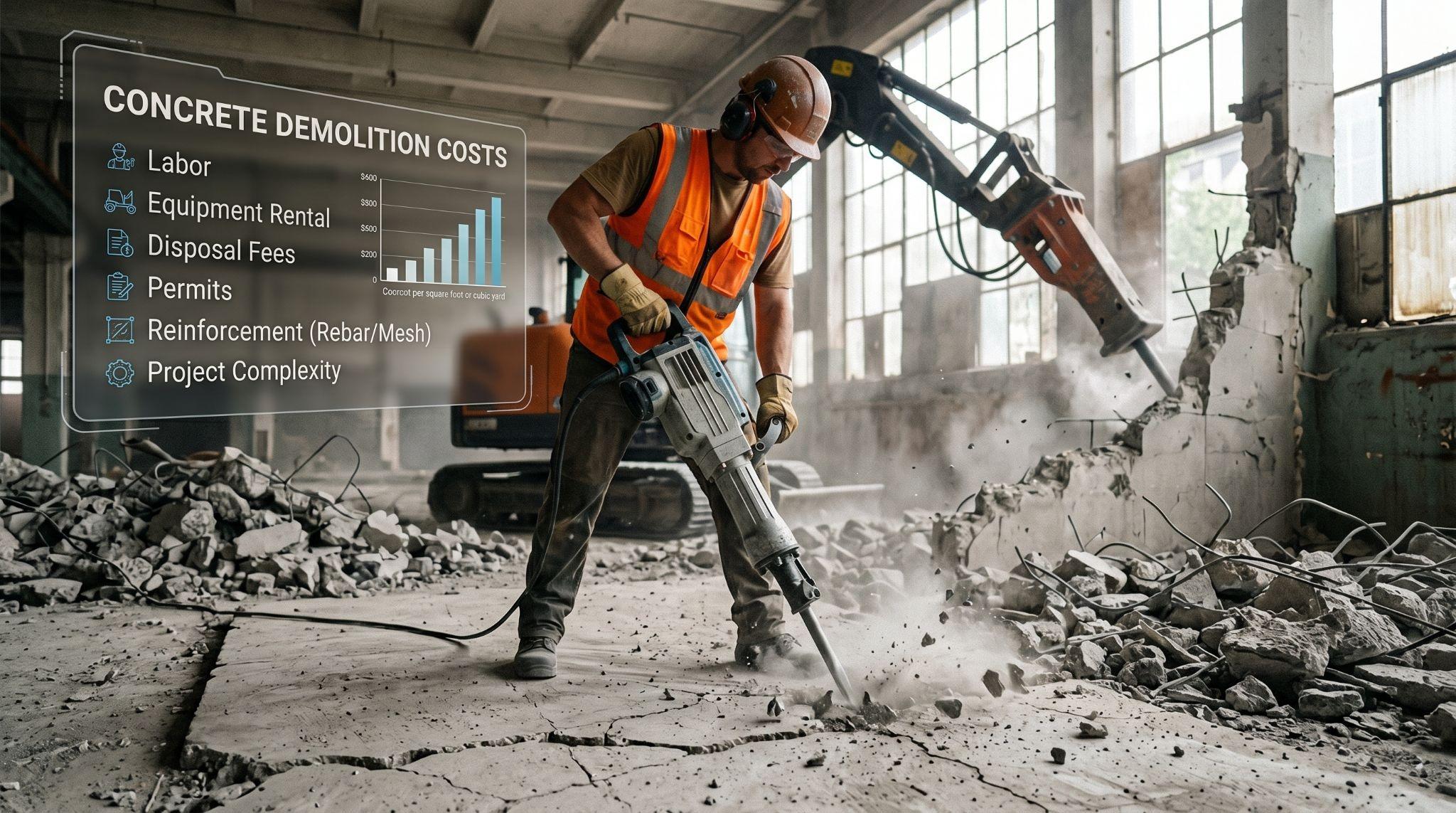
The national average cost for concrete demolition usually falls between $2 and $8 per square foot. However, the exact price depends on project complexity and local labor costs.
Typical Cost Ranges
|
Project Type |
Average Cost Range |
|
Small patio removal |
$500 – $1,500 |
|
Driveway demolition |
$1,200 – $4,000 |
|
Garage slab removal |
$1,500 – $3,500 |
|
Foundation demolition |
$3,000 – $10,000+ |
|
Commercial slab demolition |
$5,000 – $50,000+ |
Smaller projects usually have some minimum contractor charges because the transportation of equipment and labor setup alone still takes time and causes expenses.
On the other hand, major projects tend to have a lower square foot price as the contractors can allocate their overhead costs over a larger volume of work.
Major Contributors to Changing Concrete Demolition Costs
People from different parts of the U.S. experience various levels of demolition pricing due to several factors. Learning these factors will enable property owners to estimate a budget more properly.
Concrete Thickness
More concrete thickness means more work and larger machinery. Usually, a residential driveway is only about four inches thick, whereas commercial slabs can go beyond eight inches.
Concrete with Steel Reinforcement
Concrete with steel bars or wire mesh is quite hard to demolish. So, specialized hydraulic breakers and cutting tools may come into play, which will make the labor and equipment costs higher.
Accessibility
Where a job is to be carried out in a packed urban neighborhood or a fenced backyard, manual labor or compact machinery might be the only options. Such limiting access will raise the duration of demolition and the costs, too.
Disposal and Hauling
Once demolition has been carried out, the debris needs to be taken to a landfill or recycling facility. The disposal charges differ according to the state and municipality, especially for areas with very strict environmental regulations.
Permits and Inspections
Some municipalities require demolition permits to be obtained before the start of the work.
Also, the project may be subject to the inspections of utilities and review of environmental factors that could increase the project costs.
Residential and Commercial Concrete Demolition
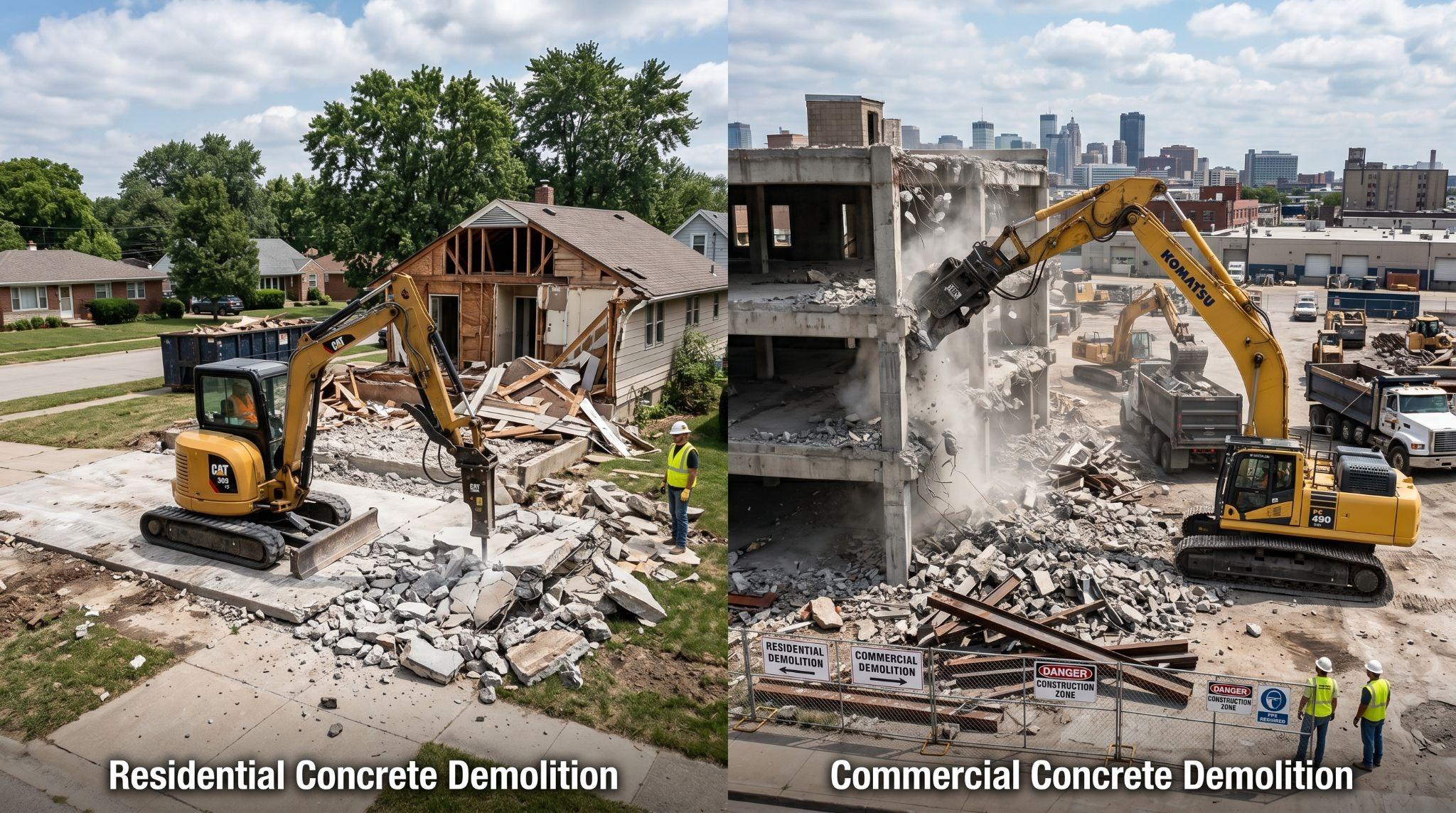
Usually, demolition of residential properties is a lot easier and cheaper than commercial ones. Whereas a homeowner may demolish a patio, sidewalk, or driveway during a remodeling project, that is commercial demolition of large structures with stricter safety regulations and more advanced equipment used, etc.
Residential Demolition
Here, the intent is to mostly work with smaller spaces and light concrete structures. Normally, such a project is finished in one or two days.
Commercial Demolition
This type of demolition involves warehouses, parking lots, or industrial foundations. Besides that, the contractors have to meet OSHA regulations and coordinate with engineers, inspectors, and utility companies.
Equipment Used in Concrete Demolition
The type of equipment used directly impacts project pricing. Contractors select machinery based on slab size, thickness, and accessibility.
Common Equipment
|
Equipment |
Purpose |
|
Jackhammers |
Breaking small slabs |
|
Excavators |
Heavy demolition work |
|
Concrete saws |
Precision cutting |
|
Hydraulic breakers |
Reinforced concrete removal |
|
Skid steers |
Debris handling and cleanup |
For smaller jobs, manual demolition is cheaper, though in most cases, it is the slowest method. For large commercial projects, heavy machinery is mainly used as it reduces time and labor, thereby leading to significant cost savings.
Concrete Removal and Disposal Costs
Disposal costs, in fact, are the element that many homeowners greatly underestimate. The act of removing concrete is just one aspect of the whole process. By far, the most expensive factor is the hauling of debris to the recycling center or the landfill, which could drastically increase your last bill.
Concrete recycling is steadily spreading all over the United States. The crushed concrete is usually recycled and turned into materials for road bases, landscaping, and other types of construction fill. Besides alleviating disposal costs, recycling also helps in the implementation of sustainable construction practices.
Disposal Cost Factors
|
Cost Factor |
Impact on Price |
|
Distance to landfill |
Higher fuel and hauling costs |
|
Weight of debris |
Disposal fees are often charged by the ton |
|
Recycling availability |
May lower landfill costs |
|
Local regulations |
Permit and environmental fees |
DIY vs Hiring Professionals
Many people think of taking out their concrete themselves to save some cash. It might only work for extremely small jobs, but without the right equipment and experience, demolition can rapidly turn out to be hazardous.
Renting jackhammers, dumpster costs, and disposal fees are some of the things that can really add up. On top of that, there is always the possibility of hitting an underground utility or other nearby structures.
Experts not only have experience and insurance, but also the right tools to do the job in a safe manner. Most of the time, by hiring professionals, you save your time and avoid costly errors.
Hidden Expenditures That Homeowners Rarely Think Of
Sometimes, concrete demolition entails additional costs that homeowners are not aware of at first.
Soil Repair and Grading
Before new construction can be done, after the removal, grading or soil compaction might be necessary.
Utility Line Protection
Inspection of underground water, gas, or electric lines may be required before demolition is started.
Cleanup and Site Preparation
Cleaning of dust, removal of debris, and hauling services can contribute to rising labor hours and disposal costs.
Concrete Demolition Cost-Cutting Methods
With proper planning and contractor coordination, property owners have the possibility to drastically lower their demolition costs.
Scheduling Multiple Services at the Same Time
Demo plus installation work, if done simultaneously, usually decreases equipment and transportation costs.
Obtaining Contractor Quotes and Comparing Them
Requesting several bids enables a homeowner to get an idea of what the reasonable market price is.
Reuse Concrete
One can recycle concrete instead of dumping it in landfills, which should cut down the disposal fees.
Make Access to the Site Easier
Demolition time and possible equipment limitations can be both reduced if fences or any other obstacles are removed beforehand.
Regional Price Differences Across the U.S.
Concrete demolition costs are different from one region to another.
Big metropolitan areas such as New York, Los Angeles, and Chicago usually have higher labor and material disposal costs. Living in the countryside can give you the advantage of lower labor rates; however, transportation can still make the overall price go up.
Furthermore, changes in the climate can also be one of the causes of inspection delays nowadays. The northern United States is suffering from the inability to get outside work done in the coldest months, while the southern states, on the contrary, can operate more or less continuously throughout the year.
Why Accurate Estimates Matter
Getting it right with demolition estimates is one of the things that homeowners, contractors, and developers rely upon. Small pricing errors may have the potential to impact the profitability of a project or even lead to a situation where budget overruns occur.
In the hands of a professional, estimating is the use of a tool for contractors that enables them to analyze labor, equipment, hauling, and disposal costs before the commencement of construction. This, in turn, leads to enhanced bidding accuracy and also gives property owners the ability to make well-informed decisions.
Properly defined project planning is one of the things that can help avoid downtime and unforeseen costs related to demolition work.
Conclusion
Concrete demolition is the backbone of remodeling and redevelopment projects all around the United States. Whether you are thinking of getting rid of a broken concrete driveway, patio, or commercial foundation, it is the knowledge of the actual cost of demolition that will provide the basis for effective planning by both homeowners and contractors.
For the most part, a concrete demolition project will run you from $2 to $8 per square foot, but the price may vary depending on factors like thickness, reinforcement, accessibility, labor, and disposal requirements. Residential projects, in most cases, are cheaper than commercial demolition ones, although both types require adequate planning and first-class safety measures.
FAQs
How much does concrete demolition cost per square foot?
On average, concrete demolition costs range from $2 to $8 per square foot across the US the exact figures depend largely on the nature of the project and whether disposal is required.
Is removing reinforced concrete more costly?
Generally, yes. Reinforced concrete is tougher to handle as it contains rebar or wire mesh. Removal entails at least the use of special equipment, if not additional labor.
Do demolition prices generally cover debris hauling?
That varies. Some contractors may roll the cost of hauling and disposal into their price, while others set that as an extra charge. It is prudent to always ask about this at the time of the quote.
Is it possible for me to remove concrete on my own?
If you have a small project and are a fairly competent DIY, you may consider doing it yourself. However, a professional demo team is the best option for a safer, more efficient job, especially if it is a large-scale one.
What is the duration of the demolition of concrete?
It may only take a day or so for a small residential one; on the other hand, a large commercial demolition might span several days or even weeks, depending on how complicated it is.
