

How Accurate Are Online IQ Tests and Should You Trust Them
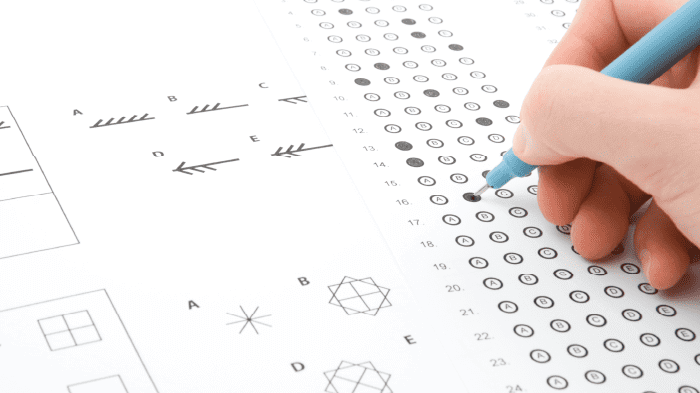
The question how accurate are online iq tests has become increasingly common as more people turn to the internet for quick intelligence assessments. With a few clicks, anyone can find dozens of free IQ tests promising instant results. These tests often claim to measure intelligence in the same way as official assessments, but the reality is far more complicated.
To understand whether online IQ tests are reliable, it is important to look at how real IQ testing works, what online versions actually measure, and whether they should be trusted for any meaningful conclusions about intelligence.
What a Real IQ Test Actually Is
A formal IQ test is a standardized psychological assessment designed and administered under controlled conditions. These tests are usually created by psychologists and are carefully calibrated to measure specific cognitive abilities such as:
-
Logical reasoning
-
Working memory
-
Verbal comprehension
-
Spatial reasoning
-
Processing speed
Professional IQ tests like the WAIS (Wechsler Adult Intelligence Scale) or Stanford-Binet are administered in controlled environments by trained professionals. The goal is to ensure consistency, accuracy, and fairness.
Scores are normalized so that the average IQ is 100, with most people scoring between 85 and 115. These tests go through years of research, validation, and statistical analysis before being considered reliable.
This is very different from most online tests, which are created without strict scientific oversight.
What Online IQ Tests Really Measure
When people search how accurate are online iq tests, they often assume these tests are simplified versions of official ones. In reality, most online IQ tests are not scientifically validated.
Many online tests measure basic pattern recognition or logic puzzles, but they rarely assess the full range of cognitive abilities included in professional IQ testing. Some may focus heavily on visual patterns, while others use multiple-choice questions that can be guessed or learned.
In many cases, online IQ tests are designed more for entertainment than for psychological accuracy. They may give a score at the end, but that score is often not based on standardized norms or real population data.
Why Online IQ Test Results Vary So Much
One of the biggest issues when evaluating how accurate are online iq tests is inconsistency. If you take multiple online IQ tests, you will likely get different results each time. This happens for several reasons:
First, there is no universal standard. Each website uses its own set of questions and scoring system. Unlike official IQ tests, there is no agreed-upon method for calculating results.
Second, many online tests are too short to be reliable. A proper IQ test contains multiple sections and takes time to evaluate different cognitive skills. Online tests may only include 10 to 30 questions, which is not enough to measure intelligence accurately.
Third, some tests adjust scores based on arbitrary formulas. Without proper statistical norming, the final number may not reflect any real comparison to a population.
The Problem of Self-Selection and Bias
Another reason to question how accurate are online iq tests is self-selection bias. People who take online IQ tests usually choose to do so out of curiosity, boredom, or a desire for validation. This is not a random sample of the population.
Because of this, the scoring system may not be based on scientifically representative data. A real IQ test is normed using large, carefully selected groups of people across different ages, backgrounds, and education levels. Online tests rarely follow this methodology.
As a result, the scores can be misleading and inconsistent.
Can Online IQ Tests Be Useful at All?
Even though most online IQ tests are not scientifically reliable, they are not completely useless. Some can provide light mental exercises or give a rough sense of how you perform on certain types of puzzles.
For example, tests that include logic problems or pattern recognition challenges may help improve problem-solving skills. They can also be entertaining and encourage cognitive engagement.
However, it is important to understand that these tests are not diagnostic tools. They should not be used to assess intelligence in a serious or professional context.
When asking how accurate are online iq tests, the honest answer is that they are only accurate in a very limited, informal sense.
Differences Between Entertainment Tests and Scientific Tests
Most online IQ tests fall into the category of entertainment. They are designed to be quick, engaging, and shareable. Some even encourage users to compare scores with friends or post results on social media.
Scientific IQ tests, on the other hand, are carefully constructed to eliminate bias and ensure reliability. They undergo extensive testing and revision before being used in psychological practice.
Key differences include:
-
Online tests are short, while official tests are long and detailed
-
Online tests are not standardized, while official tests use statistical norms
-
Online tests are self-administered, while official tests are supervised
-
Online scores are inconsistent, while official scores are validated
These differences highlight why how accurate are online iq tests is a critical question for anyone relying on them.
The Role of Marketing in Online IQ Tests
Many online IQ tests are designed with commercial goals in mind. Some websites use them to generate advertising revenue or collect user data. Others use “IQ score reports” as a way to sell premium results or personality reports.
This commercial motivation can affect how results are presented. For example, a test might inflate your score to encourage you to feel confident or to purchase a detailed analysis.
Because of this, users should be cautious when interpreting results from free or low-quality tests.
Can You Trust Online IQ Scores?
The short answer is no, not as a measure of real intelligence. When evaluating how accurate are online iq tests, it is important to understand that they do not meet scientific standards for psychological assessment.
However, they can still be useful for casual curiosity or entertainment. If you treat them as games rather than diagnostic tools, they can be harmless and even enjoyable.
Problems arise when people interpret the results too seriously or use them to judge intelligence, ability, or potential.
Psychological Research on Online Testing
Psychologists generally agree that unregulated online IQ tests lack validity. Validity refers to whether a test actually measures what it claims to measure.
For an IQ test to be valid, it must:
-
Be standardized on a large population
-
Produce consistent results over time
-
Measure multiple cognitive domains
-
Be administered under controlled conditions
Most online tests fail to meet these criteria. This is why professionals do not use them in clinical or educational settings.
Why People Still Take Online IQ Tests
Despite their limitations, online IQ tests remain popular. There are several reasons for this.
First, they are easy to access and free. Anyone with an internet connection can take one in minutes.
Second, people are naturally curious about intelligence. A number feels like a simple way to understand cognitive ability.
Third, online tests provide instant feedback, which can be satisfying even if it is not accurate.
This combination of convenience and curiosity keeps them popular, even when users know they are not fully reliable.
The Danger of Overinterpreting Results
One of the biggest risks when considering how accurate are online iq tests is overinterpretation. Some people may take a high or low score seriously and use it to define their self-worth or abilities.
This can be misleading because IQ is only one aspect of intelligence, and online tests do not even measure it accurately. Skills such as creativity, emotional intelligence, communication, and practical problem solving are not captured in these tests.
Relying too heavily on online results can create false confidence or unnecessary doubt.
A Better Way to Understand Intelligence
Instead of relying on online IQ tests, it is more useful to think about intelligence as a combination of different abilities. People may be strong in analytical thinking, creativity, social understanding, or technical skills.
Real intelligence is complex and cannot be reduced to a single number, especially one generated by an unregulated online quiz.
Professional assessments, when needed, should always be conducted by qualified psychologists using validated tools.
Conclusion
The question how accurate are online iq tests has a clear answer from a scientific perspective: they are not reliable measures of true intelligence. While they can be entertaining and sometimes thought-provoking, they lack the rigor, standardization, and validation of official IQ tests.
Online IQ tests should be viewed as casual tools rather than serious evaluations. They may offer fun challenges, but they should not be used to define intelligence, ability, or potential.
In the end, intelligence is far more complex than any quick online score, and understanding it requires much more than a few internet questions.
