


The Apri Hymns: Invoking the Divine Essence of Sacrifice
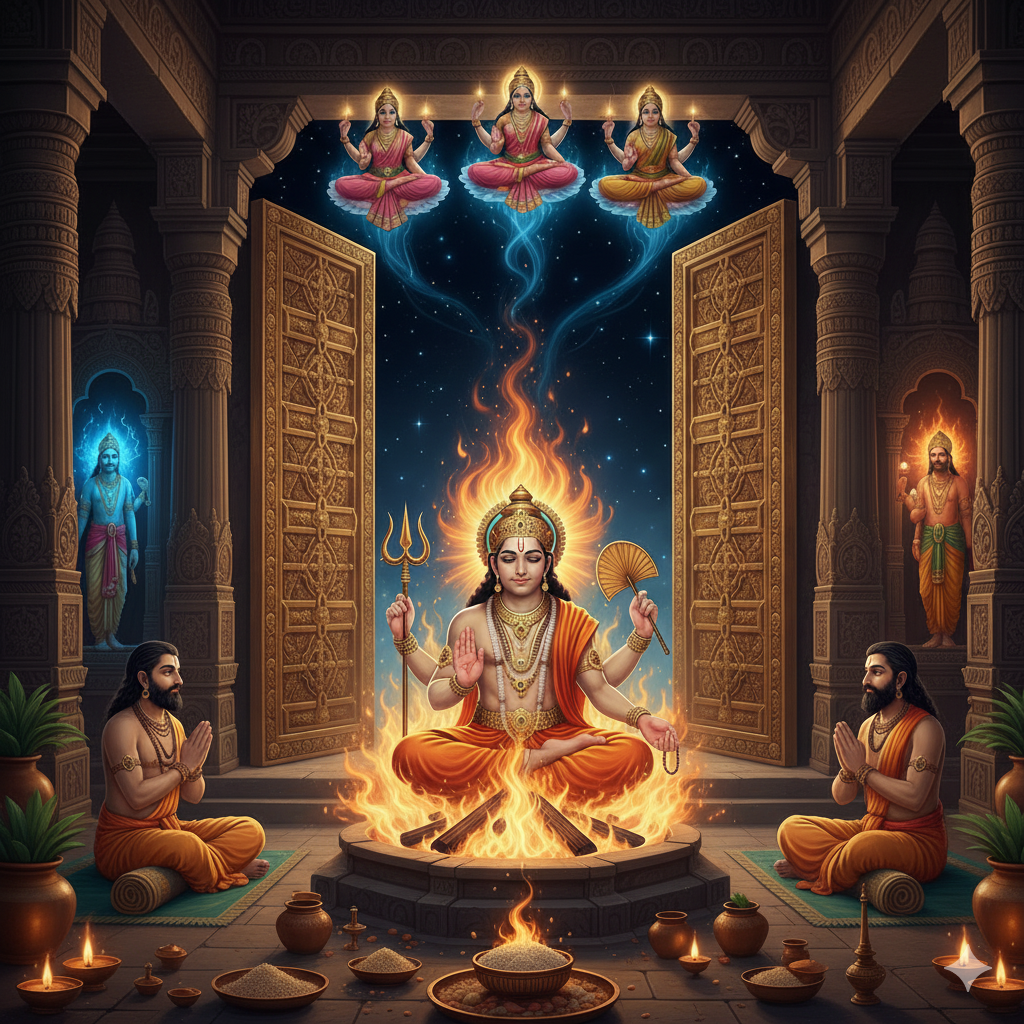
The topic of "Apris" doesn't refer to a single Hindu god, but rather to a specific and profound class of hymns found within the Rigveda, the oldest Vedic text. These hymns, known as Āprīsūktas (or Apri Hymns), are not addressed to one main deity, but are special invocations meant to conciliate and propitiate a fixed set of divinities, particularly as a preparatory ritual for the Vedic sacrifice (Yajna).
The term Āpri itself comes from the Sanskrit root prī, meaning "to please," "to propitiate," or "to gain favor," perfectly capturing their purpose. They are essentially hymns of divine conciliation.
What are the Apri Hymns?
There are ten Apri Hymns distributed across various Mandalas (books) of the Rigveda. What makes them unique is their structural uniformity: they all invoke a fixed series of divine powers, often 11 or 12 in number, in a specific sequence.
The deities invoked in the Apri Hymns are not the major cosmic gods (like Indra or Varuna), but are typically personifications of the objects, actions, and energies of the sacrificial ritual itself, all centered around the transformative power of Agni (Fire).
The Divine Order of the Apri Deities
The sequence of deities in the Apri Hymns maps out the progression of the sacrifice and the spiritual journey it represents. While the specific names can vary slightly across different Vedic schools (or gotras), the core powers generally include:
-
Samiddha (The Well-Kindled Fire): Agni as the fully ablaze flame, ready for the offering.
-
Tanūnapāt / Narāśaṁsa: Two different, yet related, manifestations of Agni—one representing the subtle, self-generated essence of the fire, and the other, the announcer or messenger of the gods (often a synonym for Agni).
-
The Divine Invoker (Hotar): Agni in his role as the priest who performs the invocation.
-
Barhis (The Sacred Grass/Litter): The purified platform on which the gods are invited to sit.
-
The Divine Doors (Dvāraḥ): The wide-open celestial portals that allow the gods to descend and receive the offering.
-
Naktā-Uṣāsā (Night and Dawn): The dual goddesses who preside over the passage of time and prepare the way for the sacrifice.
-
Daivyau Hotārā (The Two Divine Priests): Often interpreted as Agni and Vayu, the divine speakers and performers of the rite.
-
The Three Goddesses (Tistró Devīḥ): Usually Iḷā (Ila), Sarasvatī, and Mahī (Bhāratī). These embody revelation, inspiration, and vast spiritual consciousness, or are linked to the offering (Ila is sometimes personified offering).
-
Tvaṣṭṛ (The Divine Artisan): The shaper of forms, who prepares the sacrificial victim or the spiritual bodies for transformation.
-
Vanaspati (Lord of the Forest): The sacrificial post, or the tree/wood used in the rite, often symbolizing the offering itself.
-
Svāhā: The final word of offering, the power that delivers the oblations directly to the gods.
The Profound Significance: Beyond the Ritual
While ritually, the Apri Hymns were used as a crucial preliminary to the animal sacrifice (Paśubandha), their inner significance, as explored by Vedic mystics, is far deeper:
-
Spiritual Awakening: The invocation is not just of physical fire, but of the Will (Kratu) and Consciousness (Chit) inherent in the act of striving and offering.
-
A Map of Yoga: Scholars like Sri Aurobindo view the sequence as an allegorical map of the inner spiritual journey, where the Barhis is the purified mind, the Divine Doors are the opening of the inner consciousness, and the Three Goddesses are the powers that bring divine revelation.
-
The Power of Intention: The hymns ensure that the Yajamana (sacrificer) is in the right spiritual frame and that every element of the offering—from the wood to the final chant—is consecrated and blessed.
The Apri Hymns are a powerful reminder that in the Vedic vision, every detail of the material world and every act of ritual intent can be deified and harmonized, serving as a pathway for human consciousness to align itself with the divine.
