


Okra Output Overdrive: 7 Advanced Tips for a Non-Stop Harvest of Abelmoschus esculentus
Are your okra plants looking great but delivering disappointing yields? Or maybe your harvest starts strong, then slows to a trickle? Growing Abelmoschus esculentus (L.) Moench is rewarding, but to truly get a "non-stop" harvest, you need to go beyond the basics.
This guide reveals advanced techniques to transform your okra patch into a prolific, pod-producing machine all season long.
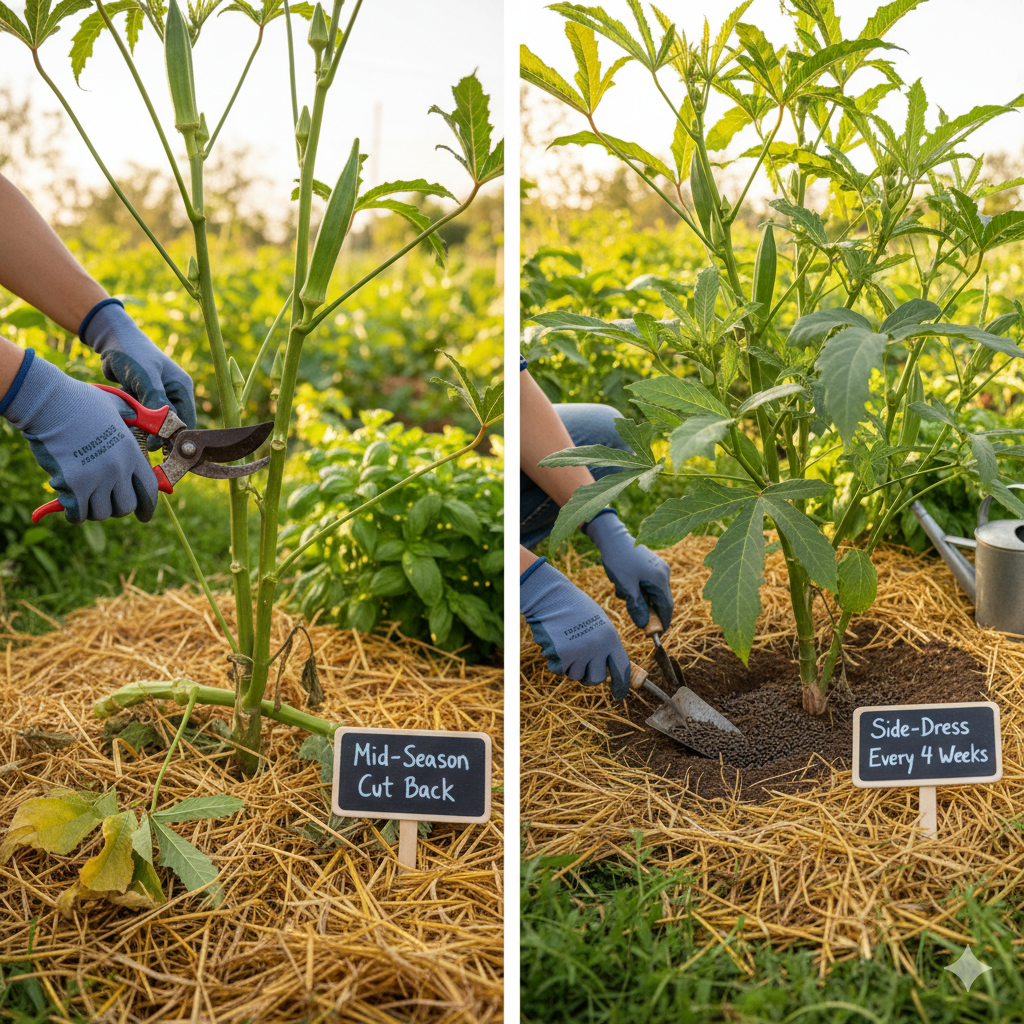
1. The "Cut Back" Secret: Rejuvenate Mid-Season
Many gardeners don't realize that okra can be "pruned" to extend its life and boost production.
-
When: Mid-season, around late July or early August, when plants start to look leggy and production slows.
-
How: Cut the plants back by about one-third to one-half of their height. Remove any spent leaves or branches.
-
Why: This stimulates new growth, encourages branching, and forces the plant to produce a fresh flush of flowers and pods, especially as late-season heat kicks in.
2. Strategic Side-Dressing: Fueling the Endless Harvest
Okra is a heavy feeder, especially when it's constantly producing. A single initial fertilization isn't enough.
-
What: Use a balanced organic fertilizer (e.g., 5-10-10 or 10-10-10) or compost tea.
-
When: Apply a "side-dressing" every 3-4 weeks during peak production. Dig a shallow trench around the plant's drip line, apply the fertilizer, and cover with soil.
-
Why: This provides a continuous supply of nutrients, preventing nutrient deficiencies that can halt pod development.
3. The Water Stress Paradox: Don't Overdo It!
While consistent moisture is good, Abelmoschus esculentus is incredibly drought-tolerant. Overwatering can actually lead to shallow root systems and make plants more susceptible to disease.
-
The Sweet Spot: Aim for 1 inch of water per week, but ensure it's deep and infrequent rather than shallow and often. Allow the top few inches of soil to dry out between waterings.
-
Why: This encourages roots to grow deeper, making the plant more resilient and better able to find its own water during dry spells.
4. Companion Planting for Pest Defense
Don't rely solely on sprays. Surround your okra with allies!
-
Good Neighbors: Plant marigolds (repel nematodes and some insects), basil (deters whiteflies and aphids), and nasturtiums (act as a trap crop for aphids).
-
Why: This creates a natural defense system, reducing pest pressure without chemicals.
5. Mulch Magic: Beyond Weed Control
A thick layer of organic mulch (straw, wood chips, shredded leaves) does more than just suppress weeds.
-
Temperature Regulation: Keeps soil cooler in intense heat, reducing plant stress.
-
Moisture Retention: Reduces evaporation, meaning you water less often.
-
Slow-Release Nutrients: As organic mulch breaks down, it slowly feeds your Abelmoschus esculentus plants.
6. Pod Size is Paramount: The "Finger Rule"
This cannot be stressed enough: harvesting frequently and at the right size is the single most important factor for continuous production.
-
The Rule: Pick pods when they are typically 2-4 inches long. Any longer, and they start to get tough and signal the plant to stop producing.
-
Frequency: Check your plants daily or every other day once they start producing. Missed pods drastically reduce overall yield.
7. End-of-Season Seed Saving Strategy
Want to save seeds but don't want to sacrifice your harvest?
-
The Smart Way: Designate a few "sacrifice" pods at the very end of the season (or on one specific plant) to mature fully and dry on the stalk for seed saving.
-
Why: This allows you to keep harvesting edible pods from the rest of your plants without interruption, ensuring a strong harvest right up until the first frost.
Ready to supercharge your okra harvest? What specific issue are you facing with your Abelmoschus esculentus plants right now? Perhaps your leaves are yellowing, or you're seeing small holes in your pods? I can also generate an image illustrating some of these advanced techniques!
