


Angiotensin Converting enzyme (ACE)
New
1,452.00₹
In stock
Hyderabad
0 Reviews
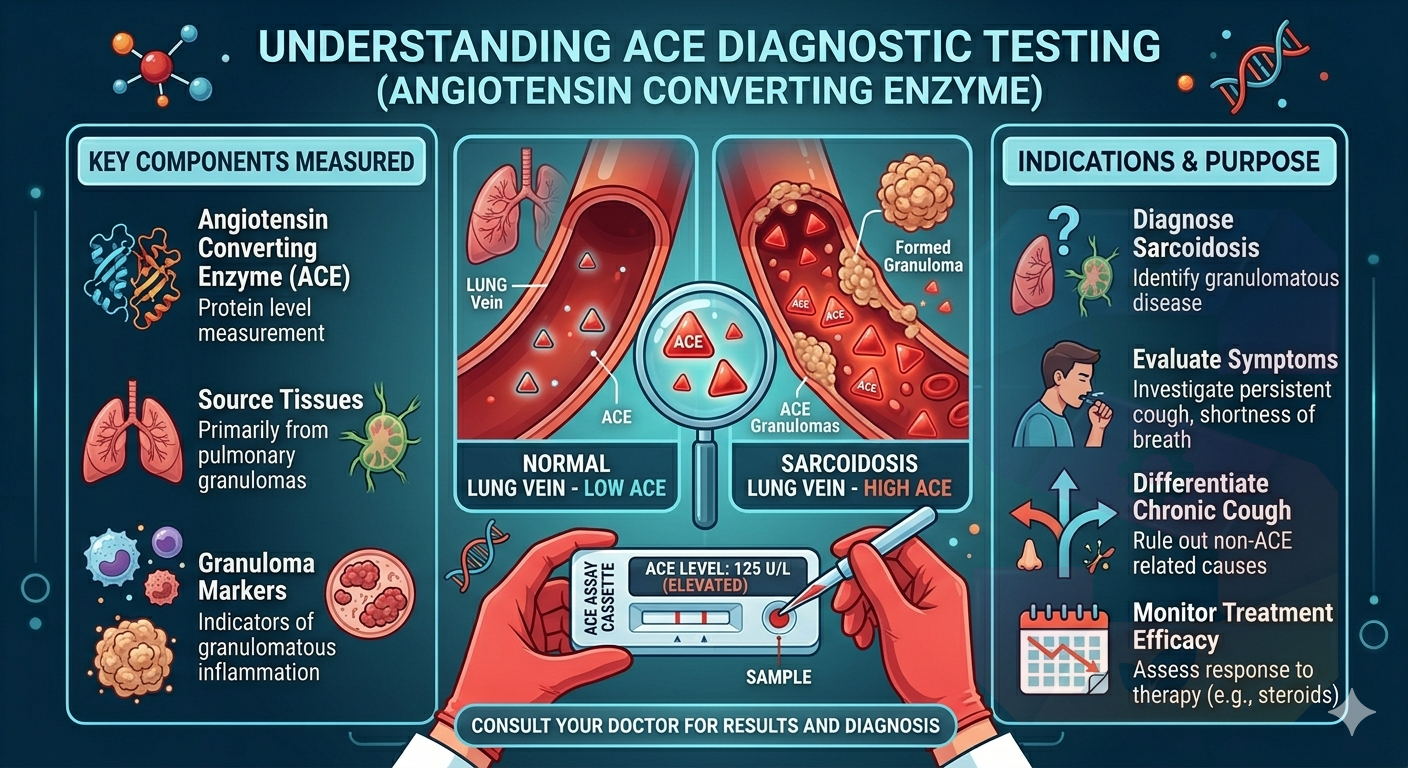
An **Angiotensin-Converting Enzyme (ACE) test** is a diagnostic blood assay primarily used to measure the concentration of ACE proteins in the bloodstream. This enzyme is naturally produced by endothelial and epithelial cells, particularly within the lungs, and plays a crucial role in blood pressure regulation through the renin-angiotensin-aldosterone system.
Clinically, an ACE test is most frequently ordered to help diagnose and monitor **sarcoidosis**, a systemic inflammatory disease characterized by the formation of granulomas (small clumps of immune cells) in organs like the lungs and lymph nodes. Because granuloma cells secrete high amounts of ACE, elevated blood levels serve as a key biomarker.
The test is also highly valuable for tracking treatment efficacy, as falling ACE levels typically indicate a positive response to therapies like corticosteroids.
Clinically, an ACE test is most frequently ordered to help diagnose and monitor **sarcoidosis**, a systemic inflammatory disease characterized by the formation of granulomas (small clumps of immune cells) in organs like the lungs and lymph nodes. Because granuloma cells secrete high amounts of ACE, elevated blood levels serve as a key biomarker.
The test is also highly valuable for tracking treatment efficacy, as falling ACE levels typically indicate a positive response to therapies like corticosteroids.
An **Angiotensin-Converting Enzyme (ACE) test** is a diagnostic blood assay primarily used to measure the concentration of ACE proteins in the bloodstream. This enzyme is naturally produced by endothelial and epithelial cells, particularly within the lungs, and plays a crucial role in blood pressure regulation through the renin-angiotensin-aldosterone system.
Clinically, an ACE test is most frequently ordered to help diagnose and monitor **sarcoidosis**, a systemic inflammatory disease characterized by the formation of granulomas (small clumps of immune cells) in organs like the lungs and lymph nodes. Because granuloma cells secrete high amounts of ACE, elevated blood levels serve as a key biomarker.
The test is also highly valuable for tracking treatment efficacy, as falling ACE levels typically indicate a positive response to therapies like corticosteroids.
