


Acid Phosphatase test
New
475.00₹
In stock
0 Reviews
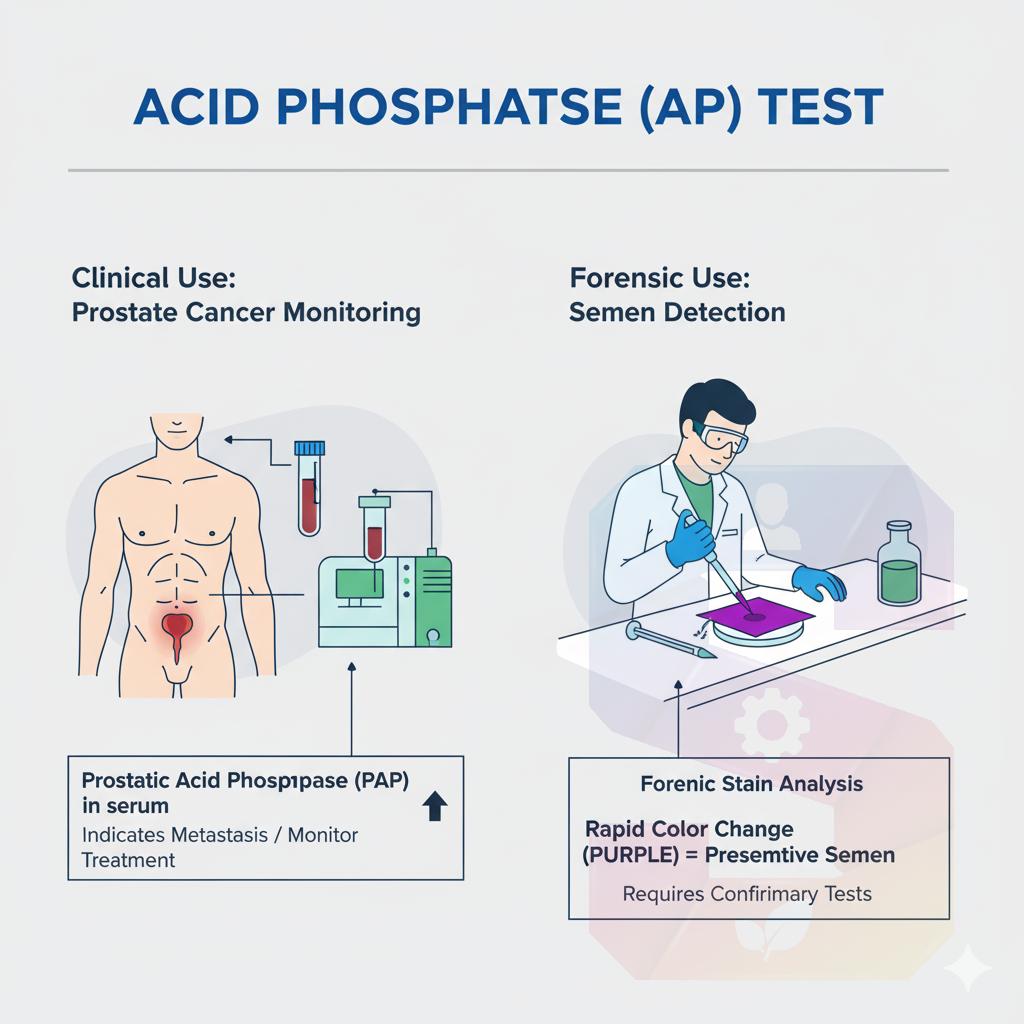
The Acid Phosphatase (AP) Test is a laboratory procedure that measures the level of the enzyme acid phosphatase in a patient's blood serum or a forensic sample (e.g., semen).
Acid phosphatase is an enzyme found in various tissues, including the liver, spleen, bone marrow, and red blood cells. However, its concentration is highest in the prostate gland in men.
🩺 Clinical Significance (Prostatic Acid Phosphatase - PAP)
Historically, and to some extent currently, the test is used in oncology to manage prostate cancer. The test often measures the Prostatic Acid Phosphatase (PAP) fraction, which is specific to the prostate gland and is inhibited by the chemical L-tartrate.
Acid phosphatase is an enzyme found in various tissues, including the liver, spleen, bone marrow, and red blood cells. However, its concentration is highest in the prostate gland in men.
🩺 Clinical Significance (Prostatic Acid Phosphatase - PAP)
Historically, and to some extent currently, the test is used in oncology to manage prostate cancer. The test often measures the Prostatic Acid Phosphatase (PAP) fraction, which is specific to the prostate gland and is inhibited by the chemical L-tartrate.
The Acid Phosphatase (AP) Test is a laboratory procedure that measures the level of the enzyme acid phosphatase in a patient's blood serum or a forensic sample (e.g., semen).
Acid phosphatase is an enzyme found in various tissues, including the liver, spleen, bone marrow, and red blood cells. However, its concentration is highest in the prostate gland in men.
🩺 Clinical Significance (Prostatic Acid Phosphatase - PAP)
Historically, and to some extent currently, the test is used in oncology to manage prostate cancer. The test often measures the Prostatic Acid Phosphatase (PAP) fraction, which is specific to the prostate gland and is inhibited by the chemical L-tartrate.
