


Activated Protein C Resistance (APCR)** test
New
5,650.00₹
In stock
All over India
0 Reviews
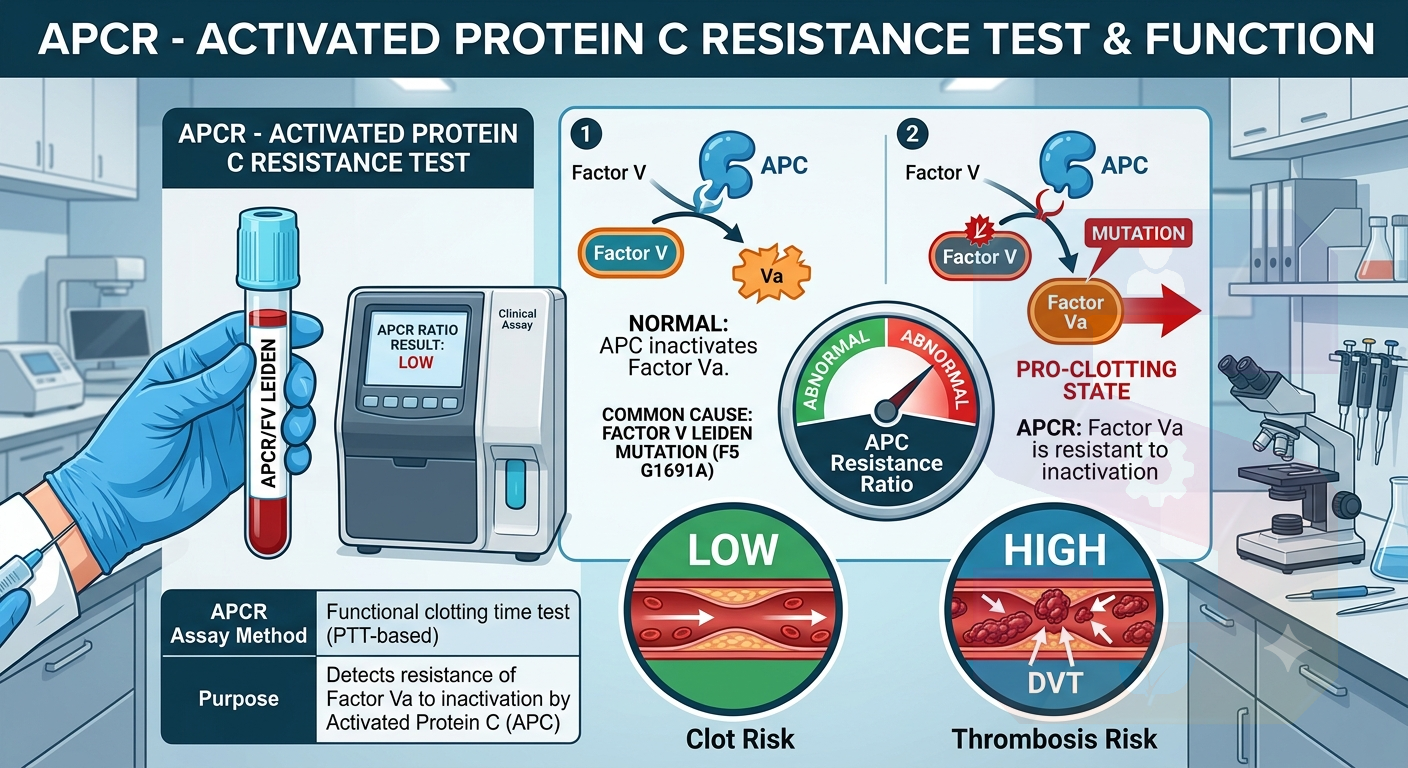
An **Activated Protein C Resistance (APCR)** test is a specialized blood investigation used to evaluate a person’s risk for developing abnormal blood clots. Activated Protein C (APC) is a natural anticoagulant protein in the body that inactivates specific clotting factors to prevent excessive coagulation.
In APCR, the blood’s response to APC is diminished, leading to a higher tendency to form blood clots—a condition known as thrombophilia. Most commonly caused by the Factor V Leiden genetic mutation, this test measures how long it takes for plasma to clot after adding APC. Identifying APCR helps clinicians assess venous thromboembolism risk and tailor preventive therapies effectively.
In APCR, the blood’s response to APC is diminished, leading to a higher tendency to form blood clots—a condition known as thrombophilia. Most commonly caused by the Factor V Leiden genetic mutation, this test measures how long it takes for plasma to clot after adding APC. Identifying APCR helps clinicians assess venous thromboembolism risk and tailor preventive therapies effectively.
An **Activated Protein C Resistance (APCR)** test is a specialized blood investigation used to evaluate a person’s risk for developing abnormal blood clots. Activated Protein C (APC) is a natural anticoagulant protein in the body that inactivates specific clotting factors to prevent excessive coagulation.
In APCR, the blood’s response to APC is diminished, leading to a higher tendency to form blood clots—a condition known as thrombophilia. Most commonly caused by the Factor V Leiden genetic mutation, this test measures how long it takes for plasma to clot after adding APC. Identifying APCR helps clinicians assess venous thromboembolism risk and tailor preventive therapies effectively.
