


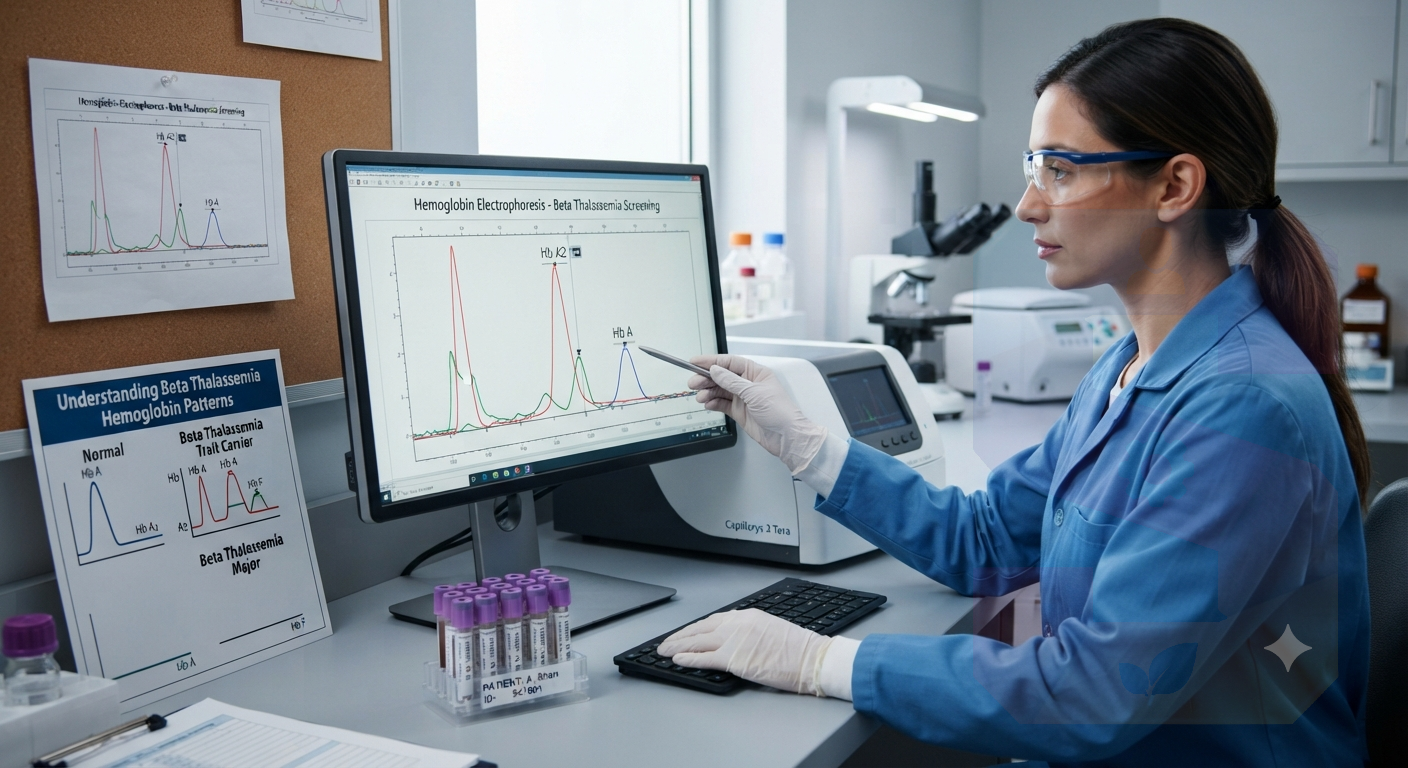
Beta Thalassemia Screening with graph
New
400.00₹
In stock
All over India
0 Reviews
A Beta Thalassemia screening is a simple blood test used to see if you carry the gene for this inherited blood disorder. It’s important to know if you are a carrier, especially when planning a family.
The screening usually starts with a complete blood count (CBC) to look at the size and shape of your red blood cells. If the results are unusual, a more specific test called Hemoglobin Electrophoresis is performed.
This specialized test separates and measures different types of hemoglobin, the protein in red blood cells that carries oxygen. The resulting graph, called an electropherogram, shows distinct peaks for each type. A carrier will show specific, identifiable patterns and levels of Hemoglobin A2 or Hemoglobin F that are different from a person who does not carry the trait.
This graph is the key tool doctors use to provide an accurate diagnosis.
The screening usually starts with a complete blood count (CBC) to look at the size and shape of your red blood cells. If the results are unusual, a more specific test called Hemoglobin Electrophoresis is performed.
This specialized test separates and measures different types of hemoglobin, the protein in red blood cells that carries oxygen. The resulting graph, called an electropherogram, shows distinct peaks for each type. A carrier will show specific, identifiable patterns and levels of Hemoglobin A2 or Hemoglobin F that are different from a person who does not carry the trait.
This graph is the key tool doctors use to provide an accurate diagnosis.
A Beta Thalassemia screening is a simple blood test used to see if you carry the gene for this inherited blood disorder. It’s important to know if you are a carrier, especially when planning a family.
The screening usually starts with a complete blood count (CBC) to look at the size and shape of your red blood cells. If the results are unusual, a more specific test called Hemoglobin Electrophoresis is performed.
This specialized test separates and measures different types of hemoglobin, the protein in red blood cells that carries oxygen. The resulting graph, called an electropherogram, shows distinct peaks for each type. A carrier will show specific, identifiable patterns and levels of Hemoglobin A2 or Hemoglobin F that are different from a person who does not carry the trait.
This graph is the key tool doctors use to provide an accurate diagnosis.
