


AFB -DNA (TB-PCR) detection by RTPCR, reflex to Rifampicin resistance by Ultra CBNAAT (Specimen) diagnostic test
New
2,260.00₹
In stock
Hyderabad
0 Reviews
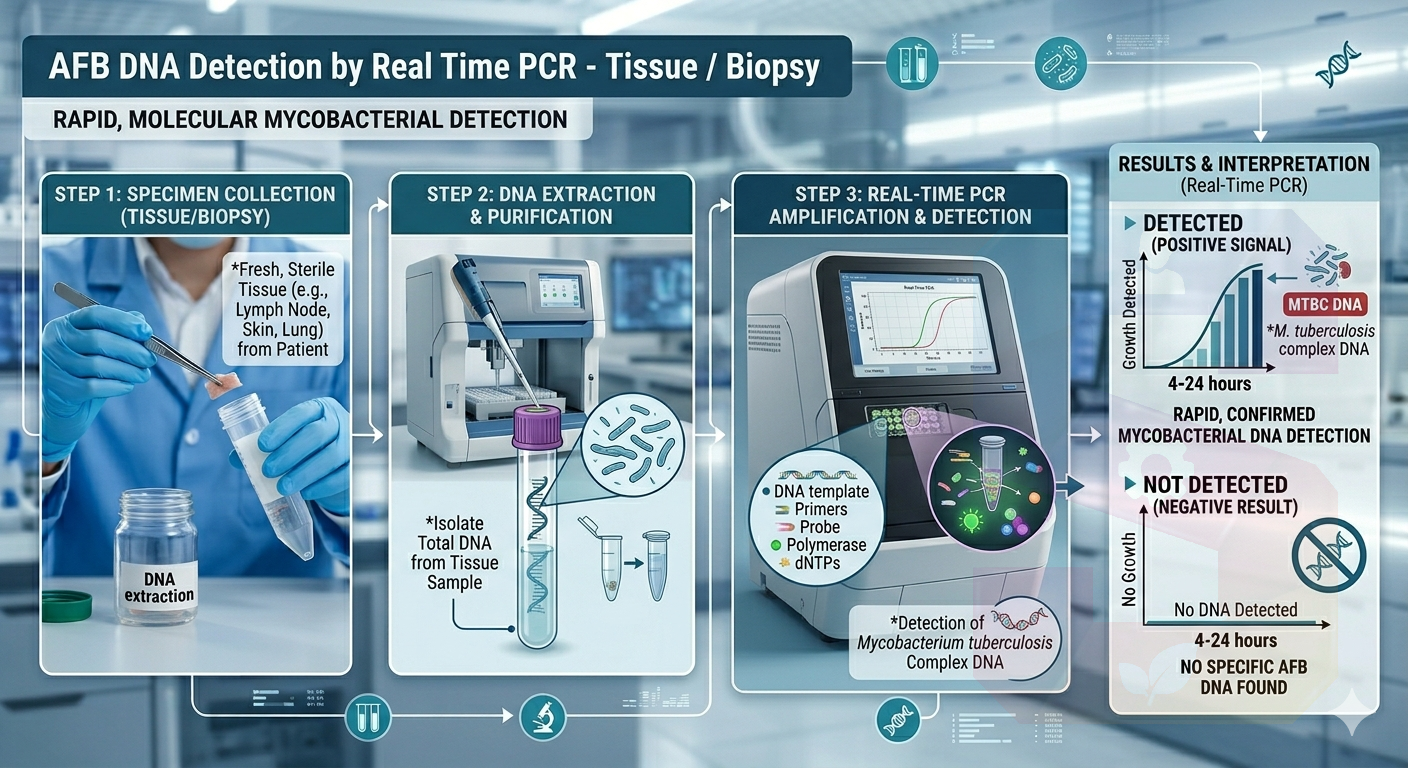
Unlike a basic microscopic visual smear, this test directly targets and amplifies the genetic code (DNA) of the Mycobacterium tuberculosis (MTB) bacteria. It is widely considered a frontline diagnostic powerhouse because it answers two vital clinical questions rapidly: Is TB DNA present? and if so, Is it a drug-resistant strain?
Deconstructing the Complex Test NameAFB-DNA (TB-PCR) by RTPCR:
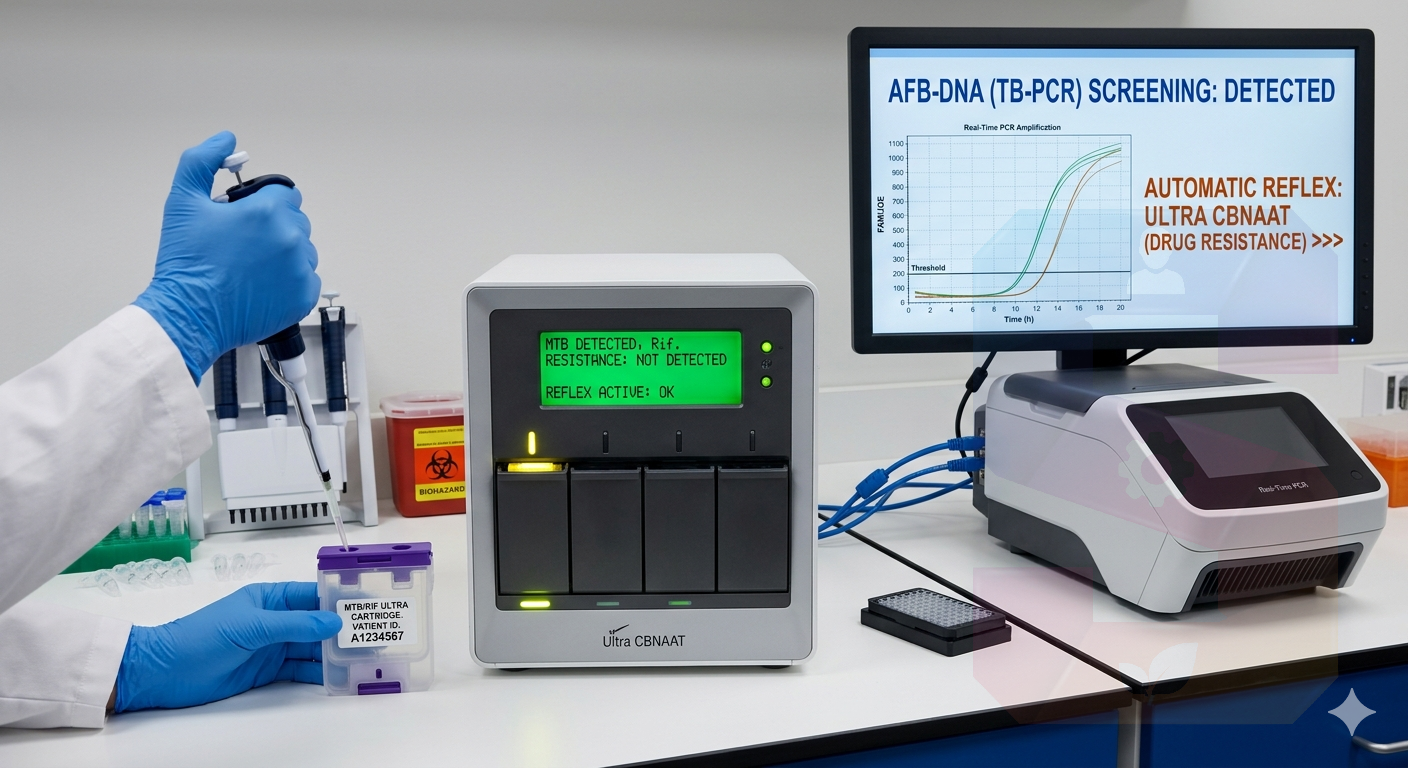
This is the first line of the test. The laboratory uses Real-Time Polymerase Chain Reaction (RTPCR) to locate even tiny, fragmented copies of tuberculosis DNA in a sample. It is far more sensitive than a microscope smear and can detect bacteria even in very low concentrations (paucibacillary infections). Reflex to Ultra CBNAAT: "Reflex" means the laboratory computer automatically triggers a secondary, deeper test only if the first step comes back positive. Ultra CBNAAT (Cartridge Based Nucleic Acid Amplification Test): This refers specifically to the GeneXpert MTB/RIF Ultra technology. It is a highly advanced molecular cartridge system that acts as a confirmation step and maps the bacterial genome to look for drug mutations. Rifampicin Resistance: Rifampicin is one of the foundational, most powerful first-line antibiotics used to cure TB. Resistance to Rifampicin is a primary medical warning indicator for MDR-TB (Multidrug-Resistant Tuberculosis), meaning standard TB medications will not work and a specialized treatment path is required.
Deconstructing the Complex Test NameAFB-DNA (TB-PCR) by RTPCR:
This is the first line of the test. The laboratory uses Real-Time Polymerase Chain Reaction (RTPCR) to locate even tiny, fragmented copies of tuberculosis DNA in a sample. It is far more sensitive than a microscope smear and can detect bacteria even in very low concentrations (paucibacillary infections). Reflex to Ultra CBNAAT: "Reflex" means the laboratory computer automatically triggers a secondary, deeper test only if the first step comes back positive. Ultra CBNAAT (Cartridge Based Nucleic Acid Amplification Test): This refers specifically to the GeneXpert MTB/RIF Ultra technology. It is a highly advanced molecular cartridge system that acts as a confirmation step and maps the bacterial genome to look for drug mutations. Rifampicin Resistance: Rifampicin is one of the foundational, most powerful first-line antibiotics used to cure TB. Resistance to Rifampicin is a primary medical warning indicator for MDR-TB (Multidrug-Resistant Tuberculosis), meaning standard TB medications will not work and a specialized treatment path is required.
Unlike a basic microscopic visual smear, this test directly targets and amplifies the genetic code (DNA) of the Mycobacterium tuberculosis (MTB) bacteria. It is widely considered a frontline diagnostic powerhouse because it answers two vital clinical questions rapidly: Is TB DNA present? and if so, Is it a drug-resistant strain?
Deconstructing the Complex Test NameAFB-DNA (TB-PCR) by RTPCR:
This is the first line of the test. The laboratory uses Real-Time Polymerase Chain Reaction (RTPCR) to locate even tiny, fragmented copies of tuberculosis DNA in a sample. It is far more sensitive than a microscope smear and can detect bacteria even in very low concentrations (paucibacillary infections). Reflex to Ultra CBNAAT: "Reflex" means the laboratory computer automatically triggers a secondary, deeper test only if the first step comes back positive. Ultra CBNAAT (Cartridge Based Nucleic Acid Amplification Test): This refers specifically to the GeneXpert MTB/RIF Ultra technology. It is a highly advanced molecular cartridge system that acts as a confirmation step and maps the bacterial genome to look for drug mutations. Rifampicin Resistance: Rifampicin is one of the foundational, most powerful first-line antibiotics used to cure TB. Resistance to Rifampicin is a primary medical warning indicator for MDR-TB (Multidrug-Resistant Tuberculosis), meaning standard TB medications will not work and a specialized treatment path is required.