


Unconventional Defense: India Explores Using Wildlife as "Biological Fences" on Bangladesh Border
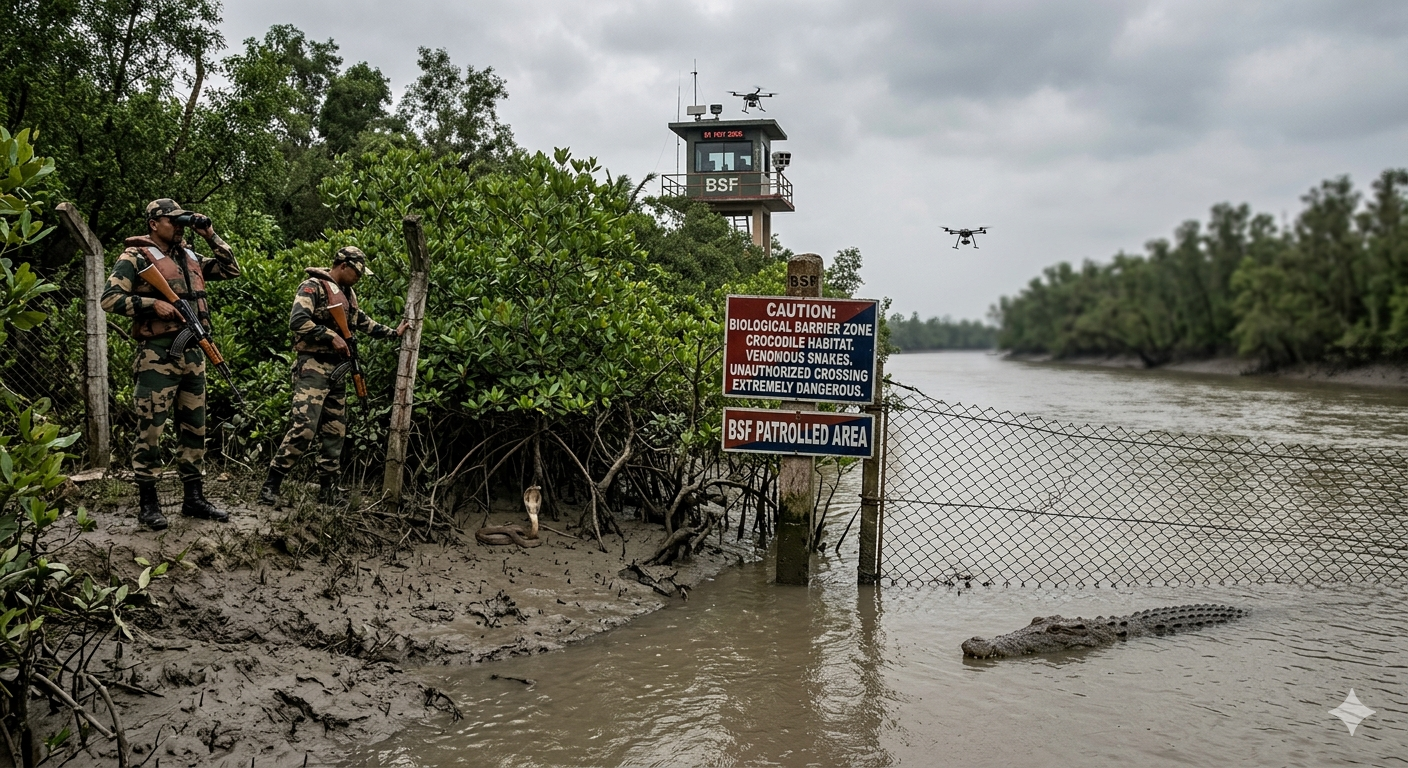
New Delhi | May 1, 2026 — In a move that has sparked intense debate among security experts and human rights advocates, India is exploring the use of "biological barriers"—specifically crocodiles and venomous snakes—to secure the most difficult stretches of its 4,096 km border with Bangladesh.
Faced with riverine gaps and marshy terrains where traditional steel fencing is impossible to maintain, the Border Security Force (BSF) is looking toward nature to augment its surveillance.
The Strategy: Why Predators?
The proposal, currently in its exploratory stage, targets approximately 175 km of unfenced "vulnerable gaps". These areas, primarily in the Sundarbans and the swamps of West Bengal and Assam, are frequent transit points for cattle smuggling, narcotics, and illegal crossings.
-
Riverine Deterrence: In the Sundarbans, the BSF is considering the natural presence of estuarine crocodiles to monitor waterways, creating a high-risk environment for clandestine swimmers or small boats.
-
Marshy Barriers: In thick undergrowth where electronic sensors often fail due to corrosion or floods, the presence of venomous snakes like Cobras and Malayan Pit Vipers acts as a psychological and physical deterrent.
-
Cost-Effective Surveillance: Officials view this as a self-sustaining method to support drones and thermal cameras in regions where "smart fencing" infrastructure frequently collapses.
"Eco-Fencing" vs. Humanitarian Concerns
While the plan is touted as a creative solution to geographical constraints, it has drawn sharp criticism from multiple sectors.
-
Human Rights Risks: Critics argue that using predators shifts border strategy from deterrence to lethal danger, potentially leading to horrific injuries or deaths for migrants and local villagers alike.
-
Ecological Impact: Environmentalists warn that managing wildlife as security assets could disrupt the delicate food chains of the Sundarbans and interfere with natural migration patterns.
-
Accountability: There are growing concerns that using wildlife as a "proxy" for border guards may allow authorities to avoid accountability for incidents occurring in the "no-man's-land" zones.
Current Status
As of today, the BSF has directed its field units to conduct feasibility studies on the implementation of these biological barriers. While the plan has not been officially deployed, it marks a significant shift in how India views its "unfenceable" frontiers. For now, the BSF continues to prioritize technological solutions, such as underground sensors and specialized drones, alongside these controversial wildlife discussions.
