




Directory
Browse the SeshtaConnect Directory: Find professionals, courses, job listings, and groups. Discover new connections to ignite your career and personal growth.
-
-
 Anti ro-SSA-IGG Antibodies by EIA Test New2,000.00₹In stockAll over India0 ReviewsAn **Anti-Ro/SSA IgG Antibodies by EIA (Enzyme Immunoassay)** test checks your blood for specific autoantibodies that mistakenly attack the body's own proteins.
This test is primarily used to help diagnose autoimmune conditions, most notably **Sjögren’s syndrome** (causing severe dry eyes and mouth) and **Systemic Lupus Erythematosus (SLE)**.
A positive result means these antibodies are present, signaling an active autoimmune response. For pregnant individuals, identifying Ro/SSA antibodies is especially crucial, as they can cross the placenta and require careful monitoring to manage the risk of neonatal lupus or congenital heart block in the baby.An **Anti-Ro/SSA IgG Antibodies by EIA (Enzyme Immunoassay)** test checks your blood for specific autoantibodies that mistakenly attack the body's own proteins. This test is primarily used to help diagnose autoimmune conditions, most notably **Sjögren’s syndrome** (causing severe dry eyes and mouth) and **Systemic Lupus Erythematosus (SLE)**. A positive result means these antibodies are present, signaling an active autoimmune response. For pregnant individuals, identifying Ro/SSA antibodies is especially crucial, as they can cross the placenta and require careful monitoring to manage the risk of neonatal lupus or congenital heart block in the baby.0 Comments 0 Shares 1K Views 0 Reviews -
 Anti saccharomyces cerevesie antibodies (ASCA IGG) test New2,310.00₹In stockAll over India0 ReviewsAn **Anti-Saccharomyces cerevisiae Antibodies (ASCA IgG)** test is a blood test used to help diagnose inflammatory bowel disease (IBD) and distinguish between its two main types: **Crohn’s disease** and **Ulcerative Colitis**.
The test detects IgG antibodies that target *Saccharomyces cerevisiae*, a common type of dietary yeast.
Elevated levels of ASCA IgG are strongly associated with Crohn’s disease, particularly cases involving the small intestine. When combined with other autoantibody markers, a positive ASCA IgG result provides crucial diagnostic clarity, helping clinicians assess the severity of disease progression and tailor effective treatment strategies.An **Anti-Saccharomyces cerevisiae Antibodies (ASCA IgG)** test is a blood test used to help diagnose inflammatory bowel disease (IBD) and distinguish between its two main types: **Crohn’s disease** and **Ulcerative Colitis**. The test detects IgG antibodies that target *Saccharomyces cerevisiae*, a common type of dietary yeast. Elevated levels of ASCA IgG are strongly associated with Crohn’s disease, particularly cases involving the small intestine. When combined with other autoantibody markers, a positive ASCA IgG result provides crucial diagnostic clarity, helping clinicians assess the severity of disease progression and tailor effective treatment strategies.0 Comments 0 Shares 1K Views 0 Reviews -
 Anti SM antibodies by EIA New2,200.00₹In stockAll over India0 ReviewsAn **Anti-Smith (Anti-Sm) Antibodies by EIA** test is a highly specific blood test used to diagnose **Systemic Lupus Erythematosus (SLE)**.
The test detects autoantibodies directed against Smith proteins, which are core components of small nuclear ribonucleoproteins involved in cellular RNA processing.
While Anti-Sm antibodies are only found in roughly 20% to 30% of lupus patients, they are rarely present in other conditions or healthy individuals. Consequently, a positive Enzyme Immunoassay (EIA) result is heavily weighted as a definitive marker for confirming an SLE diagnosis and monitoring potential lupus-related kidney disease complications.An **Anti-Smith (Anti-Sm) Antibodies by EIA** test is a highly specific blood test used to diagnose **Systemic Lupus Erythematosus (SLE)**. The test detects autoantibodies directed against Smith proteins, which are core components of small nuclear ribonucleoproteins involved in cellular RNA processing. While Anti-Sm antibodies are only found in roughly 20% to 30% of lupus patients, they are rarely present in other conditions or healthy individuals. Consequently, a positive Enzyme Immunoassay (EIA) result is heavily weighted as a definitive marker for confirming an SLE diagnosis and monitoring potential lupus-related kidney disease complications.0 Comments 0 Shares 1K Views 0 Reviews -
 Anti-smooth muscle antibody Test New1,870.00₹In stockAll over India0 ReviewsAn **Anti-Smooth Muscle Antibody (ASMA)** test is a blood test primarily used to help diagnose **Autoimmune Hepatitis (AIH)**, a chronic condition where the body’s immune system attacks its own liver cells.
The test detects autoantibodies that target actin and other components of the cellular cytoskeleton within smooth muscle tissue.
High levels or titers of ASMA are strongly associated with Type 1 Autoimmune Hepatitis. When combined with other diagnostic findings, like elevated liver enzymes, a positive ASMA result is crucial for differentiating autoimmune liver diseases from other causes of liver injury, such as viral hepatitis or fatty liver disease.An **Anti-Smooth Muscle Antibody (ASMA)** test is a blood test primarily used to help diagnose **Autoimmune Hepatitis (AIH)**, a chronic condition where the body’s immune system attacks its own liver cells. The test detects autoantibodies that target actin and other components of the cellular cytoskeleton within smooth muscle tissue. High levels or titers of ASMA are strongly associated with Type 1 Autoimmune Hepatitis. When combined with other diagnostic findings, like elevated liver enzymes, a positive ASMA result is crucial for differentiating autoimmune liver diseases from other causes of liver injury, such as viral hepatitis or fatty liver disease.0 Comments 0 Shares 1K Views 0 Reviews -
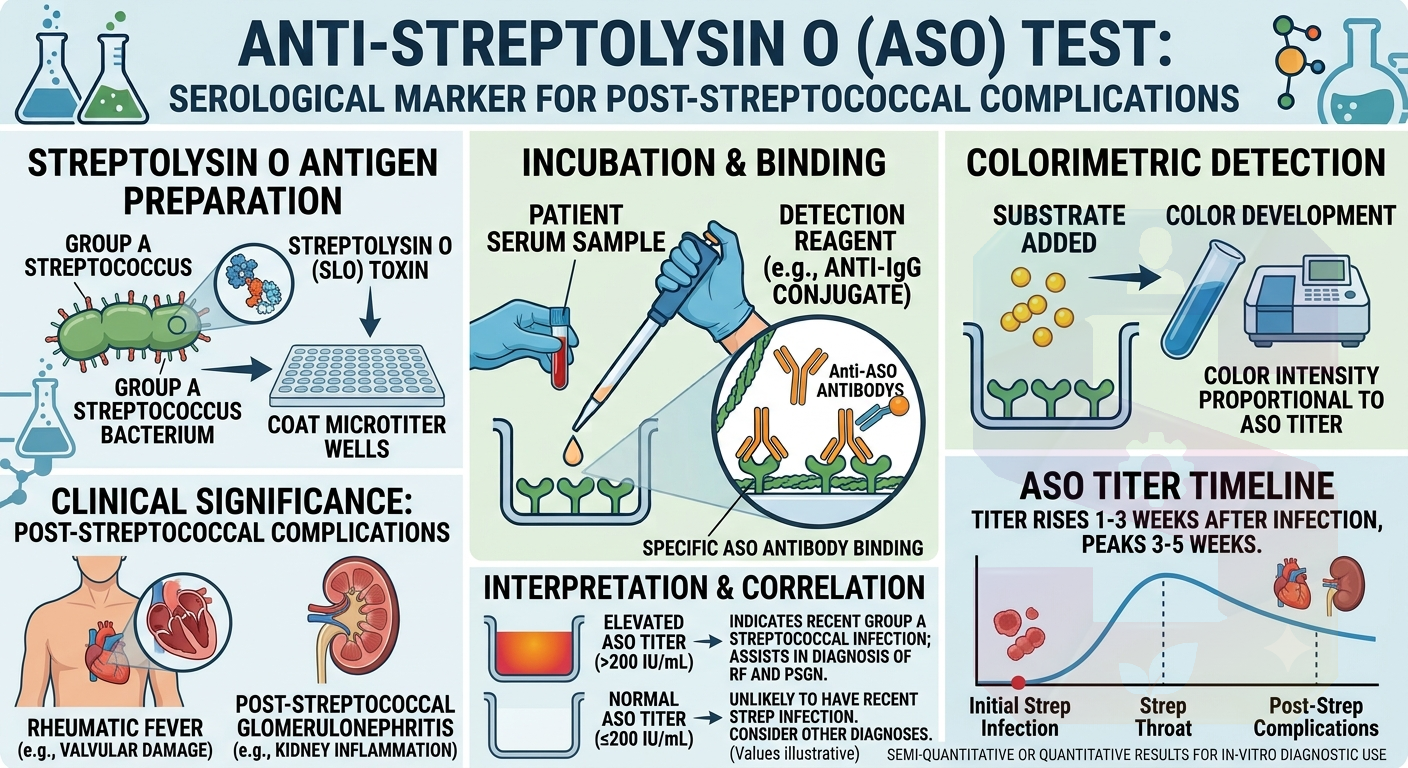 Anti-Streptolysin O (ASO) Test New473.00₹In stockAll over India0 ReviewsAn **Anti-Streptolysin O (ASO) Test** is a diagnostic blood test used to detect a recent or past infection caused by **Group A Streptococcus** bacteria, such as strep throat or scarlet fever.
The test measures the level of ASO antibodies, which the body produces to neutralize streptolysin O, a toxic enzyme released by the bacteria.
Elevated or rising ASO levels are crucial for diagnosing post-streptococcal complications that arise weeks later, most notably **rheumatic fever** and **post-streptococcal glomerulonephritis** (kidney inflammation). It helps clinicians confirm a bacterial trigger when active symptoms of the initial infection have subsided.An **Anti-Streptolysin O (ASO) Test** is a diagnostic blood test used to detect a recent or past infection caused by **Group A Streptococcus** bacteria, such as strep throat or scarlet fever. The test measures the level of ASO antibodies, which the body produces to neutralize streptolysin O, a toxic enzyme released by the bacteria. Elevated or rising ASO levels are crucial for diagnosing post-streptococcal complications that arise weeks later, most notably **rheumatic fever** and **post-streptococcal glomerulonephritis** (kidney inflammation). It helps clinicians confirm a bacterial trigger when active symptoms of the initial infection have subsided.0 Comments 0 Shares 1K Views 0 Reviews -
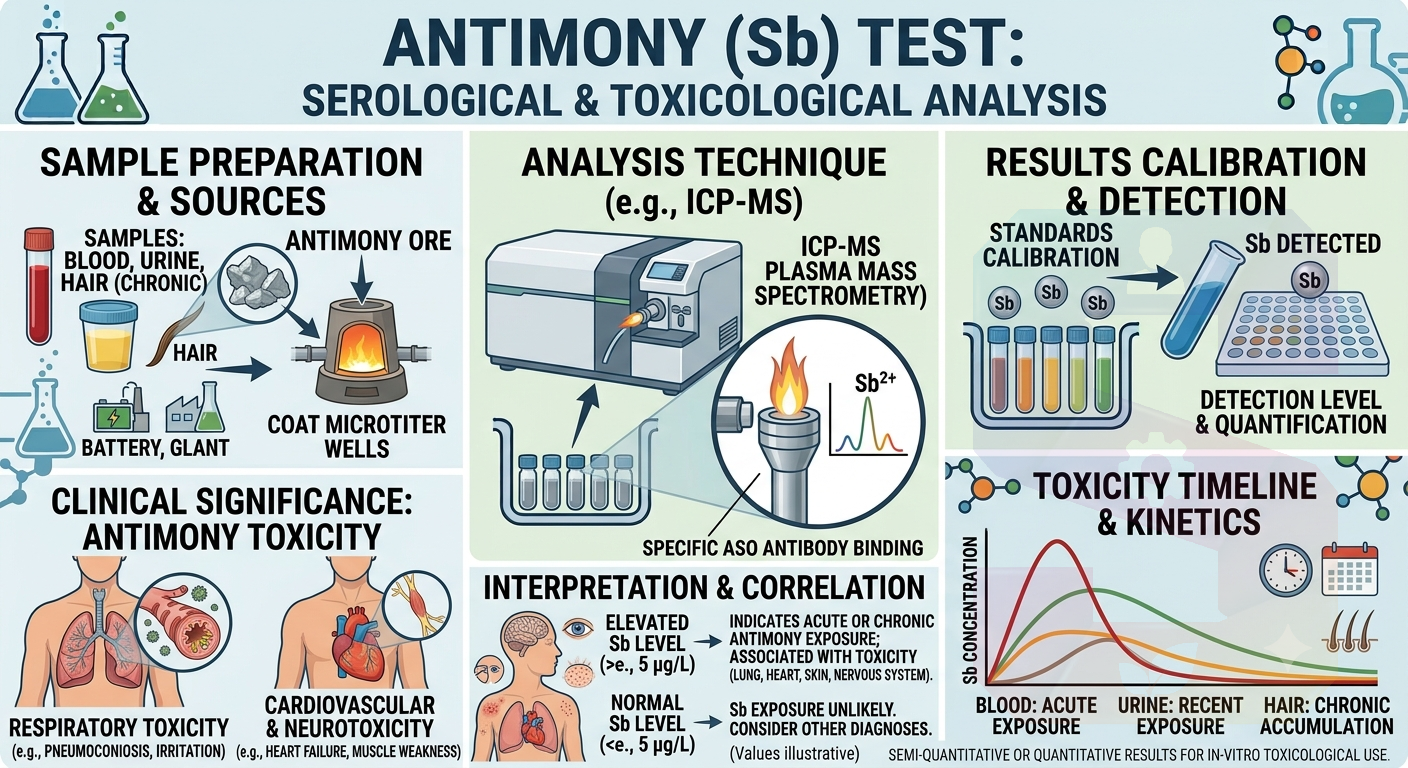 Antimony Test New2,145.00₹In stockAll over India0 ReviewsAn **Antimony Test** is a diagnostic toxicology evaluation used to measure the levels of antimony, a toxic heavy metal, in a patient's blood, urine, or hair.
The test is primarily ordered to investigate acute or chronic heavy metal poisoning resulting from occupational exposure (such as in smelting, glass production, or battery manufacturing) or accidental ingestion.
Elevated antimony levels can indicate systemic toxicity, which can severely impact the respiratory system, cardiovascular health, and gastrointestinal tract. Monitoring these levels is essential for diagnosing environmental toxicity, ensuring industrial workplace safety, and managing effective chelation therapy.An **Antimony Test** is a diagnostic toxicology evaluation used to measure the levels of antimony, a toxic heavy metal, in a patient's blood, urine, or hair. The test is primarily ordered to investigate acute or chronic heavy metal poisoning resulting from occupational exposure (such as in smelting, glass production, or battery manufacturing) or accidental ingestion. Elevated antimony levels can indicate systemic toxicity, which can severely impact the respiratory system, cardiovascular health, and gastrointestinal tract. Monitoring these levels is essential for diagnosing environmental toxicity, ensuring industrial workplace safety, and managing effective chelation therapy.0 Comments 0 Shares 2K Views 0 Reviews