


• Arthritis Scan Test New
    1,099.00₹
    In stock
    All over India
    0 Reviews
    An **arthritis scan test** is a non-invasive diagnostic imaging procedure—such as an MRI, ultrasound, X-ray, or CT scan—used to evaluate joint health and detect structural changes. It provides detailed visual insights into affected joints, allowing clinicians to assess cartilage wear, bone erosion, joint space narrowing, fluid accumulation, and soft tissue inflammation.
    By accurately identifying conditions like osteoarthritis, rheumatoid arthritis, or psoriatic arthritis, these scans play a critical role in confirming diagnoses. They also help monitor disease progression and evaluate treatment response over time. Timely imaging empowers healthcare providers to customize targeted therapies, protect joint functionality, and manage long-term discomfort effectively.
    An **arthritis scan test** is a non-invasive diagnostic imaging procedure—such as an MRI, ultrasound, X-ray, or CT scan—used to evaluate joint health and detect structural changes. It provides detailed visual insights into affected joints, allowing clinicians to assess cartilage wear, bone erosion, joint space narrowing, fluid accumulation, and soft tissue inflammation. By accurately identifying conditions like osteoarthritis, rheumatoid arthritis, or psoriatic arthritis, these scans play a critical role in confirming diagnoses. They also help monitor disease progression and evaluate treatment response over time. Timely imaging empowers healthcare providers to customize targeted therapies, protect joint functionality, and manage long-term discomfort effectively.
    0 Comments 0 Shares 438 Views 0 Reviews
  • Arthritis Screen Profile (4 marker) New
    1,081.00₹
    In stock
    All over India
    0 Reviews
    An **Arthritis Screen Profile (4 Markers)** is a targeted, focused diagnostic blood test designed for early evaluation of joint pain and systemic inflammation. By measuring four key biomarkers—typically **Rheumatoid Factor (RF)**, **Anti-CCP**, **C-Reactive Protein (CRP)**, and **Erythrocyte Sedimentation Rate (ESR)**—this profile helps clinicians differentiate between autoimmune disorders like rheumatoid arthritis and non-autoimmune conditions.
    The test detects active inflammatory processes, identifies specific autoantibodies, and assesses overall disease severity. Swift and precise, the 4-marker panel enables healthcare providers to establish an accurate diagnosis, start timely therapeutic intervention, and help safeguard long-term joint health and mobility.
    An **Arthritis Screen Profile (4 Markers)** is a targeted, focused diagnostic blood test designed for early evaluation of joint pain and systemic inflammation. By measuring four key biomarkers—typically **Rheumatoid Factor (RF)**, **Anti-CCP**, **C-Reactive Protein (CRP)**, and **Erythrocyte Sedimentation Rate (ESR)**—this profile helps clinicians differentiate between autoimmune disorders like rheumatoid arthritis and non-autoimmune conditions. The test detects active inflammatory processes, identifies specific autoantibodies, and assesses overall disease severity. Swift and precise, the 4-marker panel enables healthcare providers to establish an accurate diagnosis, start timely therapeutic intervention, and help safeguard long-term joint health and mobility.
    0 Comments 0 Shares 451 Views 0 Reviews
  • ASCA- IgA Saccharomyces Cerevisiae New
    2,360.00₹
    In stock
    All over India
    0 Reviews
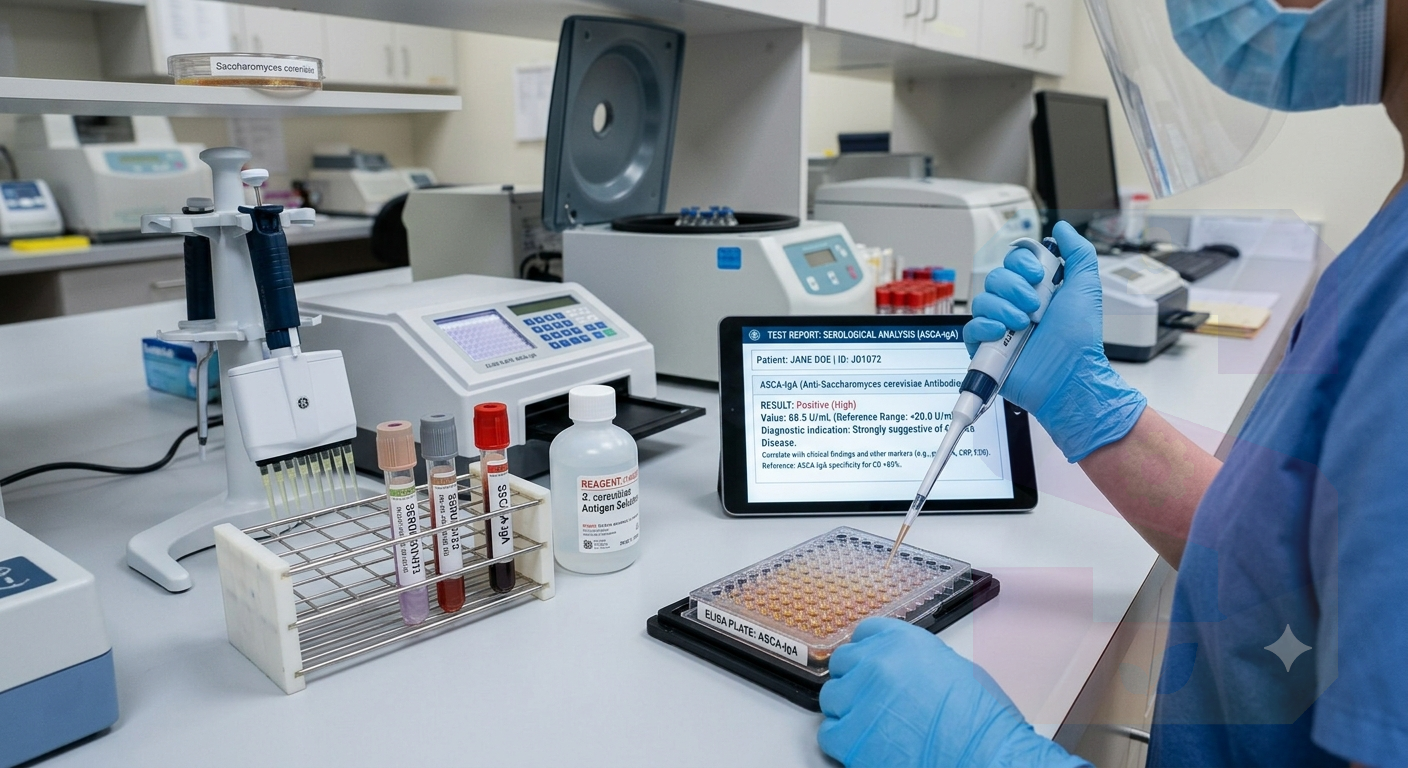
    An **ASCA-IgA (Anti-*Saccharomyces cerevisiae* Antibodies - IgA)** test is a specialized serological blood assay used in the diagnostic evaluation of Inflammatory Bowel Disease (IBD). It detects IgA-class antibodies targeted against the cell wall mannan of the yeast *Saccharomyces cerevisiae*.
    This biomarker is particularly valuable in differentiating Crohn’s disease from Ulcerative Colitis, as positive ASCA-IgA levels strongly correlate with Crohn’s disease. When combined with other serological markers like pANCA, the test aids gastroenterologists in refining diagnosis, predicting disease phenotype, assessing clinical severity, and guiding personalized therapeutic strategies for long-term management of gastrointestinal inflammation.

    An **ASCA-IgA (Anti-*Saccharomyces cerevisiae* Antibodies - IgA)** test is a specialized serological blood assay used in the diagnostic evaluation of Inflammatory Bowel Disease (IBD). It detects IgA-class antibodies targeted against the cell wall mannan of the yeast *Saccharomyces cerevisiae*. This biomarker is particularly valuable in differentiating Crohn’s disease from Ulcerative Colitis, as positive ASCA-IgA levels strongly correlate with Crohn’s disease. When combined with other serological markers like pANCA, the test aids gastroenterologists in refining diagnosis, predicting disease phenotype, assessing clinical severity, and guiding personalized therapeutic strategies for long-term management of gastrointestinal inflammation.

    0 Comments 0 Shares 405 Views 0 Reviews
  • Ascitic fluid by Conventional method New
    1,500.00₹
    In stock
    All over India
    0 Reviews
    **Ascitic Fluid Analysis by Conventional Method** is a fundamental diagnostic evaluation used to determine the underlying cause of abnormal fluid accumulation within the peritoneal cavity (ascites). The conventional procedure involves manual microscopic, chemical, and microbiological examinations, including cell counts, differential analysis, total protein, albumin, and Gram staining.
    By evaluating parameters such as the Serum-Ascites Albumin Gradient (SAAG), this traditional methodology effectively differentiates transudative causes (like cirrhosis or heart failure) from exudative causes (such as peritonitis or malignancy). It serves as a reliable, cost-effective cornerstone for clinicians to rapidly guide targeted therapeutic interventions and manage liver disease or abdominal pathologies.
    **Ascitic Fluid Analysis by Conventional Method** is a fundamental diagnostic evaluation used to determine the underlying cause of abnormal fluid accumulation within the peritoneal cavity (ascites). The conventional procedure involves manual microscopic, chemical, and microbiological examinations, including cell counts, differential analysis, total protein, albumin, and Gram staining. By evaluating parameters such as the Serum-Ascites Albumin Gradient (SAAG), this traditional methodology effectively differentiates transudative causes (like cirrhosis or heart failure) from exudative causes (such as peritonitis or malignancy). It serves as a reliable, cost-effective cornerstone for clinicians to rapidly guide targeted therapeutic interventions and manage liver disease or abdominal pathologies.
    0 Comments 0 Shares 606 Views 0 Reviews
  • Aspartate Amino Transferase (SGOT) Test New
    190.00₹
    In stock
    All over India
    0 Reviews
    An **Aspartate Aminotransferase (SGOT/AST) Test** is a crucial diagnostic blood assay used to measure levels of the AST enzyme in the bloodstream. While primarily found in the liver, AST is also present in heart tissue, skeletal muscles, kidneys, and the brain.
    Elevated SGOT levels typically indicate cellular injury or tissue damage, commonly resulting from liver conditions like hepatitis, cirrhosis, or fatty liver disease, as well as muscle trauma or cardiac events. Often evaluated alongside Alanine Aminotransferase (ALT), this test helps healthcare providers assess liver functionality, monitor disease progression, and determine the underlying cause of organ injury.
    An **Aspartate Aminotransferase (SGOT/AST) Test** is a crucial diagnostic blood assay used to measure levels of the AST enzyme in the bloodstream. While primarily found in the liver, AST is also present in heart tissue, skeletal muscles, kidneys, and the brain. Elevated SGOT levels typically indicate cellular injury or tissue damage, commonly resulting from liver conditions like hepatitis, cirrhosis, or fatty liver disease, as well as muscle trauma or cardiac events. Often evaluated alongside Alanine Aminotransferase (ALT), this test helps healthcare providers assess liver functionality, monitor disease progression, and determine the underlying cause of organ injury.
    0 Comments 0 Shares 632 Views 0 Reviews
  • Aspergillosis IgG Antibodies New
    2,100.00₹
    In stock
    All over India
    0 Reviews
    An **Aspergillosis IgG Antibodies Test** is a specialized serological blood assay used to detect specific immunoglobulin G (IgG) antibodies produced in response to *Aspergillus*, a common environmental fungus. Elevated levels of Aspergillosis IgG indicate an active or recent fungal infection, making this test essential for diagnosing non-invasive or chronic pulmonary forms of the disease, such as Chronic Pulmonary Aspergillosis (CPA) or an Aspergilloma ("fungus ball").
    By evaluating the patient's immune response to fungal antigens, this test helps clinicians confirm persistent infections, assess treatment effectiveness, and prevent severe, long-term lung tissue damage.
    An **Aspergillosis IgG Antibodies Test** is a specialized serological blood assay used to detect specific immunoglobulin G (IgG) antibodies produced in response to *Aspergillus*, a common environmental fungus. Elevated levels of Aspergillosis IgG indicate an active or recent fungal infection, making this test essential for diagnosing non-invasive or chronic pulmonary forms of the disease, such as Chronic Pulmonary Aspergillosis (CPA) or an Aspergilloma ("fungus ball"). By evaluating the patient's immune response to fungal antigens, this test helps clinicians confirm persistent infections, assess treatment effectiveness, and prevent severe, long-term lung tissue damage.
    0 Comments 0 Shares 550 Views 0 Reviews
  • Aspergillosis IgM Antibodies New
    2,400.00₹
    In stock
    All over India
    0 Reviews
    An **Aspergillosis IgM Antibodies Test** is a diagnostic blood assay designed to detect Immunoglobulin M (IgM) antibodies against the *Aspergillus* fungus. Because IgM is the first antibody produced by the immune system following exposure to an antigen, detecting Aspergillosis IgM indicates an acute or early-stage fungal infection.
    This test is particularly valuable for identifying recent exposure or early invasive aspergillosis, especially in immunocompromised patients or individuals with existing lung conditions. By flagging early-stage fungal activity, the assay enables healthcare providers to initiate prompt antifungal therapies, preventing the spread of infection and protecting pulmonary function.
    An **Aspergillosis IgM Antibodies Test** is a diagnostic blood assay designed to detect Immunoglobulin M (IgM) antibodies against the *Aspergillus* fungus. Because IgM is the first antibody produced by the immune system following exposure to an antigen, detecting Aspergillosis IgM indicates an acute or early-stage fungal infection. This test is particularly valuable for identifying recent exposure or early invasive aspergillosis, especially in immunocompromised patients or individuals with existing lung conditions. By flagging early-stage fungal activity, the assay enables healthcare providers to initiate prompt antifungal therapies, preventing the spread of infection and protecting pulmonary function.
    0 Comments 0 Shares 599 Views 0 Reviews
  • Autism Test (Package) New
    5,000.00₹
    In stock
    All over India
    0 Reviews
    An **Autism Screening Test Package** is a comprehensive diagnostic evaluation designed to identify developmental delays and behavioral traits associated with Autism Spectrum Disorder (ASD). Tailored for children, adolescents, or adults, this multi-disciplinary package typically combines standardized clinical screening tools, behavioral observations, developmental history assessments, and cognitive or communication evaluations.
    By gathering structured insights from specialists—such as developmental pediatricians, psychologists, and speech therapists—the panel helps clarify social interaction patterns, sensory sensitivities, and repetitive behaviors. Early detection through a formal test package empowers families to access tailored therapies, educational support, and interventions during critical developmental windows.
    An **Autism Screening Test Package** is a comprehensive diagnostic evaluation designed to identify developmental delays and behavioral traits associated with Autism Spectrum Disorder (ASD). Tailored for children, adolescents, or adults, this multi-disciplinary package typically combines standardized clinical screening tools, behavioral observations, developmental history assessments, and cognitive or communication evaluations. By gathering structured insights from specialists—such as developmental pediatricians, psychologists, and speech therapists—the panel helps clarify social interaction patterns, sensory sensitivities, and repetitive behaviors. Early detection through a formal test package empowers families to access tailored therapies, educational support, and interventions during critical developmental windows.
    0 Comments 0 Shares 621 Views 0 Reviews
  • Autoimmune Encephalitis Panel New
    23,000.00₹
    In stock
    All over India
    0 Reviews
    An **Autoimmune Encephalitis Panel** is a specialized diagnostic test package used to identify autoantibodies attacking brain tissue, leading to acute central nervous system inflammation. This comprehensive panel screens serum or cerebrospinal fluid (CSF) for crucial neural antibodies, including NMDA receptor, LGI1, CASPR2, and GABA-B receptor antibodies.
    Autoimmune encephalitis can cause rapid-onset cognitive decline, seizures, psychiatric symptoms, and movement disorders. By detecting specific target antibodies, this test helps neurologists distinguish autoimmune causes from infectious encephalopathies. Early, accurate identification via this panel allows clinicians to promptly initiate targeted immunotherapy, mitigating neurological damage and improving patient outcomes.
    An **Autoimmune Encephalitis Panel** is a specialized diagnostic test package used to identify autoantibodies attacking brain tissue, leading to acute central nervous system inflammation. This comprehensive panel screens serum or cerebrospinal fluid (CSF) for crucial neural antibodies, including NMDA receptor, LGI1, CASPR2, and GABA-B receptor antibodies. Autoimmune encephalitis can cause rapid-onset cognitive decline, seizures, psychiatric symptoms, and movement disorders. By detecting specific target antibodies, this test helps neurologists distinguish autoimmune causes from infectious encephalopathies. Early, accurate identification via this panel allows clinicians to promptly initiate targeted immunotherapy, mitigating neurological damage and improving patient outcomes.
    0 Comments 0 Shares 633 Views 0 Reviews
  • Autoimmune Encephalitis Panel-2 CSF New
    32,550.00₹
    In stock
    All over India
    0 Reviews
    An **Autoimmune Encephalitis Panel-2 CSF** is an advanced diagnostic panel performed on cerebrospinal fluid (CSF) to evaluate acute central nervous system inflammation caused by specific autoantibodies. By analyzing CSF directly—where neural antibody concentrations are often highest and most specific—this test screens for target antibodies targeting cell-surface and intracellular neuronal antigens, including NMDAR, LGI1, CASPR2, and GAD65.
    This panel is vital for differentiating autoimmune-mediated neurological disorders from infectious or metabolic encephalopathies. Detecting these antibodies directly from CSF provides high diagnostic precision, enabling neurologists to rapidly initiate targeted immunotherapies, suppress brain inflammation, and optimize patient recovery.
    An **Autoimmune Encephalitis Panel-2 CSF** is an advanced diagnostic panel performed on cerebrospinal fluid (CSF) to evaluate acute central nervous system inflammation caused by specific autoantibodies. By analyzing CSF directly—where neural antibody concentrations are often highest and most specific—this test screens for target antibodies targeting cell-surface and intracellular neuronal antigens, including NMDAR, LGI1, CASPR2, and GAD65. This panel is vital for differentiating autoimmune-mediated neurological disorders from infectious or metabolic encephalopathies. Detecting these antibodies directly from CSF provides high diagnostic precision, enabling neurologists to rapidly initiate targeted immunotherapies, suppress brain inflammation, and optimize patient recovery.
    0 Comments 0 Shares 631 Views 0 Reviews
Sponsored