

• Aldosterone Urine 24H diagnostic test New
    2,200.00₹
    In stock
    Hyderabad
    0 Reviews
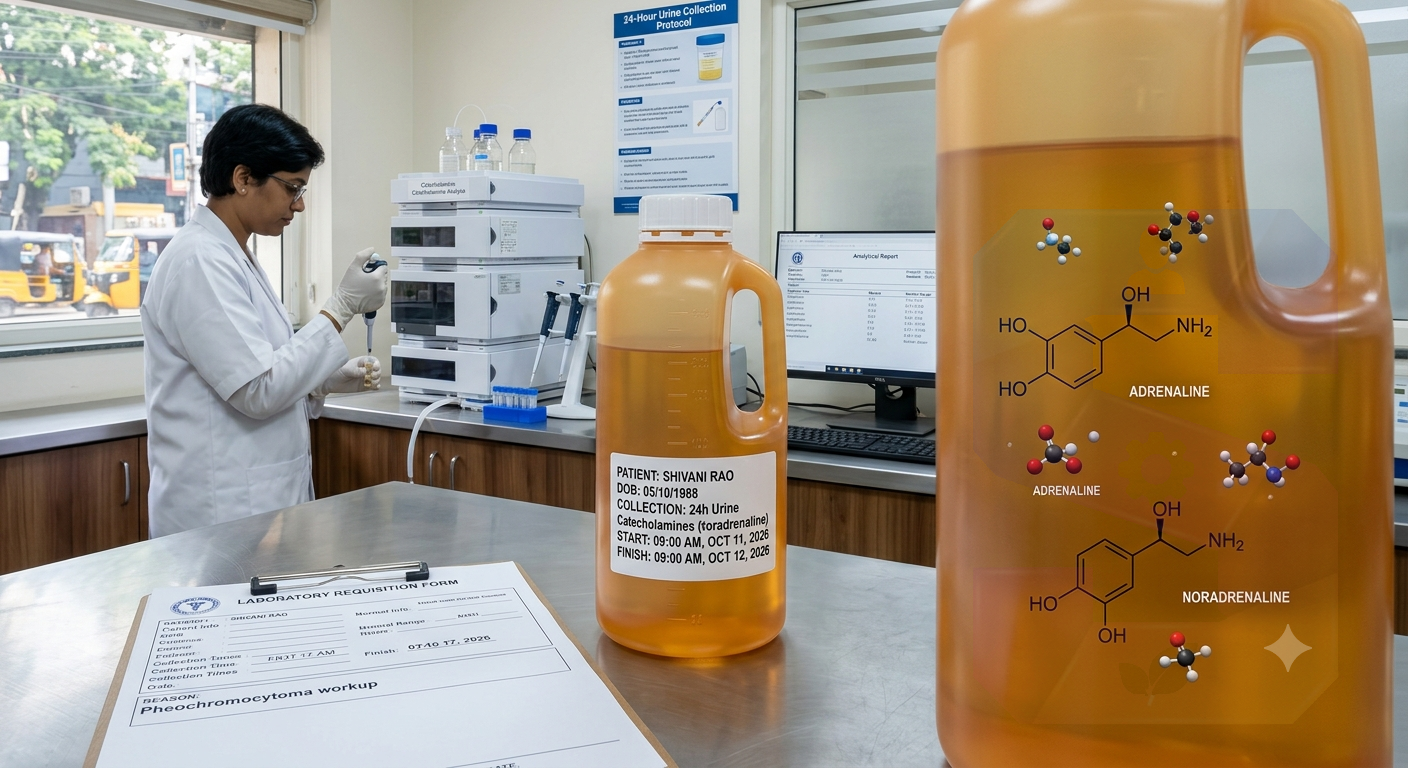
    An **Aldosterone 24-Hour Urine Diagnostic Test** measures the total amount of aldosterone excreted in urine over a full day. This provides a comprehensive overview of hormone production, bypassing the hourly fluctuations common in blood tests.

    To perform the test, a patient collects all urine passed within a 24-hour period into a specialized container.

    Clinicians typically order this test to confirm primary aldosteronism (Conn's syndrome) or evaluate cases of difficult-to-treat high blood pressure and low blood potassium. Because results depend heavily on diet, patients are often instructed to maintain a specific sodium intake prior to collection.
    An **Aldosterone 24-Hour Urine Diagnostic Test** measures the total amount of aldosterone excreted in urine over a full day. This provides a comprehensive overview of hormone production, bypassing the hourly fluctuations common in blood tests. To perform the test, a patient collects all urine passed within a 24-hour period into a specialized container. Clinicians typically order this test to confirm primary aldosteronism (Conn's syndrome) or evaluate cases of difficult-to-treat high blood pressure and low blood potassium. Because results depend heavily on diet, patients are often instructed to maintain a specific sodium intake prior to collection.
    0 Comments 0 Shares 88 Views 0 Reviews
  • Aldosterone Diagnostic test New
    2,440.00₹
    In stock
    Hyderabad
    0 Reviews
    An Aldosterone Diagnostic Test measures the level of aldosterone, a hormone produced by the adrenal glands that plays a critical role in regulating blood pressure. It controls how the kidneys balance essential electrolytes, specifically by retaining sodium and excreting potassium.

    Clinicians typically order this blood or 24-hour urine test to investigate primary aldosteronism (Conn's syndrome), unexplained high blood pressure, or low blood potassium levels. Because aldosterone levels fluctuate based on salt intake and body position, the test is frequently performed alongside a plasma renin activity (PRA) test to accurately evaluate underlying adrenal or kidney disorders.
    An Aldosterone Diagnostic Test measures the level of aldosterone, a hormone produced by the adrenal glands that plays a critical role in regulating blood pressure. It controls how the kidneys balance essential electrolytes, specifically by retaining sodium and excreting potassium. Clinicians typically order this blood or 24-hour urine test to investigate primary aldosteronism (Conn's syndrome), unexplained high blood pressure, or low blood potassium levels. Because aldosterone levels fluctuate based on salt intake and body position, the test is frequently performed alongside a plasma renin activity (PRA) test to accurately evaluate underlying adrenal or kidney disorders.
    0 Comments 0 Shares 83 Views 0 Reviews
  • Aldolase enzymatic diagnostic test New
    1,000.00₹
    In stock
    Hyderabad
    0 Reviews
    An Aldolase Diagnostic Test is a clinical blood test that measures the levels of aldolase, an essential enzyme responsible for breaking down sugars into cellular energy.

    While aldolase is found throughout the body, it is most highly concentrated in skeletal muscle tissue and the liver. When these tissues experience injury, inflammation, or disease, aldolase leaks directly into the bloodstream.

    Clinicians primarily use this test to detect, monitor, and differentiate skeletal muscle disorders, such as muscular dystrophy, dermatomyositis, or severe muscle trauma, from neurological conditions. It can also help evaluate underlying liver damage.
    An Aldolase Diagnostic Test is a clinical blood test that measures the levels of aldolase, an essential enzyme responsible for breaking down sugars into cellular energy. While aldolase is found throughout the body, it is most highly concentrated in skeletal muscle tissue and the liver. When these tissues experience injury, inflammation, or disease, aldolase leaks directly into the bloodstream. Clinicians primarily use this test to detect, monitor, and differentiate skeletal muscle disorders, such as muscular dystrophy, dermatomyositis, or severe muscle trauma, from neurological conditions. It can also help evaluate underlying liver damage.
    0 Comments 0 Shares 84 Views 0 Reviews
  • Albumin Diagnostics test New
    165.00₹
    In stock
    Hyderabad
    0 Reviews
    Albumin is the most abundant protein found in human blood plasma, primarily produced by the liver. It acts as a vital carrier molecule, transporting essential substances like hormones, vitamins, enzymes, and medications throughout the body.

    Crucially, albumin maintains oncotic pressure, a counter-pressure that prevents fluid from leaking out of blood vessels into surrounding tissues.

    A simple blood test measuring albumin levels helps evaluate liver function, kidney health, and nutritional status. Low levels often signal underlying issues, such as liver disease, kidney malfunction, or severe malnutrition, causing fluid buildup and swelling (edema) in the body.
    Albumin is the most abundant protein found in human blood plasma, primarily produced by the liver. It acts as a vital carrier molecule, transporting essential substances like hormones, vitamins, enzymes, and medications throughout the body. Crucially, albumin maintains oncotic pressure, a counter-pressure that prevents fluid from leaking out of blood vessels into surrounding tissues. A simple blood test measuring albumin levels helps evaluate liver function, kidney health, and nutritional status. Low levels often signal underlying issues, such as liver disease, kidney malfunction, or severe malnutrition, causing fluid buildup and swelling (edema) in the body.
    0 Comments 0 Shares 94 Views 0 Reviews
  • Alanine Transaminase (SGPT) New
    190.00₹
    In stock
    Hyderabad
    0 Reviews
    Alanine Transaminase (ALT), commonly known as SGPT, is an essential enzyme found primarily in the liver. It plays a crucial role in converting food into cellular energy.

    When liver cells are damaged or inflamed due to conditions like fatty liver, hepatitis, or alcohol consumption, SGPT leaks out of the cells and enters the bloodstream. A simple blood test measures these levels to assess overall liver health.

    Mildly elevated levels can indicate early stress on the liver, while significantly high numbers point to more acute injuries, allowing doctors to detect, monitor, and treat liver disorders early.
    Alanine Transaminase (ALT), commonly known as SGPT, is an essential enzyme found primarily in the liver. It plays a crucial role in converting food into cellular energy. When liver cells are damaged or inflamed due to conditions like fatty liver, hepatitis, or alcohol consumption, SGPT leaks out of the cells and enters the bloodstream. A simple blood test measures these levels to assess overall liver health. Mildly elevated levels can indicate early stress on the liver, while significantly high numbers point to more acute injuries, allowing doctors to detect, monitor, and treat liver disorders early.
    0 Comments 0 Shares 109 Views 0 Reviews
  • AFB-M.Tb detection with 1st line drug resistance (Rifampicin and Isoniazid resistance) by CBNAAT New
    3,300.00₹
    In stock
    Hyderabad
    0 Reviews
    This rapid, automated DNA test detects active Tuberculosis (M.Tb) and checks for resistance to the two most critical first-line TB medications: Rifampicin and Isoniazid.

    Using advanced CBNAAT (GeneXpert) technology, the test analyzes samples (like sputum, fluid, or tissue) to identify bacterial DNA within hours. Simultaneously, it maps genetic mutations responsible for drug resistance.

    By confirming whether the infection is standard TB or drug-resistant TB (such as MDR-TB), this test prevents critical treatment delays. It allows doctors to bypass weeks of traditional lab cultures and immediately prescribe the most effective, lifesaving antibiotic regimen.
    This rapid, automated DNA test detects active Tuberculosis (M.Tb) and checks for resistance to the two most critical first-line TB medications: Rifampicin and Isoniazid. Using advanced CBNAAT (GeneXpert) technology, the test analyzes samples (like sputum, fluid, or tissue) to identify bacterial DNA within hours. Simultaneously, it maps genetic mutations responsible for drug resistance. By confirming whether the infection is standard TB or drug-resistant TB (such as MDR-TB), this test prevents critical treatment delays. It allows doctors to bypass weeks of traditional lab cultures and immediately prescribe the most effective, lifesaving antibiotic regimen.
    0 Comments 0 Shares 120 Views 0 Reviews
  • AFB-M.Tb detection (M.Tb/NTM Detection) by CBNAAT Pleural Fluid New
    2,700.00₹
    In stock
    Hyderabad
    0 Reviews
    Test Overview: CBNAAT for M.Tb/NTM Detection (Pleural Fluid)
    This test utilizes Cartridge-Based Nucleic Acid Amplification Test (CBNAAT)—commonly known as the GeneXpert assay—to rapidly detect the presence of Mycobacterium tuberculosis (M.Tb) complex DNA in pleural fluid samples. Additionally, it differentiates M.Tb from Nontuberculous Mycobacteria (NTM) and simultaneously detects mutations associated with resistance to Rifampicin, a primary first-line anti-tubercular drug.

    Clinical Significance
    Pleural tuberculosis often presents as an exudative pleural effusion where traditional Acid-Fast Bacilli (AFB) smear microscopy has very low sensitivity due to the paucibacillary nature (low bacterial load) of the fluid.

    Speed and Sensitivity: CBNAAT bridges this gap by amplifying DNA, offering a much higher sensitivity than routine microscopy and delivering results within a few hours (compared to weeks for mycobacterial culture).

    NTM Differentiation: Distinguishing between M.Tb and NTM is critical, as the clinical management and antibiotic regimens for NTM infections differ significantly from standard tuberculosis treatment.

    Drug Resistance Screening: Early identification of Rifampicin resistance serves as a crucial surrogate marker for multidrug-resistant TB (MDR-TB), allowing clinicians to tailor effective treatment regimens immediately.
    Test Overview: CBNAAT for M.Tb/NTM Detection (Pleural Fluid) This test utilizes Cartridge-Based Nucleic Acid Amplification Test (CBNAAT)—commonly known as the GeneXpert assay—to rapidly detect the presence of Mycobacterium tuberculosis (M.Tb) complex DNA in pleural fluid samples. Additionally, it differentiates M.Tb from Nontuberculous Mycobacteria (NTM) and simultaneously detects mutations associated with resistance to Rifampicin, a primary first-line anti-tubercular drug. Clinical Significance Pleural tuberculosis often presents as an exudative pleural effusion where traditional Acid-Fast Bacilli (AFB) smear microscopy has very low sensitivity due to the paucibacillary nature (low bacterial load) of the fluid. Speed and Sensitivity: CBNAAT bridges this gap by amplifying DNA, offering a much higher sensitivity than routine microscopy and delivering results within a few hours (compared to weeks for mycobacterial culture). NTM Differentiation: Distinguishing between M.Tb and NTM is critical, as the clinical management and antibiotic regimens for NTM infections differ significantly from standard tuberculosis treatment. Drug Resistance Screening: Early identification of Rifampicin resistance serves as a crucial surrogate marker for multidrug-resistant TB (MDR-TB), allowing clinicians to tailor effective treatment regimens immediately.
    0 Comments 0 Shares 394 Views 0 Reviews
  • AFB-M.Tb detection (M.Tb/NTM Detection) by CBNAAT BAL New
    2,700.00₹
    In stock
    Hyderabad
    0 Reviews
    An AFB-M.Tb Detection (M.Tb/NTM Detection) by CBNAAT on BAL (Bronchoalveolar Lavage) fluid is an advanced, rapid molecular test used to diagnose complex lung infections.

    This test simultaneously looks for classic Tuberculosis (M.Tb) and Non-Tuberculous Mycobacteria (NTM). It is specifically performed on fluid collected directly from the deep airways of the lungs during a bronchoscopy procedure.

    1. Understanding the Terms
    BAL (Bronchoalveolar Lavage): A procedure where a small scope is passed into the lungs and a sterile saline solution is used to flush out and collect cells and secretions from the deep airways. This is often done when a patient cannot produce regular sputum or when previous sputum tests were inconclusive.

    M.Tb: Mycobacterium tuberculosis, the bacteria responsible for classic, contagious pulmonary TB.

    NTM: Non-Tuberculous Mycobacteria. These are environmental bacteria that can cause lung disease mimicking TB, but they are generally non-contagious and require a completely different combination of antibiotics.

    CBNAAT: Cartridge-Based Nucleic Acid Amplification Test. An automated PCR system that multiplies and detects the unique DNA sequences of these bacteria within 2 hours.

    2. Why BAL Fluid is Used
    BAL fluid is highly valuable for diagnosing tough respiratory cases:

    Deep Lung Access: It captures samples directly from the lower respiratory tract, where the infection is actively residing.

    Overcoming Low Bacterial Counts: Traditional microscope smears require a high concentration of bacteria to show a positive result. Because CBNAAT is highly sensitive and multiplies DNA, running it on BAL fluid catches early-stage or hidden infections that standard sputum tests miss.
    An AFB-M.Tb Detection (M.Tb/NTM Detection) by CBNAAT on BAL (Bronchoalveolar Lavage) fluid is an advanced, rapid molecular test used to diagnose complex lung infections. This test simultaneously looks for classic Tuberculosis (M.Tb) and Non-Tuberculous Mycobacteria (NTM). It is specifically performed on fluid collected directly from the deep airways of the lungs during a bronchoscopy procedure. 1. Understanding the Terms BAL (Bronchoalveolar Lavage): A procedure where a small scope is passed into the lungs and a sterile saline solution is used to flush out and collect cells and secretions from the deep airways. This is often done when a patient cannot produce regular sputum or when previous sputum tests were inconclusive. M.Tb: Mycobacterium tuberculosis, the bacteria responsible for classic, contagious pulmonary TB. NTM: Non-Tuberculous Mycobacteria. These are environmental bacteria that can cause lung disease mimicking TB, but they are generally non-contagious and require a completely different combination of antibiotics. CBNAAT: Cartridge-Based Nucleic Acid Amplification Test. An automated PCR system that multiplies and detects the unique DNA sequences of these bacteria within 2 hours. 2. Why BAL Fluid is Used BAL fluid is highly valuable for diagnosing tough respiratory cases: Deep Lung Access: It captures samples directly from the lower respiratory tract, where the infection is actively residing. Overcoming Low Bacterial Counts: Traditional microscope smears require a high concentration of bacteria to show a positive result. Because CBNAAT is highly sensitive and multiplies DNA, running it on BAL fluid catches early-stage or hidden infections that standard sputum tests miss.
    0 Comments 0 Shares 387 Views 0 Reviews
  • AFB-M.Tb detection (M.Tb/NTM Detection) by CBNAAT Ascitic Fluid New
    2,700.00₹
    In stock
    Hyderabad
    0 Reviews
    An AFB-M.Tb Detection (M.Tb/NTM Detection) by CBNAAT on Ascitic Fluid is a targeted molecular diagnostic test designed to identify tuberculosis infections within the peritoneal (abdominal) cavity.

    This specific test is a frontline tool for diagnosing Tuberculous Peritonitis (abdominal TB). What makes this panel unique is its dual capability: it not only checks for the classic Mycobacterium tuberculosis complex but also differentiates it from NTM (Non-Tuberculous Mycobacteria), which require completely different clinical treatment strategies.

    1. Breaking Down the Terminology
    M.Tb: Mycobacterium tuberculosis, the primary pathogen responsible for classic tuberculosis.

    NTM: Non-Tuberculous Mycobacteria (also known as atypical mycobacteria). These are environmental organisms that can mimic TB symptoms and presentation but do not respond to standard anti-TB medications.

    CBNAAT: Cartridge-Based Nucleic Acid Amplification Test. It uses automated, rapid Polymerase Chain Reaction (PCR) technology to detect the specific DNA signatures of these organisms.

    Ascitic Fluid: The fluid that builds up in the peritoneal cavity of the abdomen (a condition called ascites) due to inflammation, infection, or other medical conditions.
    An AFB-M.Tb Detection (M.Tb/NTM Detection) by CBNAAT on Ascitic Fluid is a targeted molecular diagnostic test designed to identify tuberculosis infections within the peritoneal (abdominal) cavity. This specific test is a frontline tool for diagnosing Tuberculous Peritonitis (abdominal TB). What makes this panel unique is its dual capability: it not only checks for the classic Mycobacterium tuberculosis complex but also differentiates it from NTM (Non-Tuberculous Mycobacteria), which require completely different clinical treatment strategies. 1. Breaking Down the Terminology M.Tb: Mycobacterium tuberculosis, the primary pathogen responsible for classic tuberculosis. NTM: Non-Tuberculous Mycobacteria (also known as atypical mycobacteria). These are environmental organisms that can mimic TB symptoms and presentation but do not respond to standard anti-TB medications. CBNAAT: Cartridge-Based Nucleic Acid Amplification Test. It uses automated, rapid Polymerase Chain Reaction (PCR) technology to detect the specific DNA signatures of these organisms. Ascitic Fluid: The fluid that builds up in the peritoneal cavity of the abdomen (a condition called ascites) due to inflammation, infection, or other medical conditions.
    0 Comments 0 Shares 398 Views 0 Reviews
  • AFB-Xpert Panel (MTB/RIF Detection & AFB Culture) - Extrapulmonary samples New
    3,580.00₹
    In stock
    Hyderabad
    0 Reviews
    An AFB-Xpert Panel (MTB/RIF Detection & AFB Culture) for extrapulmonary samples is a comprehensive diagnostic profile. It combines two different testing methodologies—molecular testing (CBNAAT/GeneXpert) and traditional microbiology (AFB Culture)—to provide the highest possible accuracy when identifying tuberculosis outside of the lungs.

    By pairing these two tests, clinicians get the speed of genetic testing alongside the definitive accuracy of a live culture.

    1. Component 1: Rapid Molecular Testing (MTB/RIF by CBNAAT)
    The first phase of the panel uses DNA amplification technology to analyze non-lung samples (such as lymph node aspirates, cerebrospinal fluid (CSF), pleural fluid, or tissue biopsies).

    M.Tb Detection: It targets specific DNA sequences of the Mycobacterium tuberculosis complex, offering a rapid "yes/no" result.

    Rifampicin Resistance: It analyzes the rpoB gene of the bacteria. If mutations are found, it indicates resistance to Rifampicin. This allows doctors to flag suspected Multi-Drug Resistant TB (MDR-TB) within just 2 hours.
    An AFB-Xpert Panel (MTB/RIF Detection & AFB Culture) for extrapulmonary samples is a comprehensive diagnostic profile. It combines two different testing methodologies—molecular testing (CBNAAT/GeneXpert) and traditional microbiology (AFB Culture)—to provide the highest possible accuracy when identifying tuberculosis outside of the lungs. By pairing these two tests, clinicians get the speed of genetic testing alongside the definitive accuracy of a live culture. 1. Component 1: Rapid Molecular Testing (MTB/RIF by CBNAAT) The first phase of the panel uses DNA amplification technology to analyze non-lung samples (such as lymph node aspirates, cerebrospinal fluid (CSF), pleural fluid, or tissue biopsies). M.Tb Detection: It targets specific DNA sequences of the Mycobacterium tuberculosis complex, offering a rapid "yes/no" result. Rifampicin Resistance: It analyzes the rpoB gene of the bacteria. If mutations are found, it indicates resistance to Rifampicin. This allows doctors to flag suspected Multi-Drug Resistant TB (MDR-TB) within just 2 hours.
    0 Comments 0 Shares 379 Views 0 Reviews
  • AFB-Xpert Panel (M.Tb Detection & Rifamipicin resistance) by CBNAAT - pulmonary samples New
    2,750.00₹
    In stock
    Hyderabad
    0 Reviews
    An AFB-Xpert Panel (M.Tb Detection & Rifampicin Resistance) by CBNAAT for pulmonary samples is a highly efficient, automated molecular test. It serves as the frontline tool for rapidly diagnosing Tuberculosis (TB) in the lungs and checking if the bacteria are resistant to one of the most powerful first-line TB medications, Rifampicin.

    Unlike extra-pulmonary testing, which deals with fluids and tissues from other organs, pulmonary testing specifically evaluates secretions from the respiratory tract.

    1. What does the name mean?
    AFB: Acid-Fast Bacilli (the class of bacteria to which Mycobacterium tuberculosis belongs).

    CBNAAT: Cartridge-Based Nucleic Acid Amplification Test (commonly known as the GeneXpert test). It uses PCR technology to multiply and detect the DNA of the TB bacteria.

    Pulmonary samples: Samples originating from the lungs and respiratory airways.

    2. Common Pulmonary Sample Types
    Because pulmonary TB directly affects the lungs, the sample types are respiratory secretions:

    Sputum (Spontaneous): The thick mucus coughed up deeply from the lungs. This is the most common sample type.

    Induced Sputum: If a patient cannot cough up sputum naturally, they inhale a sterile saline mist to help loosen secretions.

    Bronchoalveolar Lavage (BAL): Fluid collected during a bronchoscopy, where a doctor passes a small scope into the lungs and flushes the area with saline. This is often used for complex or hard-to-diagnose cases.

    Gastric Aspirate/Lavage: Commonly used in young children who cannot expectorate (spit out) sputum and instead swallow their respiratory secretions overnight.
    An AFB-Xpert Panel (M.Tb Detection & Rifampicin Resistance) by CBNAAT for pulmonary samples is a highly efficient, automated molecular test. It serves as the frontline tool for rapidly diagnosing Tuberculosis (TB) in the lungs and checking if the bacteria are resistant to one of the most powerful first-line TB medications, Rifampicin. Unlike extra-pulmonary testing, which deals with fluids and tissues from other organs, pulmonary testing specifically evaluates secretions from the respiratory tract. 1. What does the name mean? AFB: Acid-Fast Bacilli (the class of bacteria to which Mycobacterium tuberculosis belongs). CBNAAT: Cartridge-Based Nucleic Acid Amplification Test (commonly known as the GeneXpert test). It uses PCR technology to multiply and detect the DNA of the TB bacteria. Pulmonary samples: Samples originating from the lungs and respiratory airways. 2. Common Pulmonary Sample Types Because pulmonary TB directly affects the lungs, the sample types are respiratory secretions: Sputum (Spontaneous): The thick mucus coughed up deeply from the lungs. This is the most common sample type. Induced Sputum: If a patient cannot cough up sputum naturally, they inhale a sterile saline mist to help loosen secretions. Bronchoalveolar Lavage (BAL): Fluid collected during a bronchoscopy, where a doctor passes a small scope into the lungs and flushes the area with saline. This is often used for complex or hard-to-diagnose cases. Gastric Aspirate/Lavage: Commonly used in young children who cannot expectorate (spit out) sputum and instead swallow their respiratory secretions overnight.
    0 Comments 0 Shares 423 Views 0 Reviews
  • AFB-Xpert Panel (M.Tb Detection & Rifamipicin resistance) by CBNAAT - Extra pulmonary samples New
    2,570.00₹
    In stock
    Hyderabad
    0 Reviews
    An AFB-Xpert Panel (M.Tb Detection & Rifampicin Resistance) by CBNAAT for extra-pulmonary samples is a rapid molecular test used to detect Mycobacterium tuberculosis (the bacteria that causes TB) and check if it is resistant to Rifampicin, a core first-line TB medication.

    When performed on extra-pulmonary samples (tissue or fluid from outside the lungs), it is a crucial tool for diagnosing complex, hard-to-reach TB infections.

    1. What does the name mean?
    AFB: Acid-Fast Bacilli (the family of bacteria Mycobacterium tuberculosis belongs to).

    CBNAAT: Cartridge-Based Nucleic Acid Amplification Test. It is a fully automated PCR (polymerase chain reaction) test that looks for the DNA of the bacteria.

    Extra-pulmonary samples: Samples taken from body parts other than the lungs.

    2. Common Sample Types Used
    Because extra-pulmonary TB can affect almost any organ, the test can be run on various non-sputum samples, including:

    Fluids: Pleural fluid (lung lining), cerebrospinal fluid (CSF for TB meningitis), ascitic fluid (abdomen), or synovial fluid (joints).

    Tissue: Lymph node aspirates (FNAC) or biopsy tissue from suspected organs.

    Urine: Used in suspected urogenital TB.

    3. What the Test Detects
    The test provides two critical pieces of information simultaneously, usually within 2 hours:

    M.Tb Detection (Positive/Negative): Confirms whether Mycobacterium tuberculosis DNA is present in the sample.

    Rifampicin (Rif) Resistance (Detected/Not Detected): It targets the rpoB gene of the bacteria. If mutations are found in this gene, it indicates the strain is resistant to Rifampicin. Because Rifampicin resistance is highly correlated with multi-drug resistant TB (MDR-TB), this serves as a critical early warning.
    An AFB-Xpert Panel (M.Tb Detection & Rifampicin Resistance) by CBNAAT for extra-pulmonary samples is a rapid molecular test used to detect Mycobacterium tuberculosis (the bacteria that causes TB) and check if it is resistant to Rifampicin, a core first-line TB medication. When performed on extra-pulmonary samples (tissue or fluid from outside the lungs), it is a crucial tool for diagnosing complex, hard-to-reach TB infections. 1. What does the name mean? AFB: Acid-Fast Bacilli (the family of bacteria Mycobacterium tuberculosis belongs to). CBNAAT: Cartridge-Based Nucleic Acid Amplification Test. It is a fully automated PCR (polymerase chain reaction) test that looks for the DNA of the bacteria. Extra-pulmonary samples: Samples taken from body parts other than the lungs. 2. Common Sample Types Used Because extra-pulmonary TB can affect almost any organ, the test can be run on various non-sputum samples, including: Fluids: Pleural fluid (lung lining), cerebrospinal fluid (CSF for TB meningitis), ascitic fluid (abdomen), or synovial fluid (joints). Tissue: Lymph node aspirates (FNAC) or biopsy tissue from suspected organs. Urine: Used in suspected urogenital TB. 3. What the Test Detects The test provides two critical pieces of information simultaneously, usually within 2 hours: M.Tb Detection (Positive/Negative): Confirms whether Mycobacterium tuberculosis DNA is present in the sample. Rifampicin (Rif) Resistance (Detected/Not Detected): It targets the rpoB gene of the bacteria. If mutations are found in this gene, it indicates the strain is resistant to Rifampicin. Because Rifampicin resistance is highly correlated with multi-drug resistant TB (MDR-TB), this serves as a critical early warning.
    0 Comments 0 Shares 408 Views 0 Reviews
More Results