


• B K Polyoma virus DNA detection by RT- PCR, Urine Test New
    4,800.00₹
    In stock
    All over India
    0 Reviews
    The BK Polyoma Virus DNA Detection RT-PCR Urine Test is a highly sensitive diagnostic assay used to identify and quantify the genetic material of the BK polyomavirus (BKV) in a urine sample.
    Most commonly ordered for kidney transplant recipients and immunocompromised individuals, this test monitors viral reactivation when suppressed immune systems allow the dormant virus to replicate. Real-time polymerase chain reaction (RT-PCR) technology provides precise viral load measurements, serving as an early-warning indicator to help clinicians prevent serious complications like nephropathy or graft rejection.
    The BK Polyoma Virus DNA Detection RT-PCR Urine Test is a highly sensitive diagnostic assay used to identify and quantify the genetic material of the BK polyomavirus (BKV) in a urine sample. Most commonly ordered for kidney transplant recipients and immunocompromised individuals, this test monitors viral reactivation when suppressed immune systems allow the dormant virus to replicate. Real-time polymerase chain reaction (RT-PCR) technology provides precise viral load measurements, serving as an early-warning indicator to help clinicians prevent serious complications like nephropathy or graft rejection.
    0 Comments 0 Shares 261 Views 0 Reviews
  • Anti Hepatitis B surface Antibodies (Anti-HBs Titre) New
    770.00₹
    In stock
    All over India
    0 Reviews
    ### **Anti-Hepatitis B Surface Antibodies (Anti-HBs) Test**
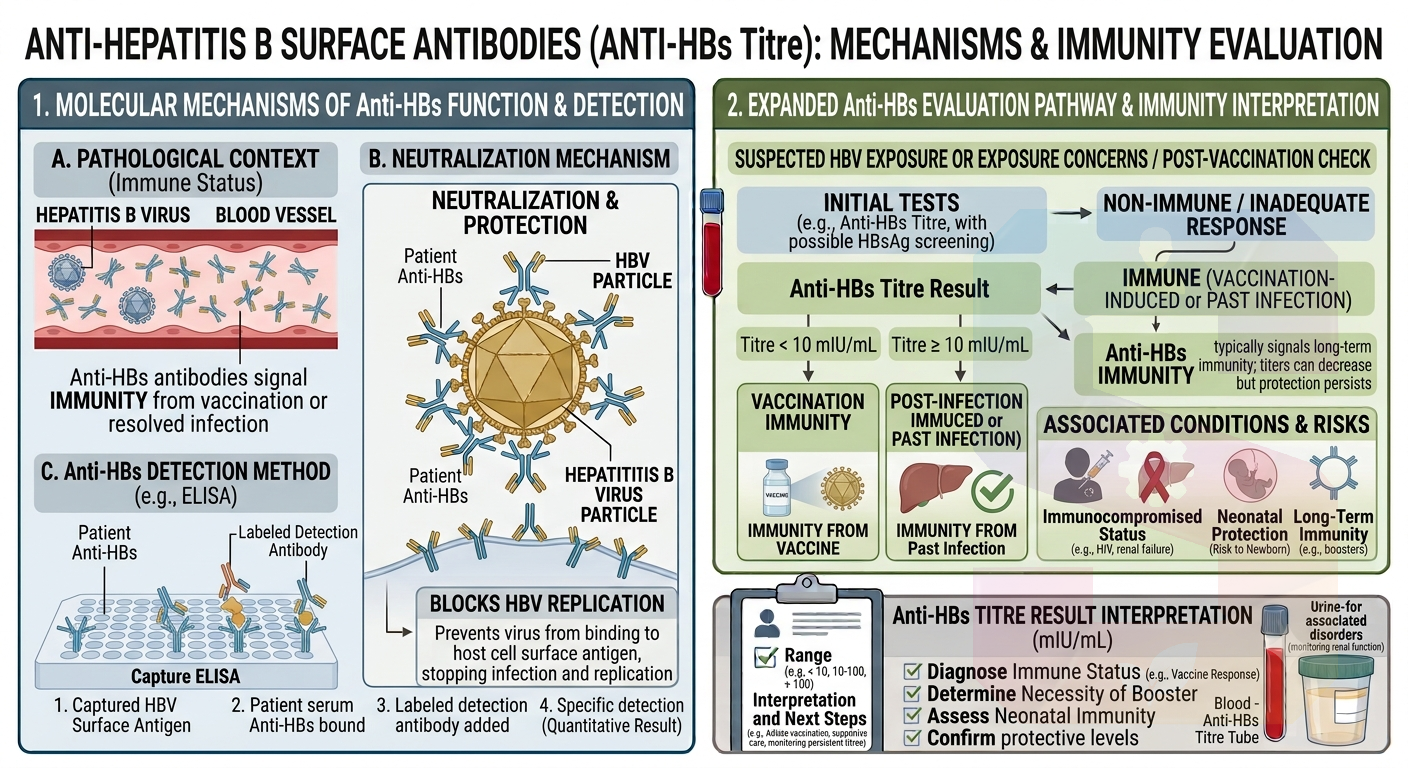
    The **Anti-HBs (HBsAb) Titre test** is a quantitative blood assay that measures the concentration of protective antibodies against the Hepatitis B surface antigen.
    * **Immunity Assessment:** It is primarily used to confirm immunity to the Hepatitis B virus (HBV), acquired either through successful vaccination or recovery from a past, resolved infection.
    * **Clinical Threshold:** A titre level of **\ge 10 mIU/mL** is globally recognized as the threshold indicating active, long-term protective immunity against HBV.
    * **Pre-employment & Monitoring:** This test is essential for healthcare workers, newborns of HBV-positive mothers, and immunocompromised patients to evaluate their defense status and determine the necessity of vaccine booster doses.
    ### **Anti-Hepatitis B Surface Antibodies (Anti-HBs) Test** The **Anti-HBs (HBsAb) Titre test** is a quantitative blood assay that measures the concentration of protective antibodies against the Hepatitis B surface antigen. * **Immunity Assessment:** It is primarily used to confirm immunity to the Hepatitis B virus (HBV), acquired either through successful vaccination or recovery from a past, resolved infection. * **Clinical Threshold:** A titre level of **\ge 10 mIU/mL** is globally recognized as the threshold indicating active, long-term protective immunity against HBV. * **Pre-employment & Monitoring:** This test is essential for healthcare workers, newborns of HBV-positive mothers, and immunocompromised patients to evaluate their defense status and determine the necessity of vaccine booster doses.
    0 Comments 0 Shares 2K Views 0 Reviews
  • Anti Chikungunya IGM Test New
    1,500.00₹
    In stock
    All over India
    0 Reviews
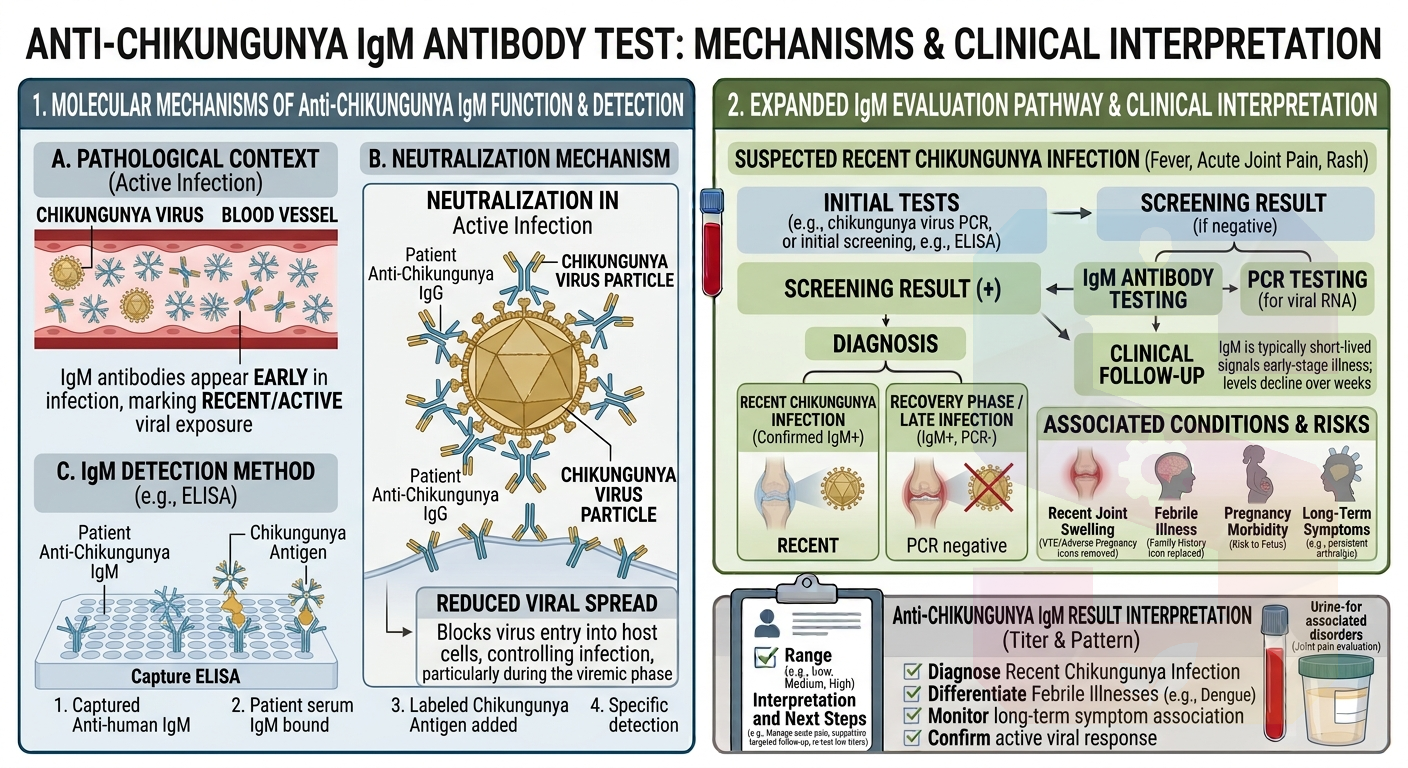
    ### **Anti-Chikungunya IgM Antibody Test**
    The **Anti-Chikungunya IgM test** is a crucial serological assay for the early diagnosis of an active or recent infection with the Chikungunya virus. Immunoglobulin M (IgM) are the first antibodies produced by the immune system, typically appearing within 3 to 7 days after the onset of symptoms (primarily fever and severe joint pain).
    A positive IgM result indicates a likely current or very recent infection, enabling rapid clinical intervention and public health response. The test is fundamental for differentiating Chikungunya from similar diseases like Dengue, as IgM antibodies typically remain detectable for several months before diminishing.
    ### **Anti-Chikungunya IgM Antibody Test** The **Anti-Chikungunya IgM test** is a crucial serological assay for the early diagnosis of an active or recent infection with the Chikungunya virus. Immunoglobulin M (IgM) are the first antibodies produced by the immune system, typically appearing within 3 to 7 days after the onset of symptoms (primarily fever and severe joint pain). A positive IgM result indicates a likely current or very recent infection, enabling rapid clinical intervention and public health response. The test is fundamental for differentiating Chikungunya from similar diseases like Dengue, as IgM antibodies typically remain detectable for several months before diminishing.
    0 Comments 0 Shares 1K Views 0 Reviews
  • Anti-CHIKUNGUNYA IGG Test New
    1,500.00₹
    In stock
    All over India
    0 Reviews
    ### **Anti-Chikungunya IgG Antibody Test**
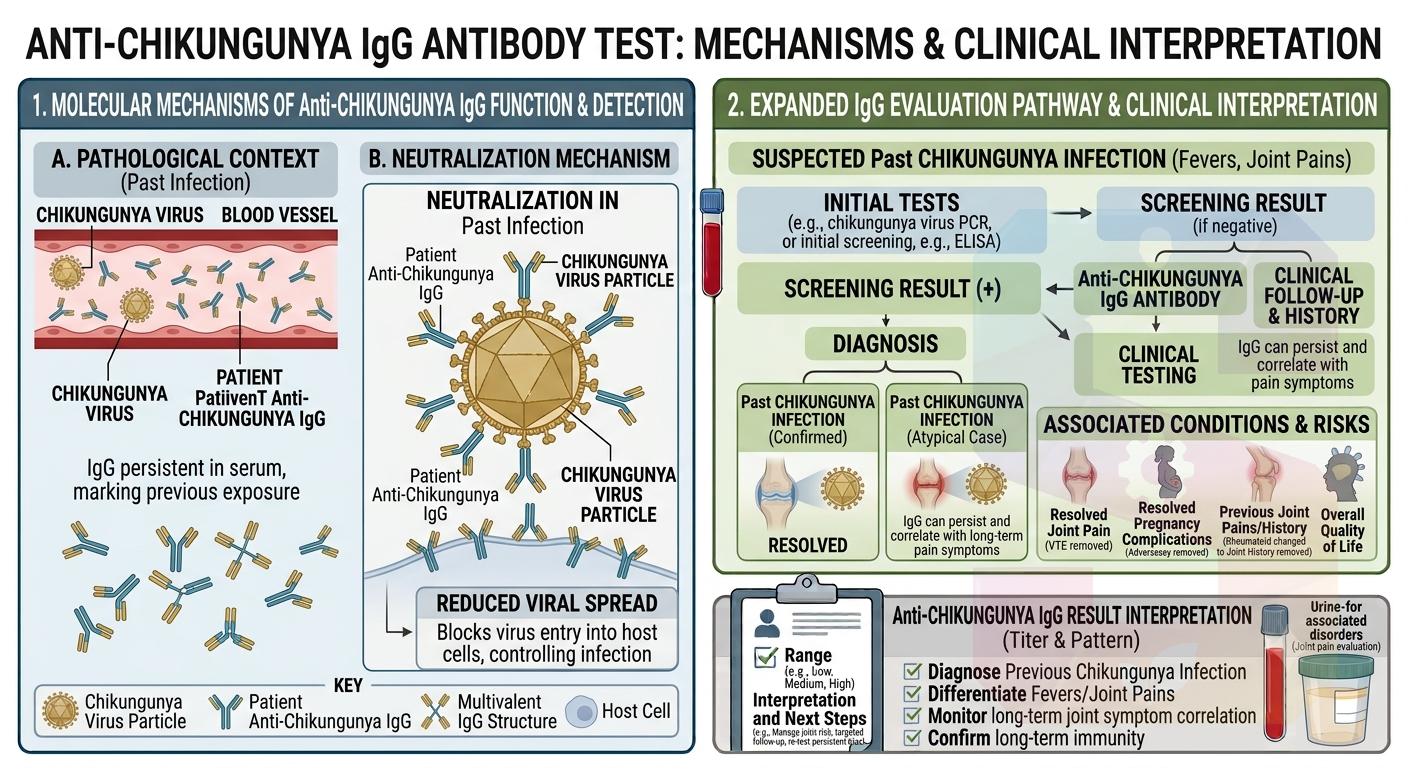
    The **Anti-Chikungunya IgG test** is a serological blood assay used to detect Immunoglobulin G (IgG) antibodies, which the immune system produces in response to the Chikungunya virus.
    * **Clinical Significance:** IgG antibodies typically appear several weeks after the initial infection and can persist for months or even years, serving as a marker for past exposure or long-term immunity.
    * **Diagnostic Utility:** It helps clinicians confirm previous infections, assess the prevalence of the virus in a population, and differentiate Chikungunya from other febrile illnesses like dengue or Zika.
    * **Interpretation:** A positive result indicates that an individual was previously exposed to the virus, whereas a negative result suggests no past infection or that the test was performed too early.
    ### **Anti-Chikungunya IgG Antibody Test** The **Anti-Chikungunya IgG test** is a serological blood assay used to detect Immunoglobulin G (IgG) antibodies, which the immune system produces in response to the Chikungunya virus. * **Clinical Significance:** IgG antibodies typically appear several weeks after the initial infection and can persist for months or even years, serving as a marker for past exposure or long-term immunity. * **Diagnostic Utility:** It helps clinicians confirm previous infections, assess the prevalence of the virus in a population, and differentiate Chikungunya from other febrile illnesses like dengue or Zika. * **Interpretation:** A positive result indicates that an individual was previously exposed to the virus, whereas a negative result suggests no past infection or that the test was performed too early.
    0 Comments 0 Shares 1K Views 0 Reviews
  • Anti Hepatitis E Virus (HEV) IgM New
    1,210.00₹
    In stock
    All over India
    0 Reviews
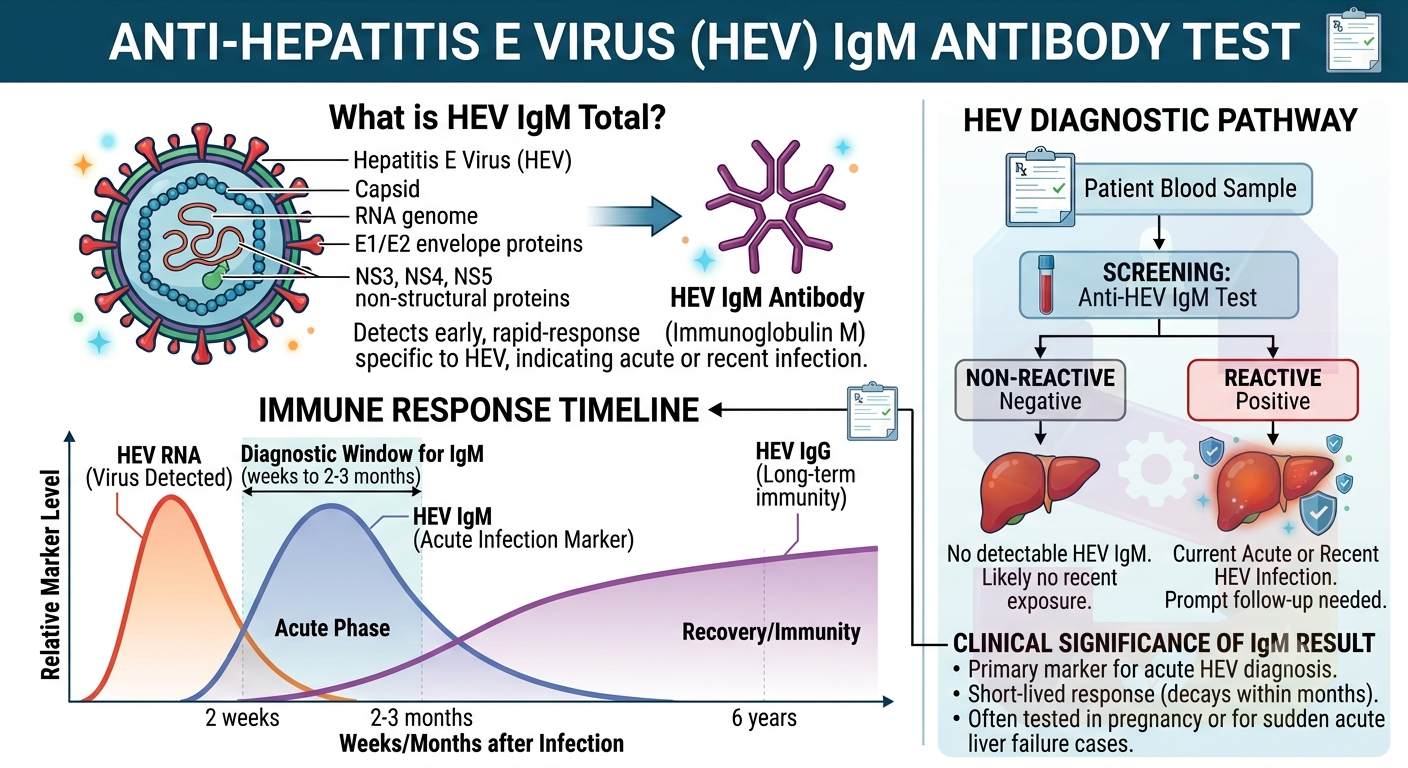
    The **Anti-Hepatitis E Virus (HEV) IgM** test is a serological blood test designed to detect Immunoglobulin M (IgM) antibodies, which the body produces in response to a sudden, acute Hepatitis E virus infection.

    Because IgM antibodies appear early during the initial phase of exposure and typically decline within a few weeks to months, a positive or reactive result serves as a strong diagnostic indicator of a current or very recent infection. Clinicians rely on this critical marker to differentiate acute illness from historical exposure (IgG) and to promptly manage or monitor acute liver inflammation.
    The **Anti-Hepatitis E Virus (HEV) IgM** test is a serological blood test designed to detect Immunoglobulin M (IgM) antibodies, which the body produces in response to a sudden, acute Hepatitis E virus infection. Because IgM antibodies appear early during the initial phase of exposure and typically decline within a few weeks to months, a positive or reactive result serves as a strong diagnostic indicator of a current or very recent infection. Clinicians rely on this critical marker to differentiate acute illness from historical exposure (IgG) and to promptly manage or monitor acute liver inflammation.
    0 Comments 0 Shares 3K Views 0 Reviews
  • Anti Hepatitis E Virus (HEV) IgG New
    1,210.00₹
    In stock
    All over India
    0 Reviews
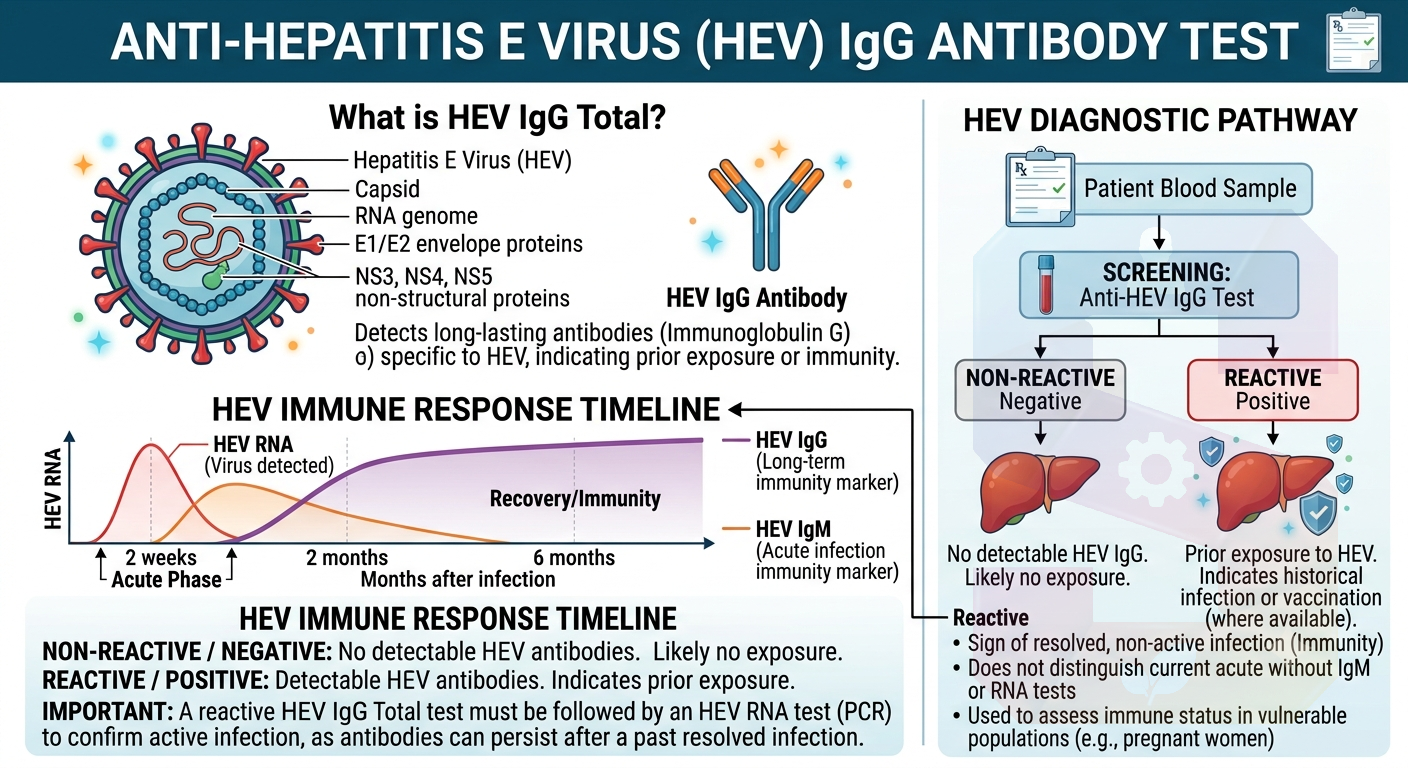
    The **Anti-Hepatitis E Virus (HEV) IgG** test is a serological blood test used to detect Immunoglobulin G (IgG) antibodies against the Hepatitis E virus.

    A positive or reactive IgG result indicates that an individual has been exposed to HEV in the past. Because IgG antibodies develop during the recovery phase and persist in the bloodstream for years, they signify long-term immunity or a resolved, historical infection rather than an active illness. To diagnose an ongoing, acute Hepatitis E infection, clinicians evaluate these results alongside clinical symptoms, liver enzyme panels, and HEV IgM or HEV RNA PCR tests.
    The **Anti-Hepatitis E Virus (HEV) IgG** test is a serological blood test used to detect Immunoglobulin G (IgG) antibodies against the Hepatitis E virus. A positive or reactive IgG result indicates that an individual has been exposed to HEV in the past. Because IgG antibodies develop during the recovery phase and persist in the bloodstream for years, they signify long-term immunity or a resolved, historical infection rather than an active illness. To diagnose an ongoing, acute Hepatitis E infection, clinicians evaluate these results alongside clinical symptoms, liver enzyme panels, and HEV IgM or HEV RNA PCR tests.
    0 Comments 0 Shares 3K Views 0 Reviews
  • Anti Hepatitis C Virus (HCV) Total New
    1,210.00₹
    In stock
    Hyderabad
    0 Reviews
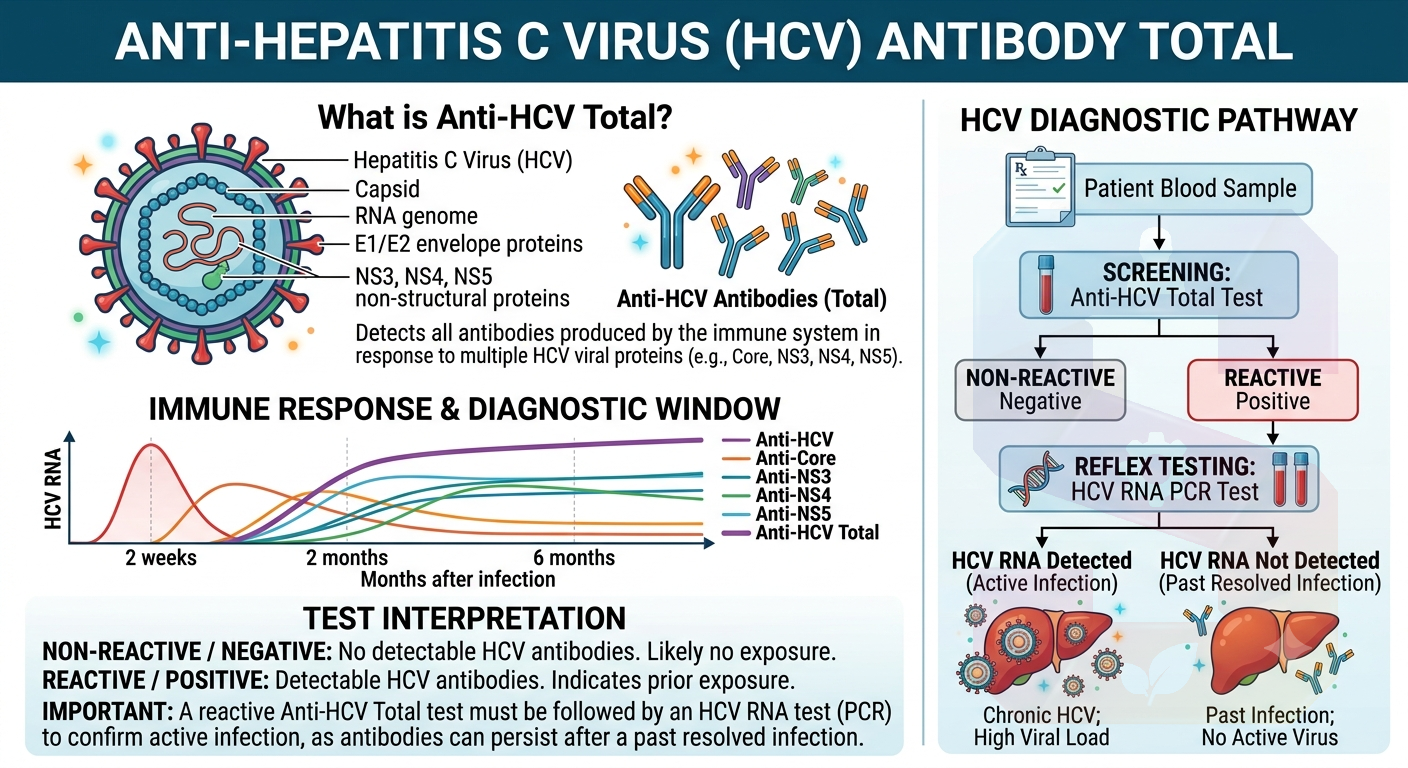
    The **Anti-Hepatitis C Virus (HCV) Total** test is a primary screening blood test used to detect antibodies manufactured by the immune system in response to a Hepatitis C virus infection.

    A "reactive" or positive result indicates exposure to the virus at some point in time, though it cannot distinguish between an active, ongoing chronic infection and a past infection that has cleared spontaneously or been successfully treated. Because these antibodies persist long-term, a positive total antibody screening must always be followed by an HCV RNA quantitative PCR test to confirm the current presence of the active virus.
    The **Anti-Hepatitis C Virus (HCV) Total** test is a primary screening blood test used to detect antibodies manufactured by the immune system in response to a Hepatitis C virus infection. A "reactive" or positive result indicates exposure to the virus at some point in time, though it cannot distinguish between an active, ongoing chronic infection and a past infection that has cleared spontaneously or been successfully treated. Because these antibodies persist long-term, a positive total antibody screening must always be followed by an HCV RNA quantitative PCR test to confirm the current presence of the active virus.
    0 Comments 0 Shares 3K Views 0 Reviews
  • Anti Hepatitis B Envelope Antibody (AHBe) - Total New
    935.00₹
    In stock
    All over India
    0 Reviews
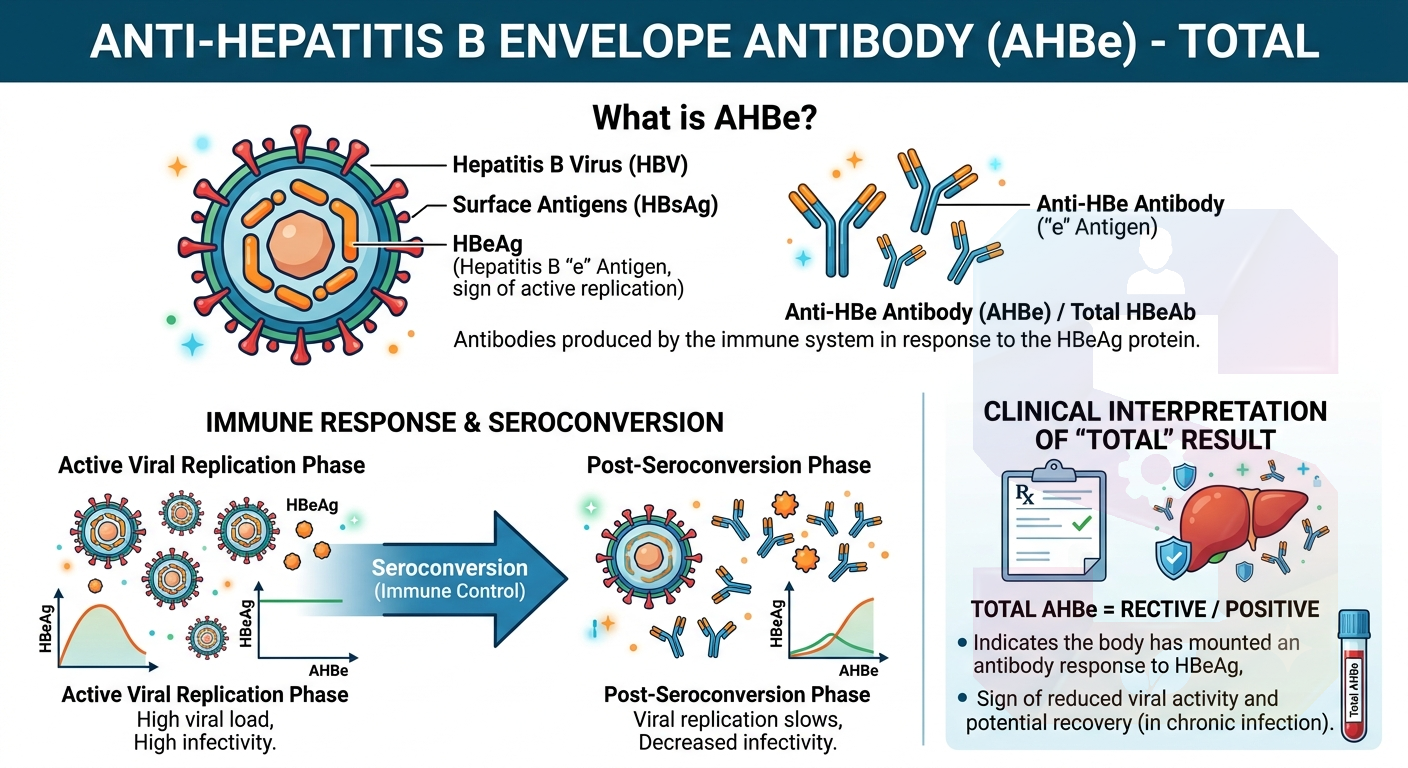
    The **Anti-Hepatitis B Envelope Antibody (AHBe) - Total** test (also known as the Anti-HBe or HBeAb test) is a crucial blood marker used to monitor and evaluate a Hepatitis B virus (HBV) infection.

    This test detects total antibodies produced by the body’s immune system to target the Hepatitis B "e" antigen (HBeAg), a protein associated with active viral replication. A positive or reactive result generally signals "seroconversion"—meaning the immune system is gaining control, viral multiplication is slowing down, and the patient's infectivity (risk of transmitting the virus to others) has significantly decreased. Doctors use it alongside other HBV tests to determine the infection stage and assess treatment success.
    The **Anti-Hepatitis B Envelope Antibody (AHBe) - Total** test (also known as the Anti-HBe or HBeAb test) is a crucial blood marker used to monitor and evaluate a Hepatitis B virus (HBV) infection. This test detects total antibodies produced by the body’s immune system to target the Hepatitis B "e" antigen (HBeAg), a protein associated with active viral replication. A positive or reactive result generally signals "seroconversion"—meaning the immune system is gaining control, viral multiplication is slowing down, and the patient's infectivity (risk of transmitting the virus to others) has significantly decreased. Doctors use it alongside other HBV tests to determine the infection stage and assess treatment success.
    0 Comments 0 Shares 3K Views 0 Reviews
  • Anti Hepatitis B Core Antibody (AHBC) Total New
    1,045.00₹
    In stock
    All over India
    0 Reviews
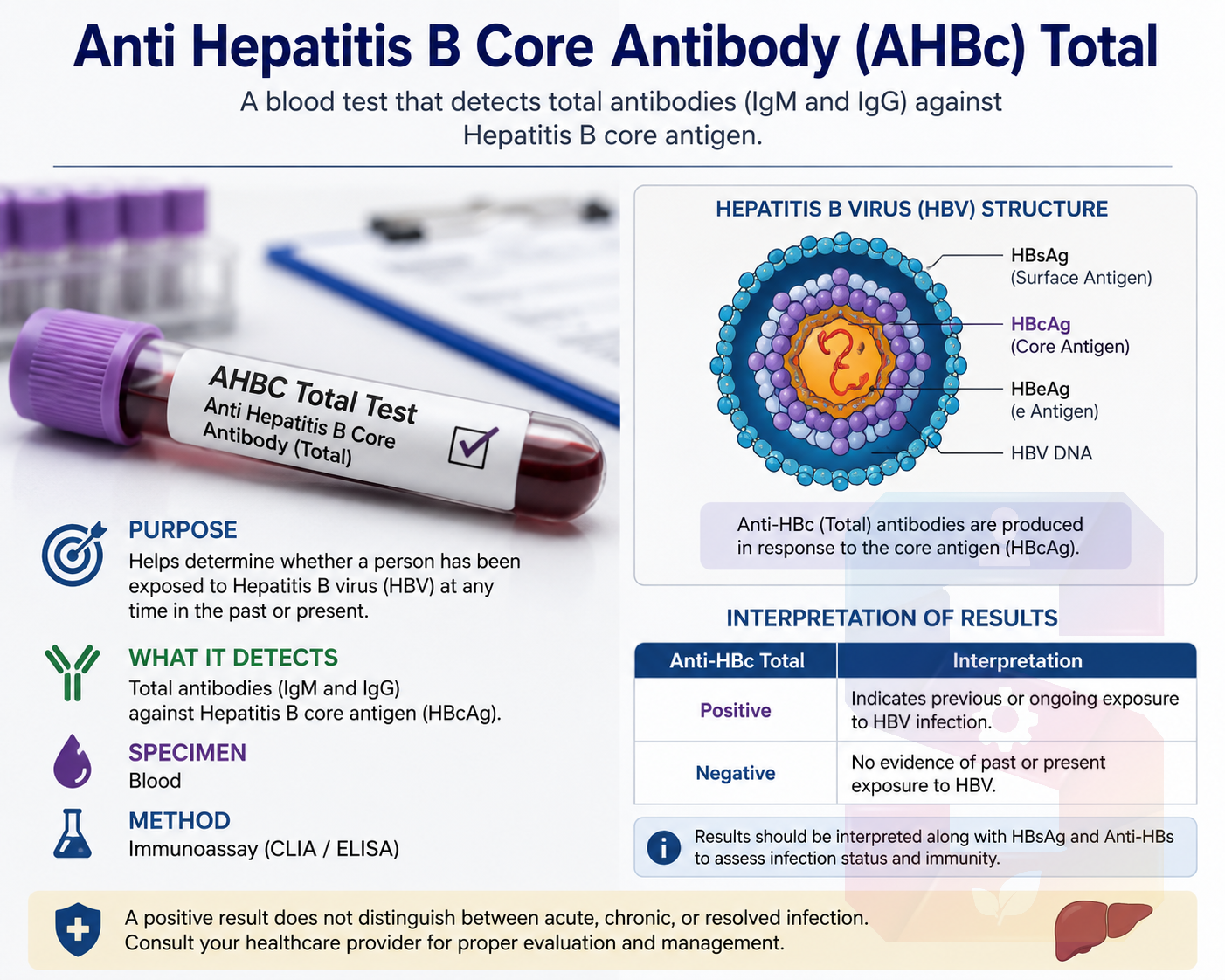
    Anti-Hepatitis B Core Antibody (AHBc) Total is a blood test that detects total antibodies (IgM and IgG) against the hepatitis B core antigen. It helps determine whether a person has been exposed to the hepatitis B virus (HBV) at any time in the past or present. A positive result indicates previous or ongoing HBV infection but does not distinguish between acute, chronic, or resolved infection. This test is commonly interpreted along with HBsAg and Anti-HBs to assess infection status and immunity. It is an important tool for diagnosing hepatitis B and guiding appropriate medical evaluation and management.
    Anti-Hepatitis B Core Antibody (AHBc) Total is a blood test that detects total antibodies (IgM and IgG) against the hepatitis B core antigen. It helps determine whether a person has been exposed to the hepatitis B virus (HBV) at any time in the past or present. A positive result indicates previous or ongoing HBV infection but does not distinguish between acute, chronic, or resolved infection. This test is commonly interpreted along with HBsAg and Anti-HBs to assess infection status and immunity. It is an important tool for diagnosing hepatitis B and guiding appropriate medical evaluation and management.
    0 Comments 0 Shares 896 Views 0 Reviews
  • Anti Hepatitis B Core Antibody (AHBC) IgM New
    1,045.00₹
    In stock
    India
    0 Reviews
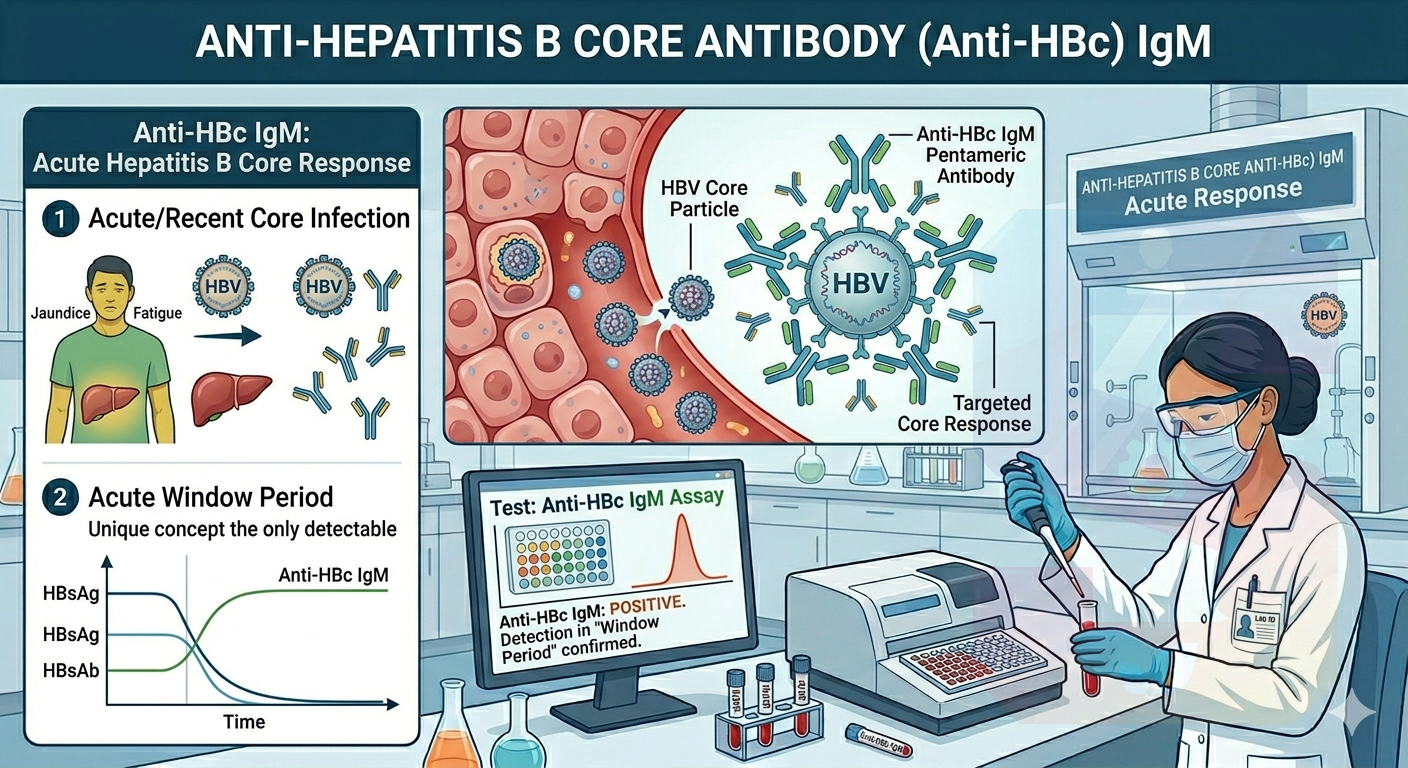
    **Anti-Hepatitis B Core Antibody (Anti-HBc) IgM** is a vital serological marker that indicates a clinical diagnosis of acute or recent Hepatitis B virus (HBV) infection. It is the earliest antibody to appear during an acute outbreak, often becoming detectable in the blood shortly after symptoms surface.
    This specific IgM antibody is especially critical during the "window period"—the clinical phase when Hepatitis B Surface Antigen (HBsAg) has cleared, but Hepatitis B Surface Antibody (HBsAb) is not yet detectable. Its presence confirms an active, sharp immune response to a new infection rather than a chronic condition.
    **Anti-Hepatitis B Core Antibody (Anti-HBc) IgM** is a vital serological marker that indicates a clinical diagnosis of acute or recent Hepatitis B virus (HBV) infection. It is the earliest antibody to appear during an acute outbreak, often becoming detectable in the blood shortly after symptoms surface. This specific IgM antibody is especially critical during the "window period"—the clinical phase when Hepatitis B Surface Antigen (HBsAg) has cleared, but Hepatitis B Surface Antibody (HBsAb) is not yet detectable. Its presence confirms an active, sharp immune response to a new infection rather than a chronic condition.
    0 Comments 0 Shares 537 Views 0 Reviews
  • Anti Hepatitis A virus (ANTI HAV) IgM New
    880.00₹
    In stock
    India
    0 Reviews
    **Anti-Hepatitis A Virus (Anti-HAV) IgM** is a crucial diagnostic antibody produced by the body during an acute or recent infection with the Hepatitis A virus. Its presence in a patient's blood sample serves as the primary marker for diagnosing sudden-onset, active Hepatitis A.
    Unlike the IgG antibody, which represents long-term immunity, IgM antibodies appear early after viral exposure—typically coinciding with the onset of symptoms like jaundice, fatigue, and abdominal pain. Anti-HAV IgM levels remain elevated for roughly three to six months, making this test essential for differentiating a current, active illness from past exposure.
    **Anti-Hepatitis A Virus (Anti-HAV) IgM** is a crucial diagnostic antibody produced by the body during an acute or recent infection with the Hepatitis A virus. Its presence in a patient's blood sample serves as the primary marker for diagnosing sudden-onset, active Hepatitis A. Unlike the IgG antibody, which represents long-term immunity, IgM antibodies appear early after viral exposure—typically coinciding with the onset of symptoms like jaundice, fatigue, and abdominal pain. Anti-HAV IgM levels remain elevated for roughly three to six months, making this test essential for differentiating a current, active illness from past exposure.
    0 Comments 0 Shares 610 Views 0 Reviews
  • Anti Hepatitis A virus (ANTI HAV) IgG New
    880.00₹
    In stock
    India
    0 Reviews
    **Anti-Hepatitis A Virus (Anti-HAV) IgG** is a specific antibody produced by the immune system in response to the Hepatitis A virus or vaccination. Its presence in a blood test signifies long-term immunity against the virus, meaning the individual is protected from future infections.
    Unlike IgM antibodies, which indicate an active or recent acute infection, IgG antibodies develop later during the recovery phase or following successful immunization and persist for life. Identifying Anti-HAV IgG is clinically crucial to confirm previous exposure, verify vaccine efficacy, and determine if a person requires vaccination before traveling to endemic areas.
    **Anti-Hepatitis A Virus (Anti-HAV) IgG** is a specific antibody produced by the immune system in response to the Hepatitis A virus or vaccination. Its presence in a blood test signifies long-term immunity against the virus, meaning the individual is protected from future infections. Unlike IgM antibodies, which indicate an active or recent acute infection, IgG antibodies develop later during the recovery phase or following successful immunization and persist for life. Identifying Anti-HAV IgG is clinically crucial to confirm previous exposure, verify vaccine efficacy, and determine if a person requires vaccination before traveling to endemic areas.
    0 Comments 0 Shares 583 Views 0 Reviews
More Results
Sponsored