


US-Iran Conflict: Trump Administration Declares Hostilities ‘Terminated’ to Bypass 60-Day Deadline'
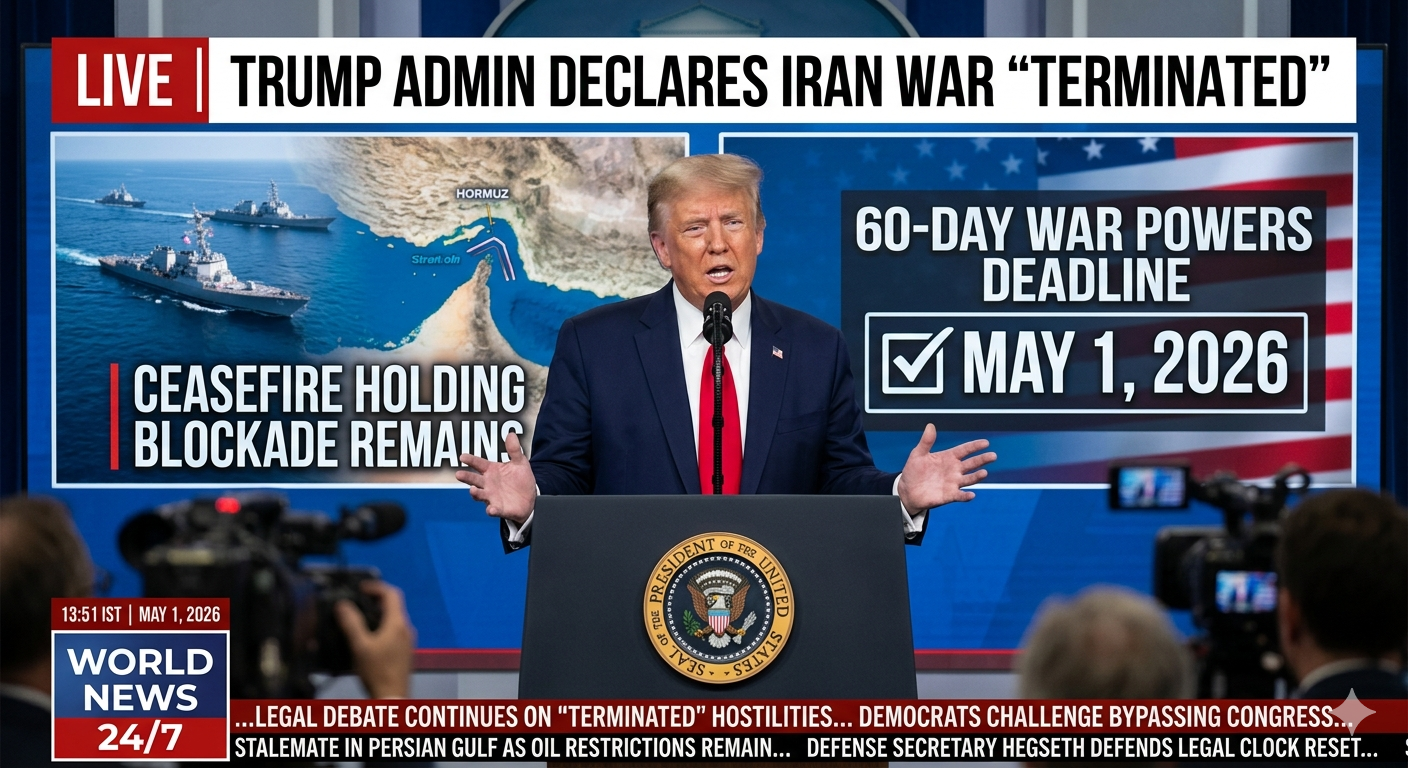
Washington D.C. | May 1, 2026 — In a move that has sparked intense legal and political debate, the Trump administration officially declared today that hostilities in the conflict with Iran have been "terminated". This declaration comes exactly on the 60-day deadline mandated by the War Powers Resolution of 1973, which requires a President to obtain congressional authorization for continued military action.
By labeling the hostilities as finished, the White House effectively argues that the legal clock has stopped, bypassing the need for a formal vote from Congress.
The Legal Maneuver
The administration’s stance hinges on the fragile ceasefire that has been in place since early April. Senior officials argue that because active combat has ceased, the state of "hostilities" notified to Congress on March 2 no longer exists.
-
The 60-Day Rule: Under federal law, the President must withdraw forces within 60 days of a notification of hostilities unless Congress declares war or grants a specific extension.
-
The "Termination" Argument: Defense Secretary Pete Hegseth testified that the current ceasefire effectively "pauses or stops" this statutory requirement.
-
Executive Interpretation: The administration maintains it can keep military assets in the region for "monitoring and stabilization" without new legislative approval.
Stalemate in the Strait
Despite the "terminated" status of the war, the region remains a powderkeg. A US-led naval blockade continues to prevent Iranian oil exports, and Iran maintains its own strategic "chokehold" on the Strait of Hormuz.
While the guns are silent for now, the economic impact is being felt globally as oil flows remain restricted and gas prices continue to climb. Reports also indicate that military readiness remains at a peak, with the US recently transferring over 6,500 tonnes of munitions to Israel amid the regional tension.
Reaction from Capitol Hill
The move has drawn sharp rebukes from several lawmakers who view it as an overreach of executive power.
-
Democratic Challenge: Senators have argued that a ceasefire does not legally "reset" the War Powers clock and that the administration is avoiding constitutional oversight.
-
Split GOP Views: While House leadership supports the President's authority to manage the ceasefire, some Senate Republicans have expressed concern that the 60-day deadline is a strict requirement that cannot be bypassed by terminology.
What Happens Next?
The administration's declaration sets the stage for a potential constitutional showdown. If Congress moves to pass a resolution of disapproval, the President would likely face a choice between a veto or a full withdrawal of forces from the Persian Gulf. For now, the "terminated" war remains a heavily armed peace.
