


Directory
Browse the SeshtaConnect Directory: Find professionals, courses, job listings, and groups. Discover new connections to ignite your career and personal growth.
-
Please log in to like, share and comment!
-
Any Lumps and Bumps biopsy Test New1,500.00₹In stockAll over India0 ReviewsA lumps and bumps biopsy is a simple medical procedure used to evaluate unusual growths, soft tissue swellings, or skin lesions. When a lump is detected under or on the skin, a tiny sample of tissue or fluid is removed for laboratory examination. Doctors typically perform this using fine-needle aspiration, core needle biopsy, or a minor surgical excision under local anesthesia. The harvested sample is then analyzed by a pathologist to determine whether the tissue is benign, inflammatory, or malignant. This essential diagnostic test provides clarity, helping your healthcare team create a safe, targeted treatment plan tailored to your needs.A lumps and bumps biopsy is a simple medical procedure used to evaluate unusual growths, soft tissue swellings, or skin lesions. When a lump is detected under or on the skin, a tiny sample of tissue or fluid is removed for laboratory examination. Doctors typically perform this using fine-needle aspiration, core needle biopsy, or a minor surgical excision under local anesthesia. The harvested sample is then analyzed by a pathologist to determine whether the tissue is benign, inflammatory, or malignant. This essential diagnostic test provides clarity, helping your healthcare team create a safe, targeted treatment plan tailored to your needs.0 Comments 0 Shares 1K Views 0 Reviews
-
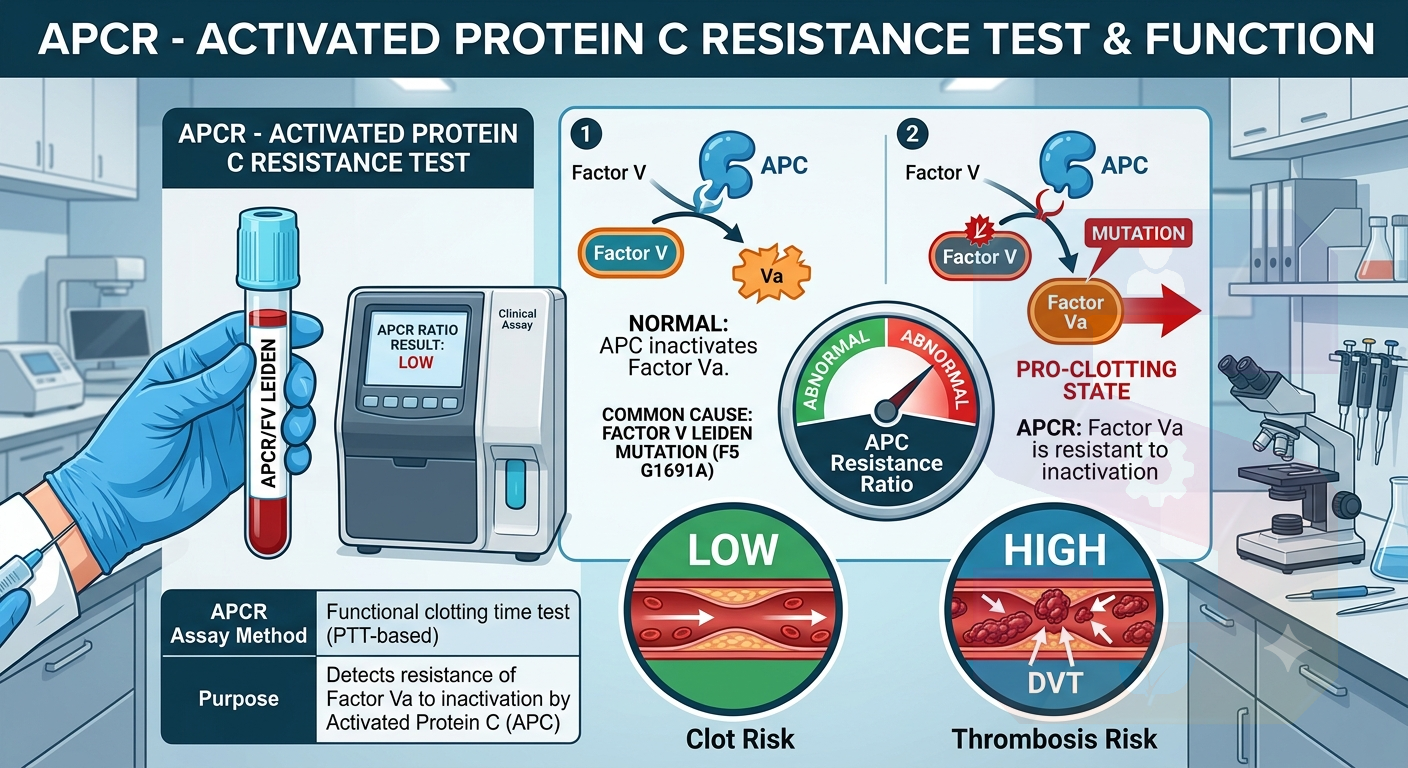
Activated Protein C Resistance (APCR)** test New5,650.00₹In stockAll over India0 ReviewsAn **Activated Protein C Resistance (APCR)** test is a specialized blood investigation used to evaluate a person’s risk for developing abnormal blood clots. Activated Protein C (APC) is a natural anticoagulant protein in the body that inactivates specific clotting factors to prevent excessive coagulation.
In APCR, the blood’s response to APC is diminished, leading to a higher tendency to form blood clots—a condition known as thrombophilia. Most commonly caused by the Factor V Leiden genetic mutation, this test measures how long it takes for plasma to clot after adding APC. Identifying APCR helps clinicians assess venous thromboembolism risk and tailor preventive therapies effectively.An **Activated Protein C Resistance (APCR)** test is a specialized blood investigation used to evaluate a person’s risk for developing abnormal blood clots. Activated Protein C (APC) is a natural anticoagulant protein in the body that inactivates specific clotting factors to prevent excessive coagulation. In APCR, the blood’s response to APC is diminished, leading to a higher tendency to form blood clots—a condition known as thrombophilia. Most commonly caused by the Factor V Leiden genetic mutation, this test measures how long it takes for plasma to clot after adding APC. Identifying APCR helps clinicians assess venous thromboembolism risk and tailor preventive therapies effectively.0 Comments 0 Shares 1K Views 0 Reviews -
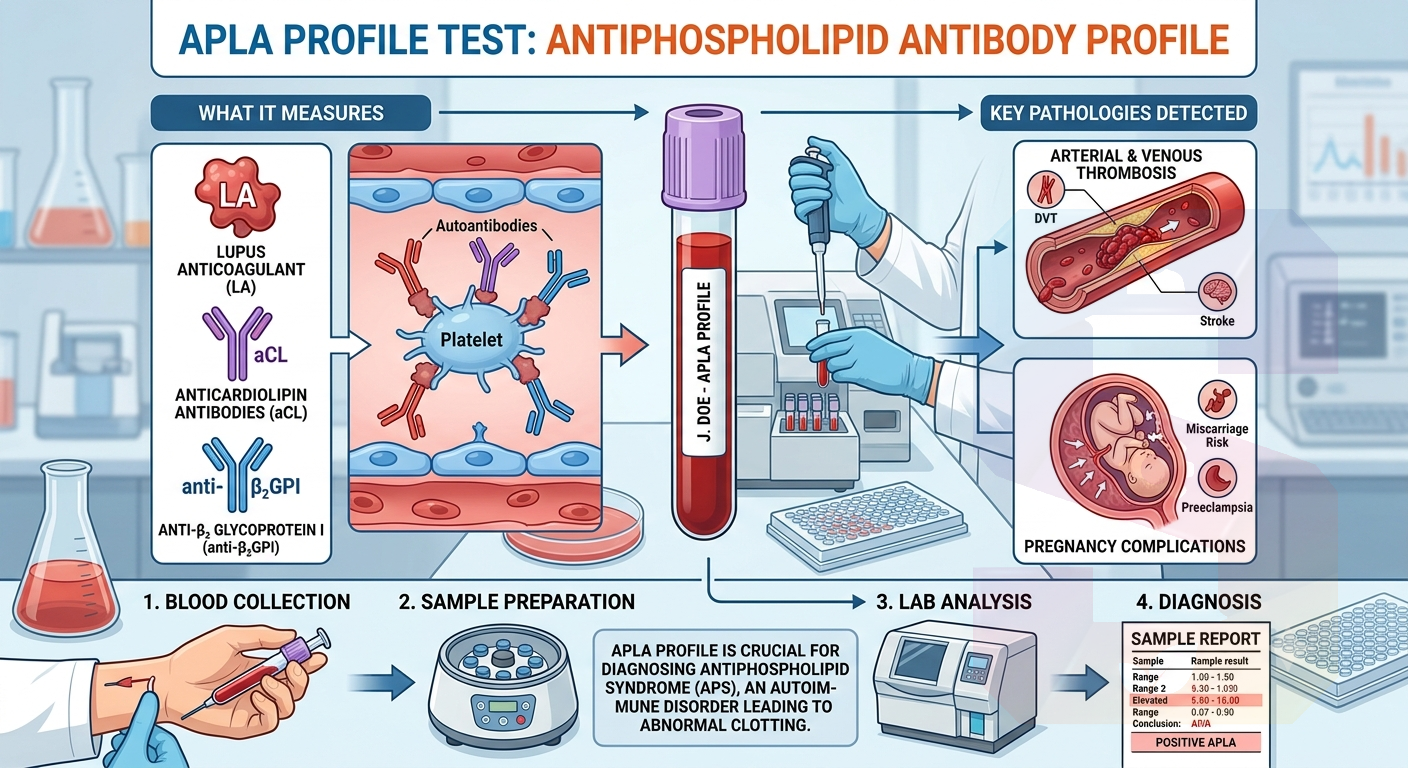
APLA Profile Test New2,999.00₹In stockAll over India0 ReviewsAn **Antiphospholipid Antibody (APLA) Profile Test** is a specialized group of blood tests used to diagnose Antiphospholipid Syndrome (APS), an autoimmune condition. In APS, the body mistakenly produces autoantibodies against its own proteins bound to phospholipids. This reaction significantly increases the risk of abnormal blood clotting in veins or arteries, as well as pregnancy complications like recurrent miscarriages.
The APLA panel typically measures three primary markers: lupus anticoagulant, anticardiolipin antibodies, and anti-beta-2 glycoprotein I antibodies. Identifying these autoantibodies helps clinicians evaluate a patient's risk of thrombotic events, guiding appropriate preventive care and targeted anticoagulant treatments.An **Antiphospholipid Antibody (APLA) Profile Test** is a specialized group of blood tests used to diagnose Antiphospholipid Syndrome (APS), an autoimmune condition. In APS, the body mistakenly produces autoantibodies against its own proteins bound to phospholipids. This reaction significantly increases the risk of abnormal blood clotting in veins or arteries, as well as pregnancy complications like recurrent miscarriages. The APLA panel typically measures three primary markers: lupus anticoagulant, anticardiolipin antibodies, and anti-beta-2 glycoprotein I antibodies. Identifying these autoantibodies helps clinicians evaluate a patient's risk of thrombotic events, guiding appropriate preventive care and targeted anticoagulant treatments.0 Comments 0 Shares 1K Views 0 Reviews -
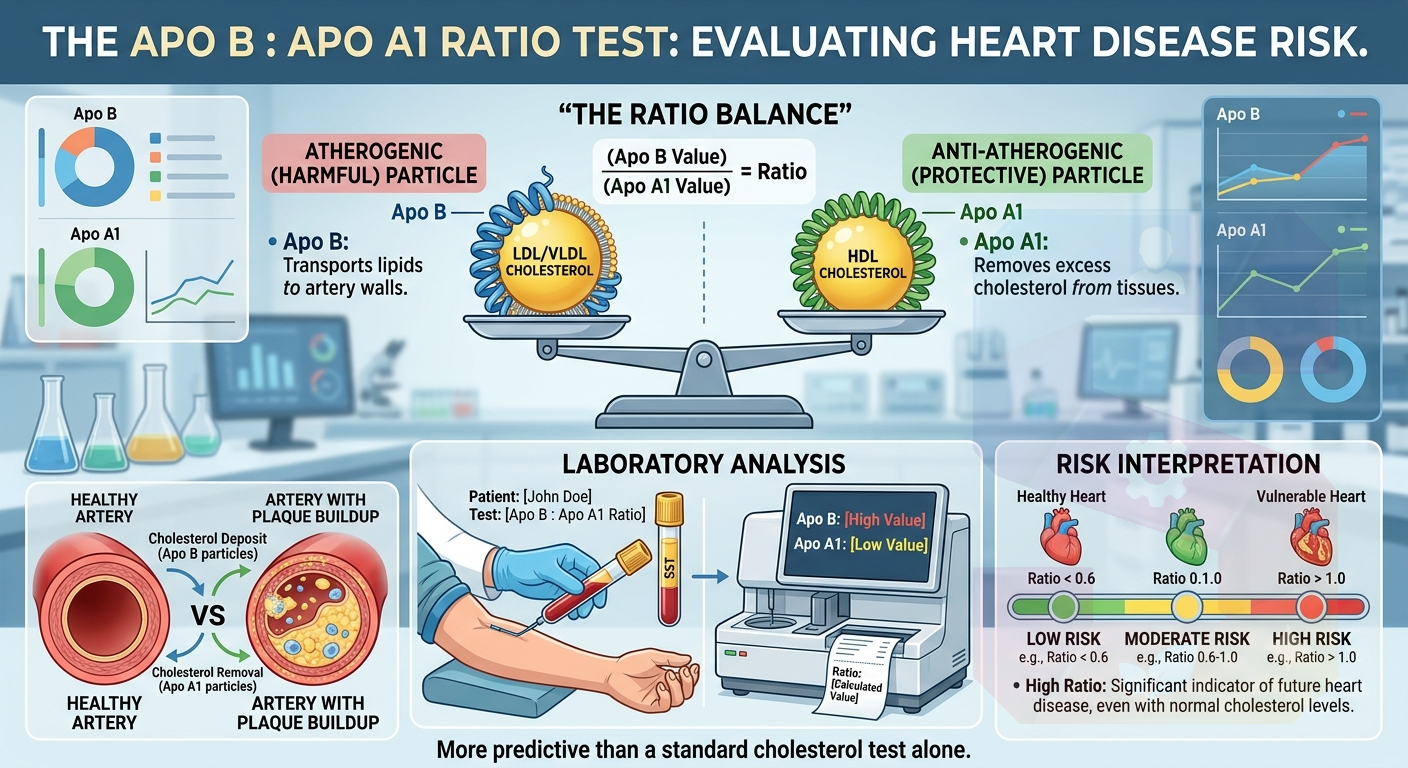
Apo B: Apo A1 ratio test New990.00₹In stockAll over India0 ReviewsThe **Apo B : Apo A1 ratio test** evaluates the balance between atherogenic (harmful) and anti-atherogenic (protective) proteins in the blood to assess cardiovascular disease risk.
**Apolipoprotein B (Apo B)** is present in destructive particles like LDL and VLDL that deposit cholesterol into artery walls, while **Apolipoprotein A1 (Apo A1)** is the primary component of HDL, which clears excess cholesterol.
Calculating the ratio of Apo B to Apo A1 provides a clearer indicator of heart disease and stroke risk than standard cholesterol panels alone. A higher ratio signifies an increased risk of plaque buildup and coronary artery disease.The **Apo B : Apo A1 ratio test** evaluates the balance between atherogenic (harmful) and anti-atherogenic (protective) proteins in the blood to assess cardiovascular disease risk. **Apolipoprotein B (Apo B)** is present in destructive particles like LDL and VLDL that deposit cholesterol into artery walls, while **Apolipoprotein A1 (Apo A1)** is the primary component of HDL, which clears excess cholesterol. Calculating the ratio of Apo B to Apo A1 provides a clearer indicator of heart disease and stroke risk than standard cholesterol panels alone. A higher ratio signifies an increased risk of plaque buildup and coronary artery disease.0 Comments 0 Shares 1K Views 0 Reviews -
0 Comments 0 Shares 35 Views 0 Reviews
-
0 Comments 0 Shares 35 Views 0 Reviews
-
0 Comments 0 Shares 36 Views 0 Reviews
-
0 Comments 0 Shares 29 Views 0 Reviews
Sponsored