• Acetyl Choline Receptor Antibodies (AChRab) New
    4,300.00₹
    In stock
    0 Reviews
    Acetylcholine Receptor Antibodies (AChR-Ab) are autoantibodies—proteins produced by the immune system that mistakenly target the body's own tissues.

    These antibodies are primarily associated with the diagnosis of Myasthenia Gravis (MG), a chronic autoimmune neuromuscular disease.
    The AChR Antibody Blood Test is a key diagnostic tool for Myasthenia Gravis.
    Acetylcholine Receptor Antibodies (AChR-Ab) are autoantibodies—proteins produced by the immune system that mistakenly target the body's own tissues. These antibodies are primarily associated with the diagnosis of Myasthenia Gravis (MG), a chronic autoimmune neuromuscular disease. The AChR Antibody Blood Test is a key diagnostic tool for Myasthenia Gravis.
    0 Comments 0 Shares 931 Views 0 Reviews
  • Acid Fast Bacilli Smear Test New
    350.00₹
    In stock
    0 Reviews
    🔬 Acid-Fast Bacilli (AFB) Smear Test
    The Acid-Fast Bacilli (AFB) Smear Test (also known as an AFB stain or AFB microscopy) is a rapid, microscopic examination used to detect acid-fast bacteria in patient samples.

    🦠 What are Acid-Fast Bacilli?
    Acid-fast bacilli are a group of bacteria characterized by a waxy cell wall that makes them resistant to decolorization by acids after being stained. The most clinically significant acid-fast bacterium is Mycobacterium tuberculosis, the causative agent of tuberculosis (TB). Other acid-fast organisms include other Mycobacterium species (e.g., non-tuberculous mycobacteria or NTM) and Nocardia species.

    📝 How the Test Works
    Sample Collection: A patient sample suspected of containing AFB is collected. Common samples include:

    Sputum: Most common for suspected pulmonary TB.

    Urine

    Tissue biopsies

    Cerebrospinal fluid (CSF)

    Gastric lavage

    Pleural fluid
    🔬 Acid-Fast Bacilli (AFB) Smear Test The Acid-Fast Bacilli (AFB) Smear Test (also known as an AFB stain or AFB microscopy) is a rapid, microscopic examination used to detect acid-fast bacteria in patient samples. 🦠 What are Acid-Fast Bacilli? Acid-fast bacilli are a group of bacteria characterized by a waxy cell wall that makes them resistant to decolorization by acids after being stained. The most clinically significant acid-fast bacterium is Mycobacterium tuberculosis, the causative agent of tuberculosis (TB). Other acid-fast organisms include other Mycobacterium species (e.g., non-tuberculous mycobacteria or NTM) and Nocardia species. 📝 How the Test Works Sample Collection: A patient sample suspected of containing AFB is collected. Common samples include: Sputum: Most common for suspected pulmonary TB. Urine Tissue biopsies Cerebrospinal fluid (CSF) Gastric lavage Pleural fluid
    0 Comments 0 Shares 1K Views 0 Reviews
  • Acid Phosphatase test New
    475.00₹
    In stock
    0 Reviews
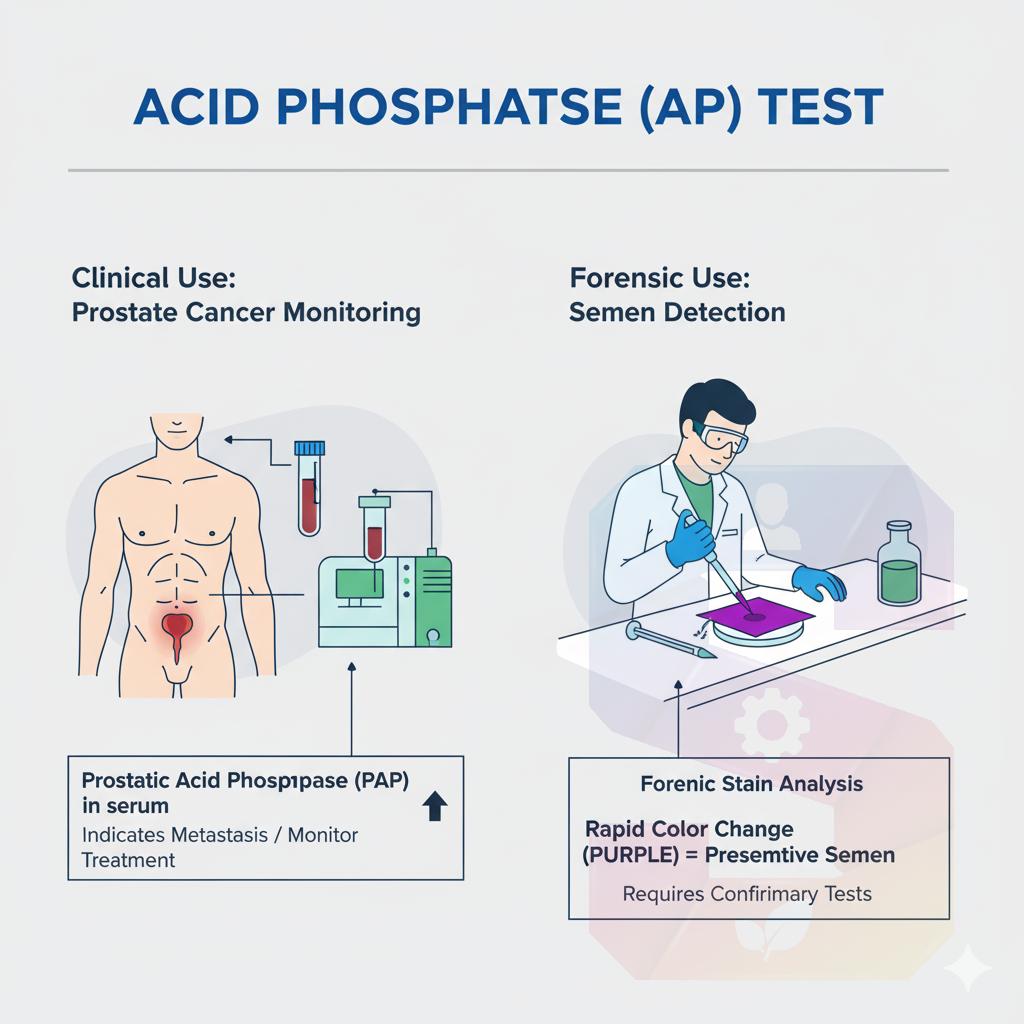
    The Acid Phosphatase (AP) Test is a laboratory procedure that measures the level of the enzyme acid phosphatase in a patient's blood serum or a forensic sample (e.g., semen).

    Acid phosphatase is an enzyme found in various tissues, including the liver, spleen, bone marrow, and red blood cells. However, its concentration is highest in the prostate gland in men.

    🩺 Clinical Significance (Prostatic Acid Phosphatase - PAP)
    Historically, and to some extent currently, the test is used in oncology to manage prostate cancer. The test often measures the Prostatic Acid Phosphatase (PAP) fraction, which is specific to the prostate gland and is inhibited by the chemical L-tartrate.
    The Acid Phosphatase (AP) Test is a laboratory procedure that measures the level of the enzyme acid phosphatase in a patient's blood serum or a forensic sample (e.g., semen). Acid phosphatase is an enzyme found in various tissues, including the liver, spleen, bone marrow, and red blood cells. However, its concentration is highest in the prostate gland in men. 🩺 Clinical Significance (Prostatic Acid Phosphatase - PAP) Historically, and to some extent currently, the test is used in oncology to manage prostate cancer. The test often measures the Prostatic Acid Phosphatase (PAP) fraction, which is specific to the prostate gland and is inhibited by the chemical L-tartrate.
    0 Comments 0 Shares 894 Views 0 Reviews
  • Acid Phosphatase Total and Prostatic Fraction Serum New
    600.00₹
    In stock
    Hyderabad
    0 Reviews
    The Acid Phosphatase Total and Prostatic Fraction Serum Test is a blood test that measures the levels of two related forms of the enzyme Acid Phosphatase (AP) in the blood:

    Total Acid Phosphatase (TAP): Measures the activity of AP from all sources in the body.

    Prostatic Acid Phosphatase (PAP) or Prostatic Fraction: Measures the activity of AP specifically originating from the prostate gland.

    This test is primarily used in the context of prostate cancer management.

    🔍 Key Components and Distinction
    Acid Phosphatase is a broad group of enzymes found in lysosomes of many tissues (liver, spleen, bone, red blood cells, etc.), but its highest concentration in males is in the prostate.
    The Prostatic Fraction is often measured by performing the AP assay in the presence of a chemical, L-tartrate, which specifically inhibits the activity of the prostatic fraction. The difference between the total activity (without inhibitor) and the residual activity (with inhibitor) yields the prostatic-specific fraction.
    The Acid Phosphatase Total and Prostatic Fraction Serum Test is a blood test that measures the levels of two related forms of the enzyme Acid Phosphatase (AP) in the blood: Total Acid Phosphatase (TAP): Measures the activity of AP from all sources in the body. Prostatic Acid Phosphatase (PAP) or Prostatic Fraction: Measures the activity of AP specifically originating from the prostate gland. This test is primarily used in the context of prostate cancer management. 🔍 Key Components and Distinction Acid Phosphatase is a broad group of enzymes found in lysosomes of many tissues (liver, spleen, bone, red blood cells, etc.), but its highest concentration in males is in the prostate. The Prostatic Fraction is often measured by performing the AP assay in the presence of a chemical, L-tartrate, which specifically inhibits the activity of the prostatic fraction. The difference between the total activity (without inhibitor) and the residual activity (with inhibitor) yields the prostatic-specific fraction.
    0 Comments 0 Shares 1K Views 0 Reviews
  • ACTH (Adreno Corticotropic Hormone) Test New
    1,950.00₹
    In stock
    0 Reviews
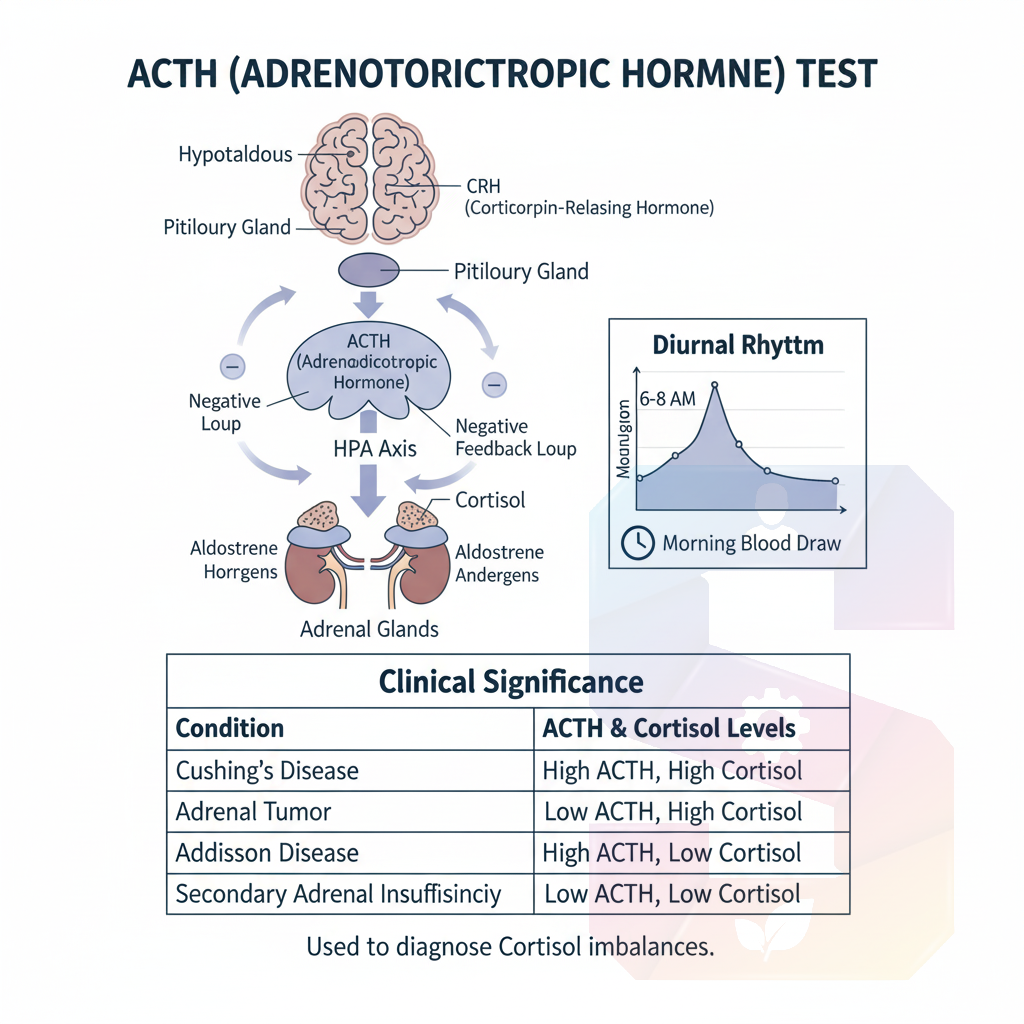
    The ACTH (Adrenocorticotropic Hormone) Test is a blood test that measures the amount of ACTH in your blood. ACTH is a hormone produced by the pituitary gland in the brain.

    🧠 The Hypothalamic-Pituitary-Adrenal (HPA) Axis
    To understand the ACTH test, it's essential to know about the HPA axis, which is a complex feedback system involving three glands:

    Hypothalamus: Releases Corticotropin-Releasing Hormone (CRH).

    Pituitary Gland: Stimulated by CRH, it releases ACTH.

    Adrenal Glands: Stimulated by ACTH, they release cortisol (and other adrenal hormones).

    Cortisol is a vital "stress hormone" involved in metabolism, immune response, blood pressure regulation, and more. When cortisol levels rise, they feed back to the hypothalamus and pituitary to inhibit CRH and ACTH production, creating a finely tuned balance.

    📝 What the Test Measures
    The ACTH test measures the level of ACTH, which helps to evaluate the function of the pituitary gland and adrenal glands and to determine the cause of imbalances in cortisol production.

    ⏰ Importance of Timing
    ACTH levels fluctuate throughout the day in a diurnal rhythm:

    They are highest in the early morning (around 6-8 AM).

    They gradually decrease throughout the day.

    They are lowest in the late evening/night.

    Therefore, the timing of the blood draw for an ACTH test is crucial, usually performed in the morning when levels are at their peak.

    🩺 Clinical Significance
    The ACTH test is used to diagnose and differentiate various conditions affecting the HPA axis, primarily related to excess or deficiency of cortisol.

    The ACTH (Adrenocorticotropic Hormone) Test is a blood test that measures the amount of ACTH in your blood. ACTH is a hormone produced by the pituitary gland in the brain. 🧠 The Hypothalamic-Pituitary-Adrenal (HPA) Axis To understand the ACTH test, it's essential to know about the HPA axis, which is a complex feedback system involving three glands: Hypothalamus: Releases Corticotropin-Releasing Hormone (CRH). Pituitary Gland: Stimulated by CRH, it releases ACTH. Adrenal Glands: Stimulated by ACTH, they release cortisol (and other adrenal hormones). Cortisol is a vital "stress hormone" involved in metabolism, immune response, blood pressure regulation, and more. When cortisol levels rise, they feed back to the hypothalamus and pituitary to inhibit CRH and ACTH production, creating a finely tuned balance. 📝 What the Test Measures The ACTH test measures the level of ACTH, which helps to evaluate the function of the pituitary gland and adrenal glands and to determine the cause of imbalances in cortisol production. ⏰ Importance of Timing ACTH levels fluctuate throughout the day in a diurnal rhythm: They are highest in the early morning (around 6-8 AM). They gradually decrease throughout the day. They are lowest in the late evening/night. Therefore, the timing of the blood draw for an ACTH test is crucial, usually performed in the morning when levels are at their peak. 🩺 Clinical Significance The ACTH test is used to diagnose and differentiate various conditions affecting the HPA axis, primarily related to excess or deficiency of cortisol.

    0 Comments 0 Shares 1K Views 0 Reviews
  • Adenosine Deaminase(ADA - Synovial Fluid) New
    1,400.00₹
    In stock
    Hyderabad
    0 Reviews
    The Adenosine Deaminase (ADA) - Synovial Fluid Test measures the level of the enzyme adenosine deaminase in the synovial fluid (the fluid that lubricates joints).

    🔬 What is Adenosine Deaminase (ADA)?
    ADA is an enzyme involved in purine metabolism. It plays a critical role in the development and function of the lymphatic system, particularly T-lymphocytes (T-cells).

    Elevated ADA levels are typically found in conditions involving activated lymphocytes, especially in the presence of cell-mediated immune responses.

    💧 Synovial Fluid
    Synovial fluid is a viscous fluid found in the cavities of movable joints. Its main function is to reduce friction between the articular cartilages of synovial joints during movement. Analysis of synovial fluid is crucial for diagnosing various joint diseases.

    🩺 Clinical Significance of ADA in Synovial Fluid
    The primary clinical utility of measuring ADA in synovial fluid is in the diagnosis of tuberculous arthritis.

    Tuberculous Arthritis: This is a form of extrapulmonary tuberculosis where Mycobacterium tuberculosis infects a joint, leading to inflammation and destruction. It's often difficult to diagnose because the bacterial load in synovial fluid can be low, making traditional cultures challenging.

    High ADA levels (typically >30-40 IU/L) in synovial fluid are strongly suggestive of tuberculous arthritis. The influx and activation of lymphocytes (especially T-cells) at the site of infection cause the release of ADA.

    It is considered a reliable marker, especially when considered in conjunction with clinical symptoms and radiological findings.

    Differentiating from other arthropathies:

    Septic Arthritis (Non-Tuberculous): Bacterial arthritis caused by other bacteria (e.g., Staphylococcus aureus) usually does not significantly elevate ADA levels in synovial fluid.

    Rheumatoid Arthritis & Osteoarthritis: ADA levels are typically normal or only mildly elevated in these conditions, helping to rule out tuberculosis.

    Crystal-induced Arthritis (Gout, Pseudogout): ADA levels are generally normal.
    The Adenosine Deaminase (ADA) - Synovial Fluid Test measures the level of the enzyme adenosine deaminase in the synovial fluid (the fluid that lubricates joints). 🔬 What is Adenosine Deaminase (ADA)? ADA is an enzyme involved in purine metabolism. It plays a critical role in the development and function of the lymphatic system, particularly T-lymphocytes (T-cells). Elevated ADA levels are typically found in conditions involving activated lymphocytes, especially in the presence of cell-mediated immune responses. 💧 Synovial Fluid Synovial fluid is a viscous fluid found in the cavities of movable joints. Its main function is to reduce friction between the articular cartilages of synovial joints during movement. Analysis of synovial fluid is crucial for diagnosing various joint diseases. 🩺 Clinical Significance of ADA in Synovial Fluid The primary clinical utility of measuring ADA in synovial fluid is in the diagnosis of tuberculous arthritis. Tuberculous Arthritis: This is a form of extrapulmonary tuberculosis where Mycobacterium tuberculosis infects a joint, leading to inflammation and destruction. It's often difficult to diagnose because the bacterial load in synovial fluid can be low, making traditional cultures challenging. High ADA levels (typically >30-40 IU/L) in synovial fluid are strongly suggestive of tuberculous arthritis. The influx and activation of lymphocytes (especially T-cells) at the site of infection cause the release of ADA. It is considered a reliable marker, especially when considered in conjunction with clinical symptoms and radiological findings. Differentiating from other arthropathies: Septic Arthritis (Non-Tuberculous): Bacterial arthritis caused by other bacteria (e.g., Staphylococcus aureus) usually does not significantly elevate ADA levels in synovial fluid. Rheumatoid Arthritis & Osteoarthritis: ADA levels are typically normal or only mildly elevated in these conditions, helping to rule out tuberculosis. Crystal-induced Arthritis (Gout, Pseudogout): ADA levels are generally normal.
    0 Comments 0 Shares 1K Views 0 Reviews
  • Watch Me Fall | Lyrical Music Video
    Watch Me Fall | Lyrical Music Video
    0 Comments 0 Shares 949 Views 0 Reviews
  • Securing Every Drop: Unpacking Singapore's Brilliant 'Four National Taps' Water Strategy
    The recent pollution incident that briefly shut down the Johor River Waterworks in Malaysia served as a critical reminder: for the island nation of Singapore, water security is not just a policy—it’s a matter of national survival. Since its independence, Singapore has transformed itself from one of the most water-stressed countries in the world to a global model of integrated...
    0 Comments 0 Shares 587 Views 0 Reviews
  • 🔬 The Alchemy of Water: Unpacking the Cutting-Edge Tech Behind NEWater
      NEWater is Singapore’s success story in water recycling, transforming treated used water into a source that is purer than tap water and rivals bottled water quality. This remarkable feat is achieved through a three-stage, multi-barrier purification process that leverages advanced membrane technology and disinfection. Here is a breakdown of the three key technological steps that...
    0 Comments 0 Shares 724 Views 0 Reviews
  • 🚇 The Sanitary Superhighway: Singapore's Deep Tunnel Sewerage System (DTSS)
    The production of NEWater, Singapore's ultra-clean reclaimed water, is an engineering miracle that begins with another: the Deep Tunnel Sewerage System (DTSS). This massive, $10 billion underground project is not just a sewer; it’s the backbone of Singapore's water security, functioning as a colossal, gravity-powered used water "superhighway." Designed to last 100 years, the DTSS...
    0 Comments 0 Shares 695 Views 0 Reviews
Sponsored