


Marine Heatwaves: Indian Ocean Temperatures Hit Critical Thresholds
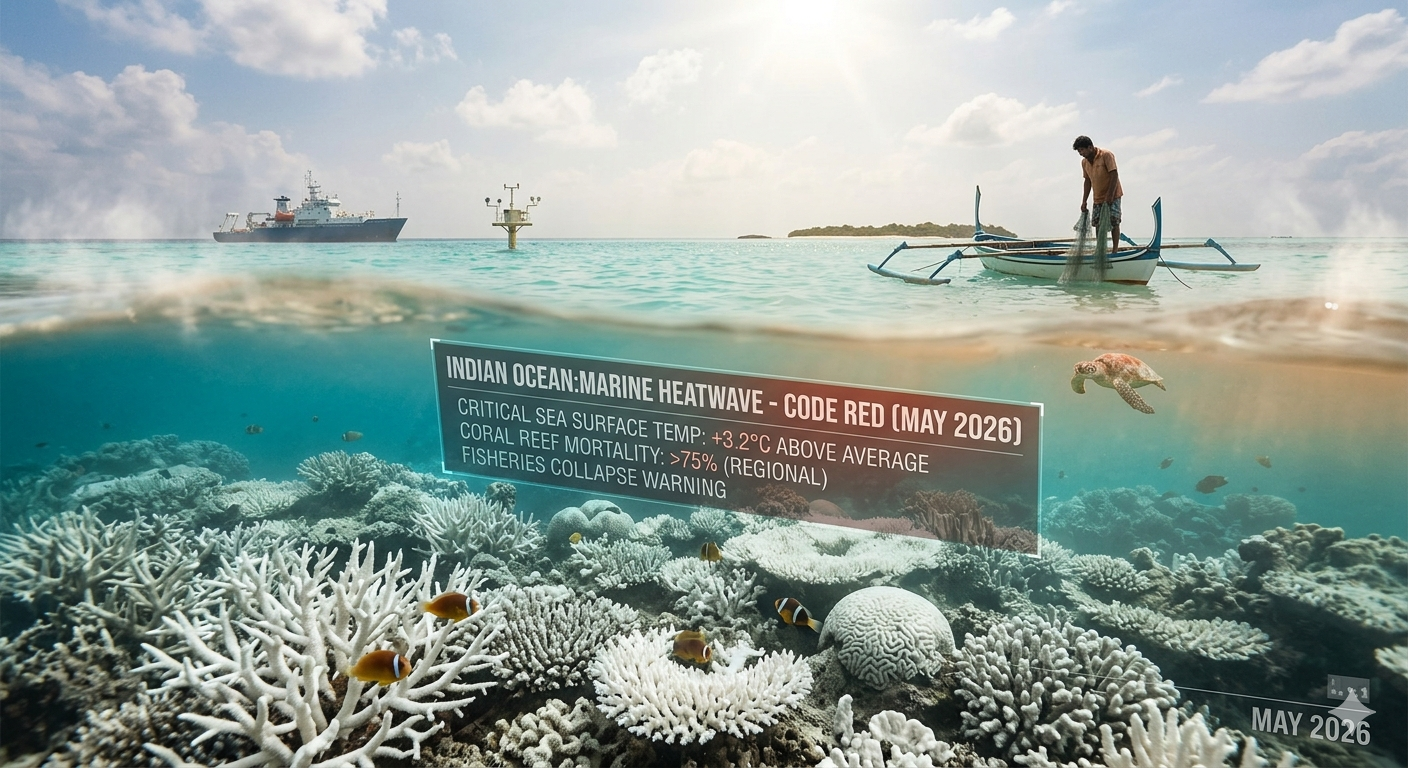
New Delhi | May 1, 2026 — Scientists are sounding an urgent alarm as the Indian Ocean reaches unprecedented temperature levels, signaling a "code red" for marine ecosystems and the millions of people who depend on them. This rapid warming, characterized by frequent and intense marine heatwaves, is threatening to permanently alter the biological and socioeconomic landscape of the region.
The Scale of the Warming
The Indian Ocean is currently warming at a rate significantly faster than other global oceans, leading to several critical consequences:
-
Record-Breaking Sea Surface Temperatures: Average sea surface temperatures have consistently remained at levels previously considered extreme, disrupting the natural thermal balance of the water.
-
Marine Heatwaves: These "heatwaves in the ocean" have increased in frequency and duration, lasting for months at a time and penetrating deep below the surface.
-
Deep Ocean Warming: The heat is no longer confined to the surface; scientists have observed significant temperature rises in deeper layers, affecting species that were previously shielded from surface fluctuations.
Impact on Biodiversity and Livelihoods
The biological fallout of this warming trend is catastrophic for both marine life and human industry:
-
Coral Bleaching: Extensive coral bleaching is being reported across the Indian Ocean, from the reefs of Lakshadweep to the East African coast, threatening the foundation of marine biodiversity.
-
Fisheries in Peril: Rising temperatures are forcing fish species to migrate to cooler waters, disrupting traditional fishing grounds and leading to a sharp decline in local fish stocks.
-
Threat to Millions: For the millions of people in coastal communities who rely on the ocean for food and income, these changes are creating a direct crisis of food security and economic stability.
The Climate Connection
Researchers highlight that while the Indian Ocean has always been a warm basin, the current acceleration is a clear indicator of human-induced climate change.
-
Monsoon Disruption: The abnormal warming is also linked to erratic monsoon patterns, leading to more frequent extreme weather events like cyclones and unseasonal heavy rainfall across the Indian subcontinent.
-
Sea Level Rise: Thermal expansion—where warmer water takes up more space—is accelerating sea-level rise, threatening low-lying coastal cities and island nations.
The report concludes that without immediate and drastic reductions in global carbon emissions, the Indian Ocean may reach a "point of no return," where its ability to sustain current life forms and regulate regional weather is fundamentally compromised.
